



MEHR YASIN
ISLAMABAD: On July. 6, a body was found in Islamabad’s posh sector of E-11, with bullet wounds to the head, chest, abdomen and shoulders.
The victim was Beenish, a transgender woman. She was known to be among the more than two dozen transgender Pakistanis’ killed this year.
A week later, un-identified people armed with automatic weapons stormed a community house of transgender persons in Garrison city of Rawalpindi and shot dead one of the transgender woman and injured two another. Assailants fled from the scene unhurt.
Police teams of Islamabad and Rawalpindi, both, have not yet able to trace murderers.
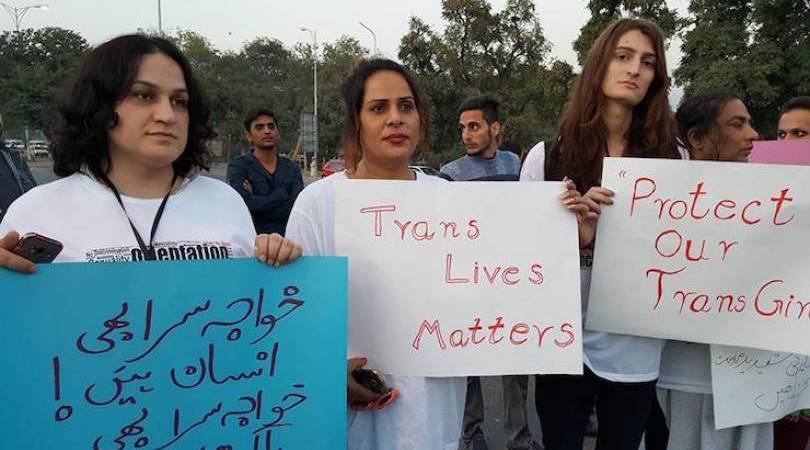
Cold blooded murder of two transgender person in twin cities of Rawalpindi and Islamabad in a week, have raised alarm bells in Pakistan with human rights activists pressing the government to take measures for safety of transgender community in Pakistan.
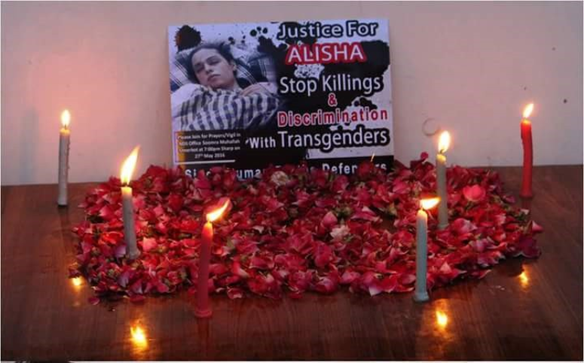
The latest killing of a transgender women in twin cities of Rawalpindi and Islamabad exemplifies the government’s failure to take measures to protect the rights of its transgender citizens.
Pakistani law includes provisions to protect the rights of transgender people. In 2009, Pakistan’s Supreme Court, like other courts in South Asia, called on all provincial governments to recognize the rights of transgender people. The judgment specifically called for improved police responses to cases involving transgender people, and to ensure the rights of transgender people.
However, police in Pakistan do not pay heed to their sufferings.
In Pakistan, transgender person are frequently subjected to physical abuse and often get killed. In May, a transgender woman was murdered in Rohtas Fort area, in Jehlum district of Punjab. The victim was identified as Hassan. His dead body was thrown into a well. Teams of Rescue 1122 shifted the body to the district headquarters hospital.

Earlier in April this year, a Christian teenager transgender, 15, was gang-raped and murdered by ‘local gang’ in Faisalabad .
In most of the cases involving transgender persons, it has been observed that police has been deliberately delaying response to facilitate transgender victims of attack and hold those responsible for attacks accountable.
In majority of attacks on transgender persons, hospital staff have been unwilling to treat victims while police won’t pursue the case. For example, in August 2016, after assailants shot a transgender woman three times in the abdomen when she resisted abduction and rape, the district hospital refused to admit her, saying they only had male and female wards. She died while waiting.

Pakistan has become a dangerous country for transgender persons. Even as transgender people have scored political victories and turned public pinion in favor of more protections, violence has risen. In 2018, authorities told Supreme Court of Pakistan at least 500 transgender people have been killed in Pakistan since 2015.
The full death toll is impossible to determine, but by rights group’s estimate violence against the transgender persons has been on the rise. If statics presented before the Supreme Court in 2018, are to consider, it means Pakistani’s kill 125 transgender persons every year.
These statistics were revealed by the secretary of the Law and Justice Commission of Pakistan, who is heading the court-formed commission to ensure that transgender community members get computerized national identity cards.
The court announced that it will offer jobs to two transgender people, adding that the details of this will be shared later.
“We are trying to bring transgender people into the mainstream,” remarked then Chief Justice Saqib Nisar. “We are here to protect their rights,” he added.