



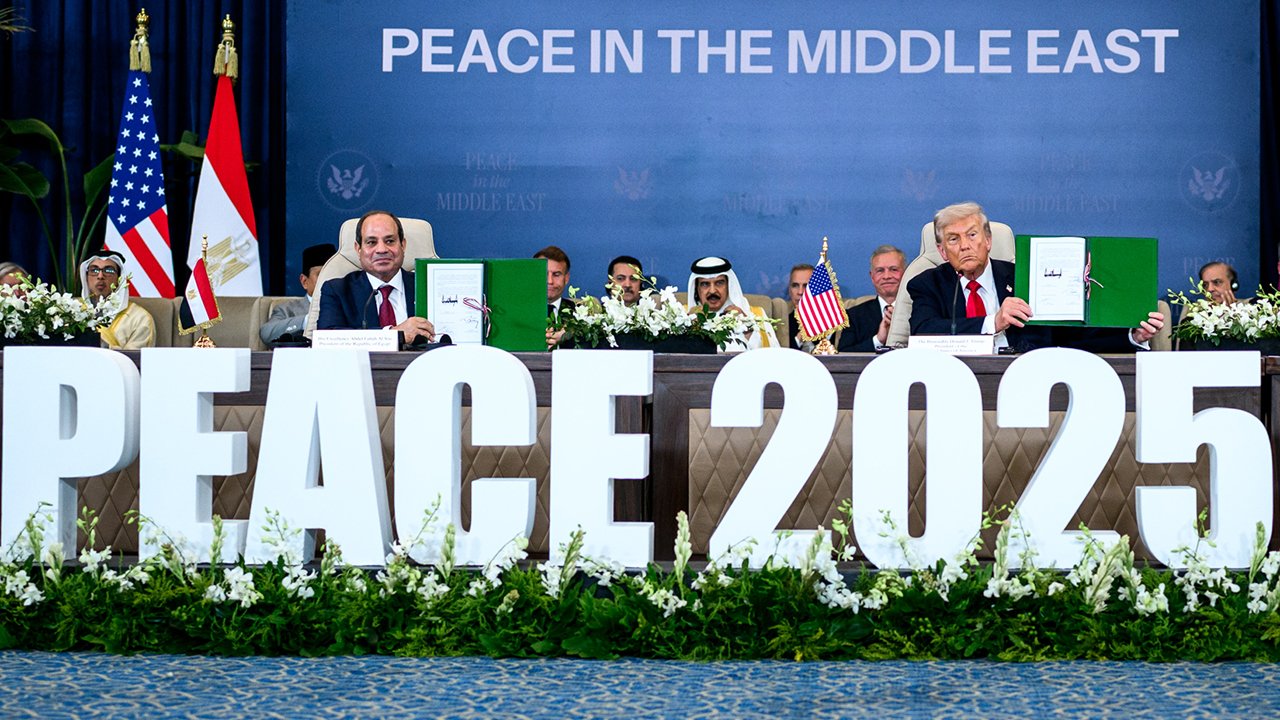
- Most Islamic nations support the Gaza peace plan as a pragmatic path toward a viable Palestinian state.
- Reservations persist, but Muslim governments see an opportunity to influence implementation rather than reject it.
- The U.N. resolution marks Washington’s strongest diplomatic win in years and reshapes Middle Eastern power dynamics.
- Russia and China abstained, leaving Muslim states to shape the plan’s political and humanitarian future.
In one of the most consequential diplomatic shifts of the decade, the U.N. Security Council has overwhelmingly endorsed President Donald Trump’s Gaza peace plan — a plan Washington insists is the only workable roadmap to end the region’s bloodshed and set Palestinians on a “credible pathway” to statehood. With 13 votes in favor and none against, the U.S. achieved a diplomatic victory unseen since the early days of the post–Cold War order.
But beneath the headlines lies a quieter, more profound political realignment:
Most Islamic countries — despite deep reservations — have thrown their weight behind the plan in the greater interest of Palestine’s long-promised statehood and the humanitarian future of its people.
This is the real story behind Monday’s vote.
Gaza Peace Plan: A reluctant yes — but a yes nonetheless
Arab and broader Muslim-majority nations did not adopt the plan blindly. Algeria’s impassioned statement at the Council reflected what many Muslim capitals are privately saying:
“Genuine peace cannot be achieved without justice… without an independent Palestinian state.”
Yet Algeria still thanked Trump for his “personal engagement,” a signal that Arab states — bruised by years of failed initiatives — see this plan, imperfect as it is, as an opening rather than a trap.
Trump’s Gaza Peace Plan Sends Ripples of Relief Across the Middle East
Diplomats confirm that Muslim states initially sought stronger guarantees on Palestinian statehood, early involvement of the Palestinian Authority, and clearer timelines for governance and reconstruction. Many of these demands remain unresolved. Yet even so, they voted “yes.”
Why?
Because the alternative is a return to war, to a Gaza that burns every two years, and to a peace process that has been functionally dead for decades.
READ MORE: U.N. Security Council approves Trump’s 20-point peace plan for Gaza
The Muslim world understands this moment:
Rejecting the plan outright would hand victory to the status quo. Accepting it keeps the pressure on Washington and Israel to deliver on what the world has long demanded — an independent Palestinian state living in dignity and security.
Backed by the Muslim world — even those with reservations
From Indonesia to Azerbaijan, the willingness of Muslim states to contribute troops to the International Stabilization Force is a striking departure from previous peacekeeping hesitations. By placing Muslim boots on the ground, these nations are essentially declaring:
“If this plan leads to a Palestinian state, we will help enforce it.”
This silent but strategic endorsement matters more than the words spoken in U.N. halls.
ALSO READ: Gaza Peacekeeping Mission: Can Muslim Nations Secure the Enclave?
It also explains why countries like Panama — hardly central to Middle Eastern politics — said they supported the plan only after seeing Arab consensus forming behind it.
Even those capitals that privately fear the plan hands too much power to the U.S.-led Board of Peace understand the geopolitical equation:
It is better to shape the plan from within than be locked outside the room where the future of Gaza is being written.
Russia and China sit out — leaving space for Muslim leadership
Moscow and Beijing abstained.
Washington celebrated.
But the unspoken outcome is this: their abstentions gave Muslim-majority countries disproportionate influence over how the plan unfolds.
A China–Russia veto would have buried the plan instantly.
Their abstention is an admission that neither power wants to own Gaza’s future — at least not right now.
This leaves Arab and Islamic nations in a rare position to steer the diplomatic machinery.
Israel objects — but accepts the outcome
Israel’s government fumes at even vague references to Palestinian statehood.
Defense Minister Israel Katz has bluntly declared:
“There will be no Palestinian state.”
National Security Minister Ben Gvir wants Mahmoud Abbas arrested.
Prime Minister Netanyahu insists he is under no obligation to recognize a Palestinian state “in any form.”
And yet — Israel has officially welcomed the U.N. approval.
Why the contradiction?
Because the plan gives Israel time, space, and international cover.
Because the Israeli military retains a perimeter security presence.
And because the final political horizon remains undefined enough for Israel to maneuver.
But Muslim states understand this too — which is why they supported the plan.
Their calculation is simple:
A U.N.-endorsed, internationally supervised transition gives them leverage Israel has long denied them.
The Muslim world’s strategic gamble
Behind closed doors, Arab diplomats admit the concerns are real:
A Board of Peace led by Trump.
A vaguely defined transition authority.
A technocratic Palestinian committee with limited powers.
An Israeli military that will withdraw only gradually.
None of this resembles the traditional contours of statehood.
But Muslim-majority nations are backing the plan because they believe the long-term payoff — an irreversible diplomatic commitment to Palestinian self-determination — outweighs the risks.
This is not naïveté. It is calculated statecraft.
If the plan fails, the Muslim world will not be blamed.
If it succeeds, they will have helped shape Palestinian independence.
No other U.S. administration in decades, whether Democrat or Republican, has offered a legally binding U.N.-sanctioned pathway — however indirect — to Palestinian statehood.
The Islamic bloc is seizing the moment.
Washington’s hardball diplomacy — and the Muslim world’s response
The U.S. warned openly that any attempt to undermine the plan would result in “grave consequences” for Palestinians. Privately, that message was received as political coercion.
Yet Muslim capitals interpreted the warning differently:
If Washington is this invested, then the plan has liabilities — but also possibilities.
U.S. Ambassador Michael Waltz framed the vote as a choice between peace and Hamas rule. But Muslim nations did not buy this binary. Their “yes” vote was neither a gift to Trump nor a capitulation to pressure.
It was a strategic choice driven by the recognition that the Palestinian cause now demands political pragmatism, not rhetorical purity.
A new chapter for Palestine — or another mirage?
Whether this plan becomes the first real catalyst for Palestinian statehood or another mirage in a desert of broken promises depends on what happens next:
- Will the Palestinian Authority be reformed?
- Will the International Stabilization Force be truly neutral?
- Will Israel actually withdraw?
- Will Washington deliver on the political horizon it now legally owns?
Muslim nations have thrown their support behind the plan not because they trust its authors, but because they believe Palestinians deserve a future beyond endless conflict.
For now, they are betting on hope — but with their eyes wide open.
And that, in the shifting landscape of Middle Eastern diplomacy, may be the boldest stance of all.