



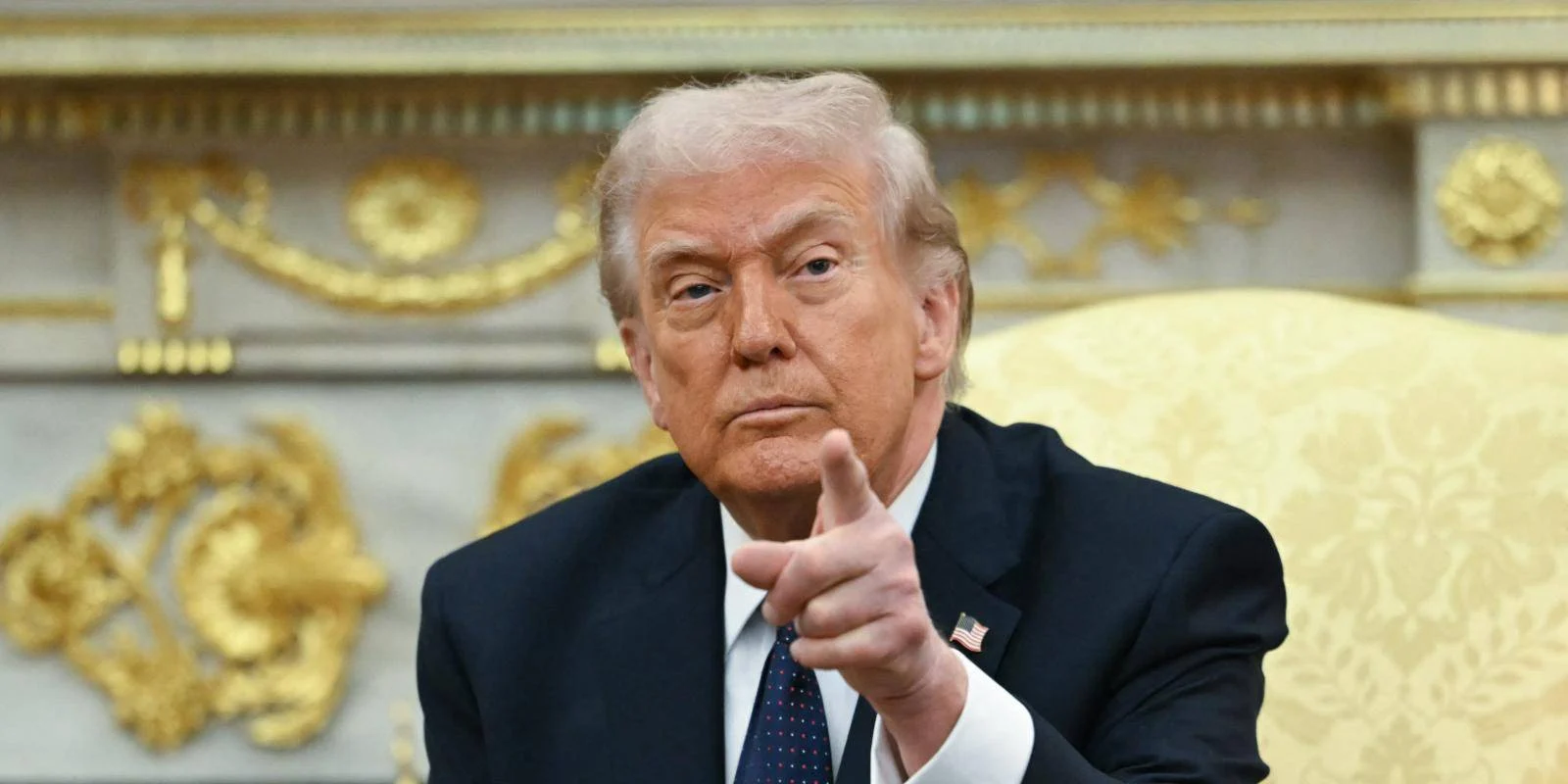
- Iran war risks are rising as Washington reportedly considers renewed military strikes after the November 3 midterm elections.
- Mecca alliance diplomacy brings Saudi Arabia, Pakistan and Turkey into direct engagement with Tehran to reduce regional tensions.
- Asim Munir’s mediation reflects Pakistan’s effort to balance its Saudi defence commitments with the need to prevent a wider regional conflict.
As the United States prepares for the possibility of renewed strikes after its midterm elections, Saudi Arabia, Pakistan and Turkey are engaging Tehran in an effort to prevent another regional escalation.
The United States has warned several Gulf Arab states to prepare for a possible short, intense military campaign against Iran after November 3 midterm elections, raising fresh questions about whether Washington intends to return to the battlefield or use the threat of force to extract diplomatic concessions from Tehran.
According to a Wall Street Journal report published on October 27, President Donald Trump has not made a final decision but is considering renewed strikes on Iranian infrastructure and nuclear facilities.
American military preparations reportedly include reinforcing missile defences, replenishing ammunition stocks and moving personnel away from vulnerable bases. Israel is also preparing for the possibility of renewed operations.
The warning is significant, but it is not an announcement of war. Washington retains the option of negotiations, and military preparations do not establish that a decision to attack has been taken. Nevertheless, the possibility of renewed strikes is forcing regional governments to prepare for a conflict that could extend beyond Iran’s borders.
READ NEXT: Israel’s Election Deadlock Puts Netanyahu’s Regional Strategy Under Pressure
At the same time, Saudi Arabia, Pakistan and Turkey are pursuing a diplomatic initiative with Tehran. Their efforts reflect a difficult strategic calculation: the countries seeking to strengthen regional deterrence also have economic, security and political reasons to prevent another prolonged confrontation.
Military pressure may not deliver a political settlement
The United States has substantial advantages in air power, intelligence, precision strikes and long-range military operations. Renewed attacks could damage Iranian military infrastructure, missile facilities and nuclear installations.
However, the ability to destroy targets does not automatically translate into the ability to secure political concessions. Iran retains missile and drone capabilities and has threatened retaliation against American interests and economic infrastructure across the region. Its capacity to sustain a response would depend on the extent of damage inflicted, the availability of remaining weapons and the effectiveness of its command structures.
Tehran would not necessarily need to defeat American forces in a conventional military confrontation to impose additional costs. Attacks on regional bases, disruption to shipping or threats to energy infrastructure could complicate Washington’s military calculations and place pressure on Gulf governments.
READ MORE: U.S. Warns Gulf of Possible Short, Intense Renewal of Iran War After Midterms
This creates a fundamental uncertainty. A short American campaign might inflict considerable damage, but it could also trigger retaliation that extends beyond the initial period of fighting. A limited operation could consequently become a longer confrontation if either side concludes that it must respond to preserve its credibility or deter further attacks.
The nuclear question adds another layer of uncertainty. International Atomic Energy Agency Director General Rafael Grossi said on October 27 that the agency had found no evidence that Iran had begun reconstructing nuclear facilities damaged by earlier American and Israeli strikes. However, inspectors have been unable to verify the current status of Iran’s stockpile of highly enriched uranium because they lack access to relevant facilities.
The absence of evidence of reconstruction does not establish that Iran’s nuclear capabilities have been permanently eliminated. Nor does uncertainty about its uranium stockpile, on its own, prove that Tehran has decided to build a nuclear weapon.
READ MORE: Crown Prince MBS Houthi Strategy: A Masterclass in Long-Term Regional Security
Further strikes could damage facilities and delay Iran’s technical progress. They would not necessarily settle the questions of nuclear material, inspections and future intentions that a lasting agreement would have to address.
The Mecca alliance turns to Tehran
Against this backdrop, Saudi Arabia, Pakistan and Turkey have opened a significant diplomatic channel with Iran.
On October 26, senior representatives of the three countries met Iranian officials in Tehran to discuss regional security and ways to contain the escalating crisis. Saudi Arabia was represented by Defence Minister Prince Khalid bin Salman, Pakistan by Field Marshal Asim Munir, and Turkey by intelligence chief Ibrahim Kalin.
The meeting followed Munir’s earlier visit to Tehran, during which he met Iranian President Masoud Pezeshkian and other senior officials. According to Reuters reporting, the initiative for the four-country meeting emerged during that visit. Iranian officials had reportedly told Munir that Tehran was unwilling to resume negotiations with Washington until its demands were addressed.
The discussions brought together countries with different relationships with Iran and the United States but overlapping interests in regional stability. The delegations discussed security concerns at a time when Houthi attacks on Saudi Arabia had intensified and Washington was signalling that further military action against Iran remained possible.
The diplomatic initiative also carries institutional significance. Saudi Arabia, Pakistan and Turkey signed the Mecca Joint Defence Agreement in August, committing themselves to assist one another in the event of an armed attack. The agreement establishes a collective-defence framework, although its practical implementation depends on the circumstances and decisions of its members.
An emergency meeting of the alliance’s Strategic-Political and Defence Committee in Riyadh earlier in October focused on implementing the agreement and facilitating the rapid deployment of agreed military capabilities in Saudi Arabia. The arrangement is intended to strengthen deterrence, but its existence does not establish that the three countries intend to wage war against Iran.
Indeed, their engagement with Tehran illustrates why collective defence and diplomacy need not be mutually exclusive. The members can strengthen their capacity to respond to threats while attempting to persuade Iran that further escalation would carry substantial regional costs.
The October 26 meeting did not produce a comprehensive settlement or publicly announced agreement on a ceasefire. Its immediate importance lies in establishing direct communication between Tehran and the three countries at a moment when the prospect of another American military campaign is growing.
Asim Munir’s mediation faces a difficult test
Field Marshal Asim Munir has become a prominent figure in Pakistan’s efforts to prevent the Iran crisis from widening. His recent contacts with Iranian leaders, combined with Pakistan’s close defence relationship with Saudi Arabia, give Islamabad channels through which it can communicate with both sides.
Pakistan’s position is strategically sensitive. It shares a border with Iran, maintains important security ties with Saudi Arabia and has an interest in preventing instability from spreading across the region. A prolonged conflict could disrupt cross-border trade, complicate border security, increase energy costs and expose Pakistan to competing diplomatic and security pressures.
Munir’s engagement with Tehran is therefore not simply an exercise in diplomatic visibility. It reflects Pakistan’s interest in preventing a wider conflict while maintaining its commitments to Saudi security. By bringing Saudi and Turkish representatives into direct discussions with Iranian officials, Islamabad has helped create an additional channel for regional communication.
READ MORE: Analysis: Why Pakistan’s Iran border reopening matters for US diplomacy
Pakistan has also participated in efforts, alongside Qatar, to facilitate contacts between Washington and Tehran. Earlier mediation contributed to a temporary agreement in June, but the arrangement subsequently collapsed when fighting resumed. That experience demonstrates the limitations of mediation: regional intermediaries can help arrange talks and communicate proposals, but they cannot compel the principal parties to accept or implement a settlement.
Munir’s efforts should therefore be assessed against practical outcomes rather than the number of diplomatic meetings held. A sustained reduction in attacks on Saudi territory, restored maritime access, renewed US-Iran negotiations and a verifiable framework for nuclear monitoring would provide stronger evidence of progress.
There are also limits to Pakistan’s leverage. Islamabad cannot independently resolve the nuclear dispute, remove American sanctions or guarantee that Iran will refrain from retaliation. Nor can it assure Tehran that Saudi Arabia would remain outside a conflict if the kingdom suffered a major attack.
Pakistan’s diplomatic role is consequently best understood as that of a regional intermediary seeking to narrow the space for escalation, rather than an actor capable of determining the outcome on its own.
Why Saudi Arabia and the wider Gulf are vulnerable
For Saudi Arabia and its neighbours, another US-Iran confrontation would bring risks beyond the immediate military theatre.
Gulf states host American military facilities and depend on secure energy exports, maritime routes, commercial aviation and investor confidence. They have reasons to oppose attacks on their territory and to seek guarantees against threats to critical infrastructure. At the same time, they have strong incentives to avoid becoming the battleground for a prolonged confrontation between Washington and Tehran.
The Strait of Hormuz is particularly important because it connects the Persian Gulf with international shipping routes and carries a substantial share of global oil and gas trade. Renewed hostilities could raise shipping insurance premiums, increase freight costs and place additional pressure on energy markets.
The economic consequences would extend far beyond the region. Higher oil prices could increase transport and manufacturing costs, complicate efforts to control inflation and place additional pressure on countries dependent on imported energy. Even without a complete closure of the strait, uncertainty over shipping could affect prices and investment decisions.
For Gulf governments, the diplomatic effort is therefore not an endorsement of Iran’s regional policies. It is an attempt to manage the risks created by geographical proximity, economic interdependence and the possibility of retaliatory attacks.
The same calculation applies to Turkey, which has an interest in preventing instability from spreading across its neighbourhood, and Pakistan, which faces direct consequences from any prolonged deterioration in relations with Iran.
Iran War: The midterms are a factor, not a guarantee
The reported prospect of renewed strikes after the November 3 elections raises questions about the relationship between American domestic politics and military decision-making.
The timing could reflect political considerations, but it would be premature to conclude that the elections alone explain the administration’s calculations. Military readiness, ammunition supplies, intelligence assessments, the vulnerability of American bases and the potential response from Iran are also relevant factors.
A short campaign might appear attractive if Washington believes concentrated military pressure could compel Tehran to accept its demands. But the duration of the initial operation would not determine the duration of the conflict. Iranian retaliation could continue after the strikes ended, potentially forcing Washington to choose between further military action and accepting a period of heightened insecurity.
READ MORE: Comprehensive midterms coverage exploring what election night means for President Trump, the U.S. and the world announced by the BBC
The distinction between military objectives and political objectives is crucial. Destroying selected facilities is a more limited task than securing a durable agreement on nuclear restrictions, regional security and sanctions. If Washington seeks the latter, a military campaign would need to be accompanied by a credible diplomatic framework.
Iran faces a parallel calculation. Retaliation could demonstrate that American military action carries costs, but it could also deepen regional isolation, damage its economy and invite further strikes. Neither side can assume that escalation will produce the political outcome it wants.
Diplomacy must produce more than meetings
The efforts by Saudi Arabia, Pakistan and Turkey, supported by Qatar’s mediation, offer a regional channel at a time when direct US-Iran diplomacy remains uncertain. Their challenge is to translate that access into concrete measures that reduce the risk of another confrontation.
A workable process would need to address several connected issues: the resumption of nuclear inspections, restrictions on Iran’s nuclear activities, the future of sanctions, maritime security and assurances against renewed attacks. Progress would also depend on sequencing, since neither side is likely to make major concessions without confidence that the other will honour its commitments.
Regional governments can help maintain communication, encourage restraint and explore arrangements for de-escalation. They cannot substitute for an agreement between Washington and Tehran on the core disputes that have driven the conflict.
The stakes are therefore larger than whether the United States launches another short campaign after its midterm elections. The question is whether military pressure, collective defence and regional diplomacy can be combined in a way that prevents repeated cycles of strikes and retaliation.
Washington retains the capacity to inflict further damage on Iran, but that does not guarantee a durable settlement. Tehran retains the capacity to impose costs on the region, but that does not ensure that escalation would improve its strategic position.
For Munir and the other regional intermediaries, the immediate task is to keep communication open and reduce the risk of miscalculation. Their longer-term test will be whether they can help create conditions in which the principal parties have greater incentives to negotiate than to resume fighting.
The October 26 meeting has opened a channel, not resolved the crisis. Whether that channel can prevent another war will depend on decisions made in Washington and Tehran as much as on the diplomatic efforts underway across the region.