



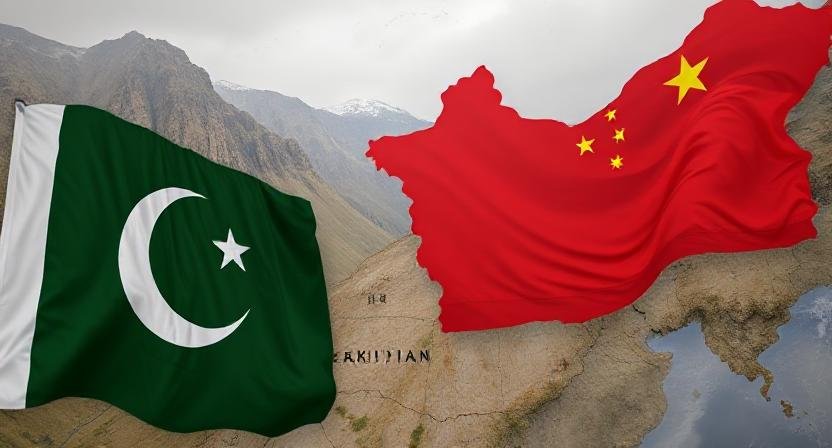
- Pakistan, Afghanistan, and China have revived their trilateral dialogue in Kabul, pledging stronger cooperation on security, trade, and counter-terrorism.
- Islamabad urged Kabul to take “verifiable measures” against TTP and BLA militants using Afghan soil for cross-border attacks.
- China pushed for extending CPEC into Afghanistan, positioning the country as a future hub for regional trade and connectivity.
- The meeting marks the highest-level engagement since 2023, signaling cautious but growing consensus on stability and economic integration.
KABUL – In a rare show of unity, Pakistan, Afghanistan, and China have vowed to intensify their cooperation on counter-terrorism, regional security, and economic integration, underscoring a shared desire to transform Afghanistan from a battleground of instability into a hub of connectivity.
The pledge came during the Sixth Trilateral Foreign Ministers’ Dialogue, convened on Wednesday in Kabul, where Pakistan’s Deputy Prime Minister and Foreign Minister Ishaq Dar joined his Chinese counterpart Wang Yi and Afghan Foreign Minister Amir Khan Muttaqi. The high-level engagement focused on strengthening political understanding, expanding economic corridors, and tackling the rising threats of militancy and narcotics.
A Trilateral Commitment to Security
A joint statement released after the meeting confirmed that the three countries had agreed to expand collective measures against terrorism. They underscored the importance of confronting extremist groups that have destabilized the region for decades. The foreign ministers also reaffirmed cooperation in areas ranging from health and education to cultural exchange and drug control, while endorsing the ambitious plan to extend the China-Pakistan Economic Corridor (CPEC) into Afghanistan — a move seen as critical for boosting Kabul’s economic recovery.
Pakistan’s Foreign Office noted that the sides highlighted terrorism as the greatest common threat. Islamabad, in particular, stressed that groups like the Tehreek-i-Taliban Pakistan (TTP) and the Balochistan Liberation Army (BLA) have been responsible for a surge in cross-border attacks that cost Pakistan over 850 civilian and security personnel lives in 2023 alone, according to official figures. Dar urged Afghan authorities to adopt “concrete and verifiable actions” to dismantle these groups operating from Afghan territory.
Bilateral Progress Between Pakistan and Afghanistan
On the sidelines of the trilateral, Dar also held direct talks with Amir Khan Muttaqi. The two ministers acknowledged that while diplomatic and economic ties had witnessed progress — especially with the recent upgrade of diplomatic representation from chargé d’affaires to ambassador level — challenges in the security arena remained unresolved.
The Afghan side reassured Pakistan that Afghanistan’s territory would not be allowed to be used as a launchpad for terrorist activities against its neighbors. Muttaqi reiterated the Taliban administration’s earlier commitments, stressing that Afghanistan desired peaceful ties based on mutual respect and non-interference.
The Foreign Office revealed that both sides expressed satisfaction with the implementation of earlier agreements, particularly those concerning trade and transit. Bilateral commerce between Pakistan and Afghanistan has seen notable growth, reaching over $2.2 billion in 2023, despite political strains. However, Islamabad emphasized that further progress hinges on Kabul’s seriousness in controlling militant networks.
China’s Strategic Role
China’s participation in the dialogue highlighted its growing influence in shaping the regional security and economic architecture. Beijing has long viewed Afghanistan as a critical piece in its Belt and Road Initiative (BRI). Extending CPEC — the multi-billion-dollar flagship of BRI that links China’s Xinjiang province with Pakistan’s Gwadar port — into Afghanistan could provide Kabul with much-needed infrastructure and investment.
Beijing had earlier hosted an informal trilateral in May, during which the three sides agreed in principle to exchange ambassadors and revive the trilateral process that had been suspended since 2023 due to worsening security conditions. The May meeting also marked Beijing’s attempt to assert itself as a peace broker in South and Central Asia, a role that enhances China’s image as a stabilizing power in contrast to Western withdrawal.
China’s Foreign Minister Wang Yi, who has consistently emphasized the need for “Afghan-led and Afghan-owned” peace, reiterated that development and security were inseparable. Chinese officials believe that by investing in Afghanistan’s stability, they are simultaneously safeguarding their own western frontier from extremism while creating new trade corridors.
Regional Implications
The trilateral format, first launched in 2017, has gradually evolved into a platform where Pakistan and China seek to engage the Taliban-led administration constructively. Although the process stalled after 2021, the resumption of formal dialogue in Kabul is seen as a breakthrough.
Analysts argue that the move reflects both necessity and pragmatism. For Pakistan, persistent cross-border violence remains a pressing concern. For Afghanistan, international recognition and economic relief are urgent priorities. And for China, the stability of its vast investments in South Asia and Central Asia hinges on Afghanistan not becoming a sanctuary for militant movements.
The United Nations estimates that Afghanistan lost over $2 billion in licit trade opportunities in 2023 due to insecurity and sanctions, while illicit drug trafficking remains a major revenue source for non-state actors. Against this backdrop, trilateral cooperation offers a potential alternative to isolation and lawlessness.
A Fragile but Crucial Process
Despite the optimism surrounding the Kabul talks, challenges remain formidable. Pakistan has repeatedly voiced concerns about the Taliban’s reluctance to act decisively against TTP militants. Meanwhile, the international community continues to withhold formal recognition of the Taliban government, complicating broader economic engagement.
Still, the symbolism of three key neighbors meeting in Kabul cannot be overlooked. It signals that regional powers are willing to work with the Taliban administration on pragmatic grounds, even if political legitimacy remains unresolved.
As Ishaq Dar put it, the progress made in diplomacy and commerce is encouraging, but “peace will only be sustainable if terrorism is defeated.” China echoed similar sentiments, stressing that without collective security measures, economic development would remain a distant dream.
Looking Ahead
The Sixth Trilateral Dialogue concluded with an agreement to maintain momentum by holding regular ministerial meetings and establishing working groups on security, trade, and connectivity. Officials said the immediate priority is the extension of CPEC roads and energy projects into Afghanistan, potentially unlocking billions in infrastructure investments.
If realized, such initiatives could change Afghanistan’s trajectory — from a landlocked and war-torn country into a bridge of trade linking South Asia, Central Asia, and China. But much will depend on whether the Taliban administration can match words with action on terrorism, and whether Pakistan and China can keep pushing for a cooperative framework.
For now, the Kabul meeting represents a cautious but meaningful step towards a regional order where Afghanistan is not a problem to be managed but a partner to be engaged.