



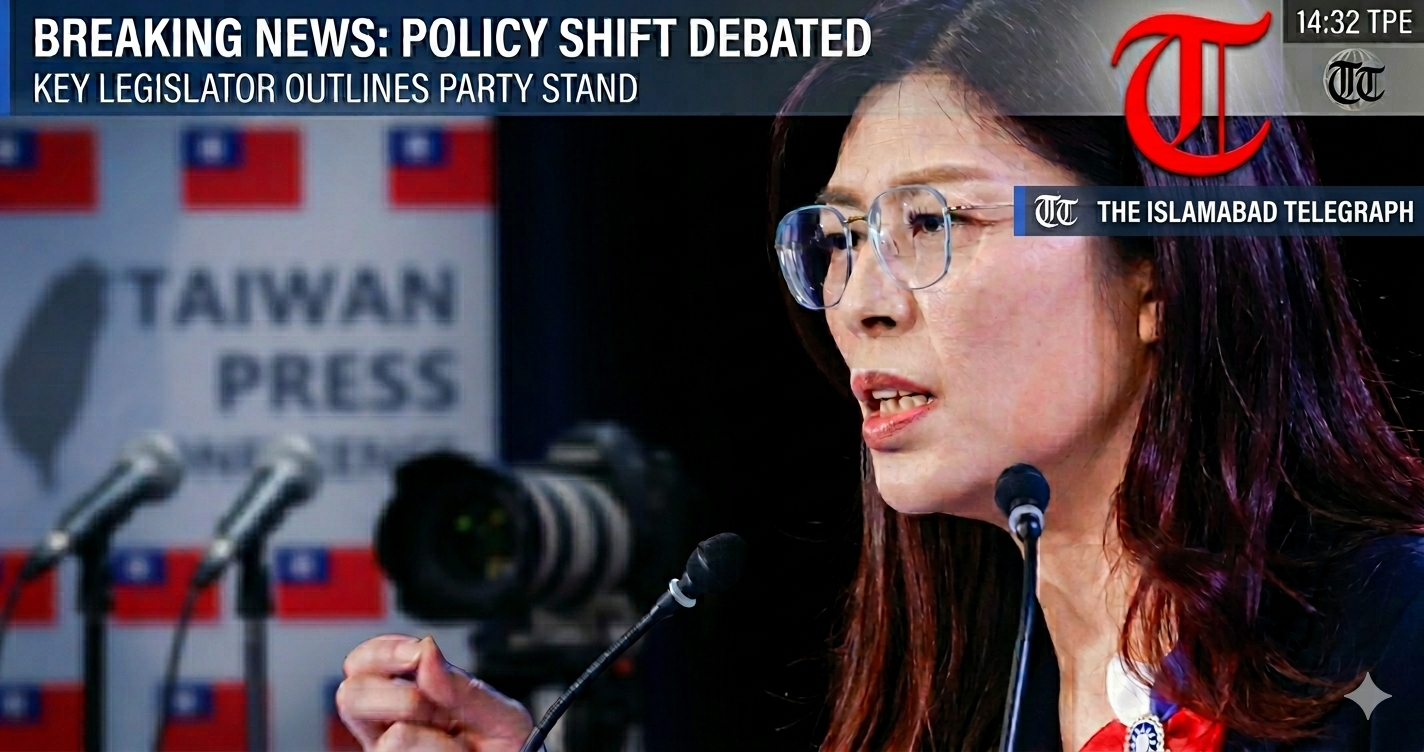
- China Taiwan Strategy evolves as Beijing shifts from military threats to political influence tactics
- U.S.-China tensions intensify over Taiwan amid arms sales and diplomatic friction
- Taiwan opposition leader’s China visit signals Beijing’s growing political outreach
- Japan warns of military intervention, raising stakes in Indo-Pacific security
In the shifting geometry of global power politics, China is recalibrating its long-standing strategy to regain influence over Taiwan—not through an immediate military assault, but increasingly via political maneuvering, economic leverage, and psychological pressure. Beijing continues to assert that Taiwan is an “integral part” of its territory, a claim reinforced diplomatically by the widespread adherence to the One China policy, under which the majority of countries recognize Beijing as the sole legal government of China.
Yet, this consensus has never fully resolved the Taiwan question. The United States, while officially acknowledging the One China policy, maintains robust unofficial ties with Taiwan—supplying arms, supporting its democratic institutions, and ensuring its strategic relevance in the Indo-Pacific. This dual-track approach has long been a source of friction between Washington and Beijing, evolving into one of the most volatile fault lines in contemporary geopolitics.
U.S. Siege of Venezuela Gives China a Golden Opening to Reclaim Taiwan
Historically, China’s approach toward Taiwan combined diplomatic isolation with the implicit threat of force. Over the past decade, Beijing significantly expanded its military footprint in the South China Sea, constructing artificial islands, deploying advanced missile systems, and asserting control over critical sea lanes. These actions not only alarmed Washington but also triggered deep concerns in Japan, which views stability in the Taiwan Strait as vital to its own national security.
However, recent developments suggest a subtle but important shift in China’s modus operandi. Rather than pursuing a high-risk amphibious invasion—an option that U.S. intelligence assessments consider extremely complex and prone to failure—Beijing appears to be investing in political influence campaigns aimed at shaping Taiwan’s internal dynamics.
U.S. Intelligence: China Not on Taiwan Timeline
A striking example of this evolving strategy is the recent visit of Cheng Li-wun, a senior figure from the Kuomintang (KMT), to mainland China. Framed as a “peace mission,” her trip underscores Beijing’s renewed effort to engage with Taiwanese political actors who favor dialogue over confrontation. The KMT, traditionally more open to cross-strait engagement, has positioned itself as a counterweight to the ruling Democratic Progressive Party (DPP), which Beijing accuses of pursuing separatist policies.
Cheng’s outreach comes at a politically sensitive moment. Taiwan’s parliament, currently influenced by opposition forces, has stalled a $40 billion defense spending plan backed by the United States. This internal division presents an opportunity for Beijing to amplify narratives that question the effectiveness of militarization and instead promote economic integration and political dialogue as pathways to stability.
Oil Prices Surge Iran War: Singapore, Japan and China Brace for Shock as Trump Ultimatum Nears Deadline
China’s messaging has also become increasingly sophisticated. Through cultural symbolism, economic incentives, and media campaigns, Beijing is attempting to reshape public perception in Taiwan. Its vision of “peaceful reunification”—though met with skepticism by the majority of Taiwanese citizens—remains central to its long-term strategy. Notably, opinion polls consistently show minimal support in Taiwan for Beijing’s “one country, two systems” framework.
Despite this softer approach, the shadow of military force has not disappeared. China has never renounced the use of force and continues to conduct military drills near Taiwan, signaling its readiness to escalate if necessary. Still, intelligence assessments indicate that Beijing currently lacks a fixed timeline for invasion, preferring instead to keep its options open while expanding its strategic toolkit.
Trump Iran War Uranium Operation: Inside the High-Risk Mission to Seize Tehran’s Nuclear Stockpile
Meanwhile, the United States continues to deepen its engagement with Taiwan, a move Beijing views as direct interference. Arms sales, high-level visits, and security cooperation have reinforced Taiwan’s defenses but also heightened tensions. In a recent exchange, Chinese President Xi Jinping warned U.S. leadership to “carefully handle” Taiwan-related issues, particularly arms transfers.
The regional dimension of this rivalry is becoming increasingly pronounced. Japan, under Prime Minister Fumio Kishida(referred to in some reports as Takashi), has adopted a more assertive stance, signaling that Tokyo could use military force to support Taiwan in the event of a Chinese attack. This marks a significant departure from Japan’s traditionally pacifist posture and reflects growing anxiety over China’s ambitions.
At its core, the Taiwan issue encapsulates the broader struggle between a rising China seeking to redefine regional order and a United States determined to preserve its influence in Asia. While war remains a possibility, the current trajectory suggests a more complex contest—one fought not just with weapons, but with diplomacy, narratives, and political influence.
In this evolving landscape, Taiwan stands not merely as a territorial dispute, but as a symbol of competing visions for the future of global power.