



- Davos 2026 marks the first annual meeting without founder Klaus Schwab.
- Discussions will focus on the U.S. intervention in Venezuela and its impact on global oil markets.
- The summit faces a crisis as U.S. threats to Greenland strain the NATO alliance.
- Leaders will address the growing AI-driven economic divide between the Global North and South.
As the elite of the global political and business worlds ascend the Swiss Alps for the World Economic Forum (WEF), the 2026 Davos summit marks a historic departure from the consensus-driven gatherings of the past. Under the theme “A Spirit of Dialogue,” nearly 3,000 delegates—including German Chancellor Friedrich Merz, making his debut as leader—face an international order being redrawn by raw power and technological upheaval.
The “Donroe” Doctrine: Venezuela and the End of Sovereignty
Dominating the hallways of the Congress Centre is the fallout from “Operation Absolute Resolve.” The January 3 capture of Venezuelan President Nicolás Maduro by U.S. forces has been described by critics as a “modern-day kidnapping” that effectively dismantles the principle of state sovereignty.
Davos 2026: Global Geopolitics at a Crossroads: Trump and the New World Order
While Washington justifies the strike as a move against narcoterrorism, the global community is fixated on the geoeconomic reality: the U.S. now exercises de facto control over the world’s largest oil reserves. In Islamabad and Beijing, leaders view this as the revival of the Monroe Doctrine on steroids. For energy-dependent nations, the question is no longer about “free markets” but about navigating a world where energy security is dictated by military intervention.
Arctic Chills: Greenland and the NATO Crisis
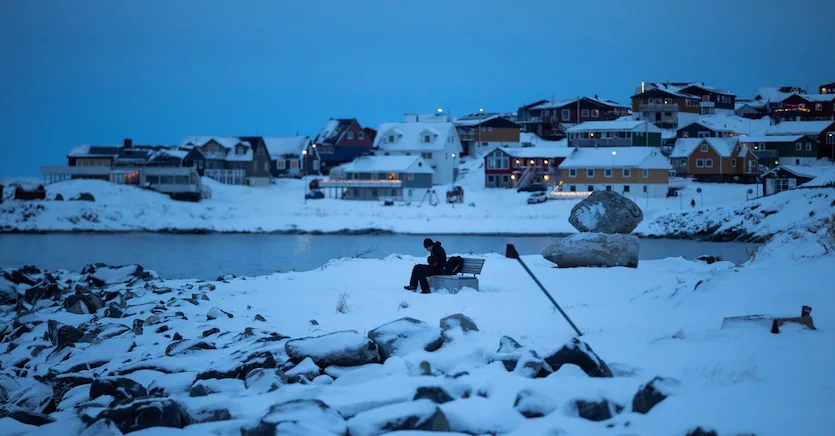
If Venezuela shook the Global South, the U.S. threat to annex Greenland has pushed the Western alliance to the brink of collapse. President Trump’s assertion that the U.S. will take the territory “one way or the other” to counter Russian and Chinese influence has elicited a fierce rebuke from Copenhagen and Brussels.
World Economic Forum Annual Meeting
European leaders have warned that military or economic coercion against a NATO ally would signify the end of the alliance. With Trump threatening tariffs on eight NATO members—including Germany and the UK—unless they facilitate the Greenland deal, Davos has become a “theater of confrontation” rather than a forum for cooperation.
AI: The New Economic Iron Curtain
Beyond the kinetic battles for land and oil, the Artificial Intelligence revolution is creating a “white-collar Rust Belt” in the Global North while threatening to permanently decouple the Global South.
- Job Displacement: Experts warn that AI could eliminate half of all entry-level white-collar roles by 2030.
- Infrastructure Gap: The Global South lacks the compute power and energy grids required to compete, leading to a new form of digital colonialism.
- Productivity Paradox: While AI promises trillions in growth, many firms are seeing initial productivity losses as they struggle with implementation.
Institutional Siege: The WEF After Schwab
For the first time since 1971, Klaus Schwab is absent from the helm. Following his resignation in April 2025, the WEF is navigating a transition to interim co-leadership under Larry Fink (BlackRock) and Andre Hoffmann (Roche). This “institutionalization” comes at a moment of extreme vulnerability, as the forum struggles to remain relevant in an era where unilateralism has replaced the “Davos Man” ideal of global citizenship.
As the summit begins, the atmosphere remains somber, further dampened by the recent Crans-Montana tragedy—a reminder of the fragility of even the safest havens. Davos 2026 may not be the place where the world’s problems are solved, but it is certainly where its deepest divisions are being laid bare.
As the opening plenary concludes, the mountain air in Davos feels heavier than in years past. The shift from a “global village” to a world of competing spheres of influence is no longer a theoretical risk; it is the current reality. With the U.S. asserting raw power in Venezuela and the Arctic, and AI rewriting the rules of labor, the “Spirit of Dialogue” faces its greatest test. Ultimately, Davos 2026 may be remembered not as a forum for solutions, but as the moment the old international order finally fractured.