



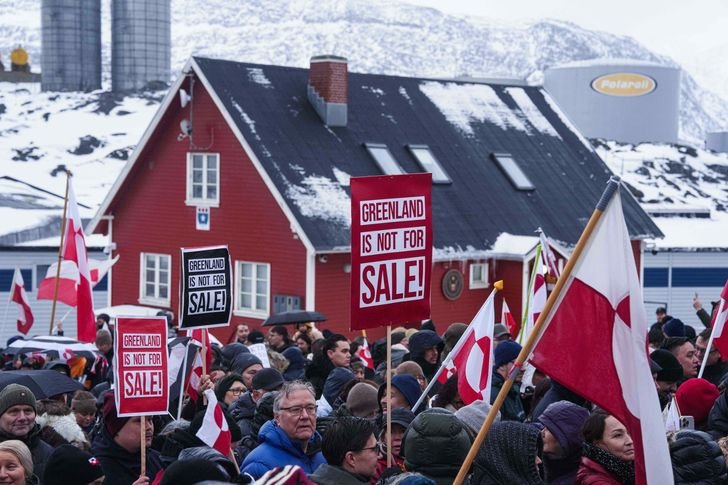
- European Populists are facing a strategic dilemma as national interests clash with ideological ties.
- The AfD and National Rally have denounced Trump’s “Wild West” tactics in the Arctic.
- Tariff threats on eight nations forced a rare consensus among rival political factions.
- The Davos framework deal provides a reprieve, but trust remains shattered across the continent.
Walking through the corridors of the Reichstag this week, the usual hum of German bureaucracy was replaced by a sharp, staccato rhythm of indignation. For years, the leaders of Europe’s populist right have looked toward Mar-a-Lago as a North Star, a template for their own “sovereignty-first” movements.
But as President Donald Trump’s pursuit of Greenland escalated into threats of “Wild West” annexation and punitive tariffs, that ideological bridge didn’t just crack—it buckled under the weight of national interest.
The ground reality here in Europe is a startling role reversal. Mainstream centrists, like German Chancellor Friedrich Merz, are playing the role of the cool-headed diplomats, while Trump’s erstwhile “patriotic” allies—the AfD in Germany, the National Rally in France, and Reform UK—are the ones using the most vitriolic language to describe his tactics.
Sovereignty vs. Solidarity
The friction lies in the very definition of nationalism. While Trump’s “America First” doctrine demands absolute alignment from allies, European populists are discovering that their own “Germany First” or “France First” platforms cannot survive the appearance of being a “vassal state.”
- Diverging Interests: Nationalist parties rely on the optics of strength; supporting a foreign power’s land grab of a neighbor’s territory is a political death sentence in Europe.
- The Tariff Trigger: Trump’s threat of a 10% tariff—rising to 25%—on eight nations including the UK and Germany forced leaders like Nigel Farage into a corner.
- The AfD Break: Alice Weidel, who has spent months cultivating ties with the Trump administration, recently accused him of violating his own promise of non-interference.
- Public Sentiment: With Trump’s approval ratings hovering below 20% in major European markets, local populists cannot afford to be seen as his messengers.
A “Concept” of a Deal
At Davos on Wednesday, the tension appeared to ease when Trump announced a “framework” for a deal with NATO Secretary-General Mark Rutte. The immediate threat of military force has been sidelined in favor of “total access” to minerals and the inclusion of Greenland in the “Golden Dome” missile defense system.
However, the damage to the populist international remains. In Paris, Jordan Bardella of the National Rally didn’t mince words, calling the pressure “commercial blackmail.” The sentiment on the ground is that the “America First” philosophy has finally collided with the “Sovereignty First” reality of Europe.
” sovereignty is not a commodity,” Danish Prime Minister Mette Frederiksen noted on Thursday, a sentiment now echoed by the very far-right parties that once cheered for a borderless populist revolution. They have learned that in Trump’s world, you are either a partner in the purchase or a target for the tariff.
The Greenland crisis serves as a permanent pivot point for global geopolitics. Looking ahead to the remainder of 2026, the “Populist International”—the once-vaunted alliance between MAGA and European hard-right parties—appears to be a failed experiment. The core contradiction has been exposed: Nationalism is, by definition, not internationalist.
Moving forward, expect European populist parties to pivot toward a “Fortress Europe” model that maintains distance from Washington. As the U.S. leans into aggressive territorial and trade mercantilism, leaders like Meloni and Bardella will likely prioritize European strategic autonomy to protect their own domestic economies. The era of blind ideological kinship is over; in its place is a cold, transactional realism where “America First” and “Europe First” are increasingly destined to collide rather than coexist.