



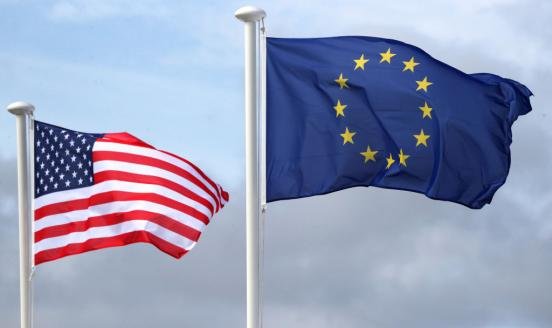
- The EU is transitioning from a policy of openness to a doctrine of strategic resilience.
- European Sovereignty is being redefined through new “Made in Europe” requirements and investment controls.
- Collective pushback against the Greenland proposal signaled a new era of diplomatic firmness.
- Diversifying trade with India and Mercosur reduces the risk of external political leverage.
Europe is not breaking with the United States. But it is, unmistakably, preparing for a future in which the old assumptions about American reliability no longer hold. What began with trade disputes has now matured into something deeper: a strategic recalibration driven by the realization that Donald Trump’s second-term America is not a temporary disruption but a structural challenge to Europe’s political, economic, and security order.
The first rupture came with tariffs. Trump’s renewed protectionist push rattled European capitals, reviving memories of his first term when trade became a blunt geopolitical weapon. Even when deals were struck, they felt transactional and contingent on Trump’s mood rather than institutional trust. Europe absorbed the shock, hoping accommodation would buy stability. It did not.
The Greenland episode changed the tone entirely. When Trump floated the idea of asserting U.S. control over Greenland—an autonomous Danish territory—European leaders interpreted it not as rhetoric, but as a test of sovereignty. This time, unlike in earlier tariff disputes, Europe pushed back collectively. The message was clear: economic pressure might be negotiated, but territorial integrity was a red line.
Trump’s subsequent retreat in Davos—ruling out force and shelving new tariffs on eight European states—was seen in Europe as proof that firmness works. Yet few in Brussels or Berlin believe the episode is over. If anything, it confirmed a more unsettling truth: Europe will be tested again, and often, by a United States increasingly willing to coerce allies.
That realization is driving what EU officials now call “de-risking” from Washington. This is not decoupling, nor a rupture of the $2 trillion transatlantic trading relationship. NATO, Ukraine, and Europe’s own security still depend heavily on U.S. power. But dependence is precisely the problem Europe is now trying to address.
The Greenland row has accelerated discussions about flexibility—moving away from unanimity toward coalitions of the willing. The Ukraine model, where security guarantees are voluntary and veto-proof, is increasingly viewed as a template for future European action. Smaller groupings such as the E3—France, Germany, and Britain—are gaining renewed relevance, while EU law itself is being creatively used to bypass internal blockers, as seen in the immobilization of Russian assets despite Hungarian resistance.
Economically, Europe is hardening its stance. New legislation will introduce “Made in Europe” requirements in strategic sectors and tighter conditions on foreign investment. Officially aimed at reducing dependence on China, these measures quietly reflect a broader ambition: ensuring Europe is not vulnerable to political leverage from any external power, including the United States. This marks a significant shift in European doctrine—from openness as default to resilience as priority.
Trade diversification is another pillar. The EU-Mercosur pact and talks with India underscore Europe’s search for alternatives. Notably, there is little appetite for pivoting toward China. Instead, Europe is betting on a wider network of partnerships. The early signs are telling: German investment in the U.S. nearly halved last year, even as trade volumes remained high.
Still, Europe’s limits are evident. Military autonomy remains aspirational. Despite increased defense spending, analysts agree it will take years before Europe can independently secure its eastern flank or project power in the Arctic—an area now firmly on Washington’s radar.
What has changed is Europe’s mindset. The past weeks have served as a catalyst, stripping away lingering illusions. The transatlantic partnership may endure, but it will no longer be taken on trust. Europe is learning to push back, hedge its bets, and prepare for a world where its closest ally is also its most unpredictable one.