



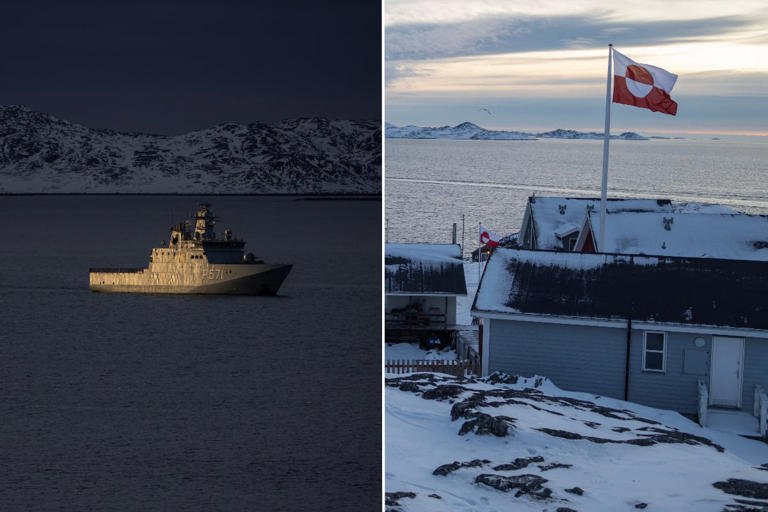
- Europe’s Greenland Gambit: Analyzing how the U.S. reframed the Arctic from a climate responsibility to a strategic frontier.
- Greenland serves as a focal point for American leverage involving rare-earth minerals and military positioning.
- How European fragmentation prevented a unified response to Washington’s diplomatic outreach in Nuuk.
- The geopolitical shift from European stewardship to American primacy in the northern latitudes.
When President Donald Trump steps onto the snow-packed stage of Davos, the choreography of global power shifts in ways Europe still struggles to anticipate. For years, European leaders have treated the Arctic as a distant strategic theater—important, yes, but not urgent. Trump, by contrast, has treated it as a chessboard. And Greenland, improbably, has become the queen he keeps placing in the center of the board.
The idea of the United States purchasing Greenland was once dismissed by European commentators as a diplomatic oddity—an eccentric flourish from a president known for breaking convention. But the laughter that echoed across European capitals in 2019 has long since faded. What replaced it is something closer to unease: a recognition that Trump’s Greenland overture was not a joke, but a signal. A signal that the United States was willing to challenge Europe’s assumptions about its own territorial and strategic periphery.
In the years since, Europe has found itself reacting rather than leading, conceding ground not through formal agreements but through a gradual acceptance of American primacy in the Arctic conversation.
A Shift Europe Didn’t See Coming
European leaders have often spoken about the Arctic in the language of stewardship—climate, research, indigenous rights. Trump reframed it in the language of power—resources, military positioning, and long-term strategic advantage.
A senior Scandinavian official, speaking in 2020, summarized the tension bluntly: “The United States sees the Arctic as a frontier. Europe sees it as a responsibility. Those two visions do not align.”
Trump Warns There’s ‘No Going Back’ on Greenland and Accuses U.K. of ‘Act of Great Stupidity’
That misalignment has only widened. As Trump returns to Davos, the contrast between Europe’s caution and America’s assertiveness is impossible to ignore.
Greenland as Leverage, Not Land
Trump’s interest in Greenland was never solely about acquisition. It was about leverage—economic, military, and symbolic. Greenland sits atop rare-earth minerals, strategic air routes, and the increasingly navigable Arctic passages that will define 21st-century trade. The U.S. already maintains a major military presence at Thule Air Base, but Trump’s approach signaled something more: a willingness to challenge Denmark’s assumptions about uncontested sovereignty.
Arctic Expansionist Policy: How the Pursuit of Greenland is Fracturing NATO and Abandoning Ukraine
European leaders initially responded with indignation. Denmark’s Prime Minister Mette Frederiksen famously called the idea of selling Greenland “absurd,” a remark that Trump publicly criticized. But beneath the diplomatic friction, something more consequential occurred: Europe realized it had no unified Arctic strategy capable of countering American ambition.
A German foreign-policy adviser later reflected, “We underestimated how serious Washington was. We assumed the Arctic was a European neighborhood. It is not.”
Davos as the Stage for a Quiet Concession
Davos has always been a place where Europe speaks loudly about global leadership. But this year, as Trump arrives, the tone is different. European leaders are not projecting confidence—they are recalibrating.
The EU’s internal debates over defense spending, energy dependence, and Arctic policy have left it fragmented. Meanwhile, Trump’s administration has continued to expand U.S. influence in Greenland through investment, diplomatic outreach, and security cooperation. Washington has opened a consulate in Nuuk, increased economic aid, and strengthened ties with Greenlandic political leaders—moves that Europe has struggled to match.
A French diplomat recently acknowledged the imbalance: “The United States is acting. Europe is discussing.”
In the world of geopolitics, action is control.
Why Europe Keeps Losing the Initiative
Europe’s challenge is structural. The EU is a coalition of states with divergent Arctic interests. Denmark holds sovereignty over Greenland, but the EU does not. Norway is deeply invested in Arctic policy but is not an EU member. France and Germany speak about the Arctic as a global commons but lack direct territorial stakes.
Trump exploited this fragmentation with characteristic bluntness. By treating Greenland as a strategic asset rather than a symbolic territory, he forced Europe to confront its own lack of coherence.
A senior EU official admitted in a 2021 briefing, “We cannot respond to Washington with a single voice. That is our weakness.”
Trump, who thrives in environments where opponents are divided, has used that weakness to expand American influence without needing formal agreements or territorial transfers.
The Checkmate Europe Didn’t Recognize
Europe has not “lost” Greenland in any legal sense. But geopolitically, the continent has ceded initiative. Trump’s approach—dismissed at first as theatrical—has reshaped the Arctic conversation. Europe now finds itself reacting to U.S. moves, acknowledging U.S. leadership, and quietly accepting that Washington—not Brussels, not Copenhagen—sets the tempo.
In chess, checkmate is not always a dramatic final blow. Sometimes it is the slow realization that every move left leads to a weaker position.
As Trump arrives in Davos, Europe faces that realization. Greenland was never just about land. It was about vision. And in that contest, Trump forced Europe to play defense on a board it once assumed it controlled.
The laughter has stopped. The game continues. And the initiative belongs to Washington.