



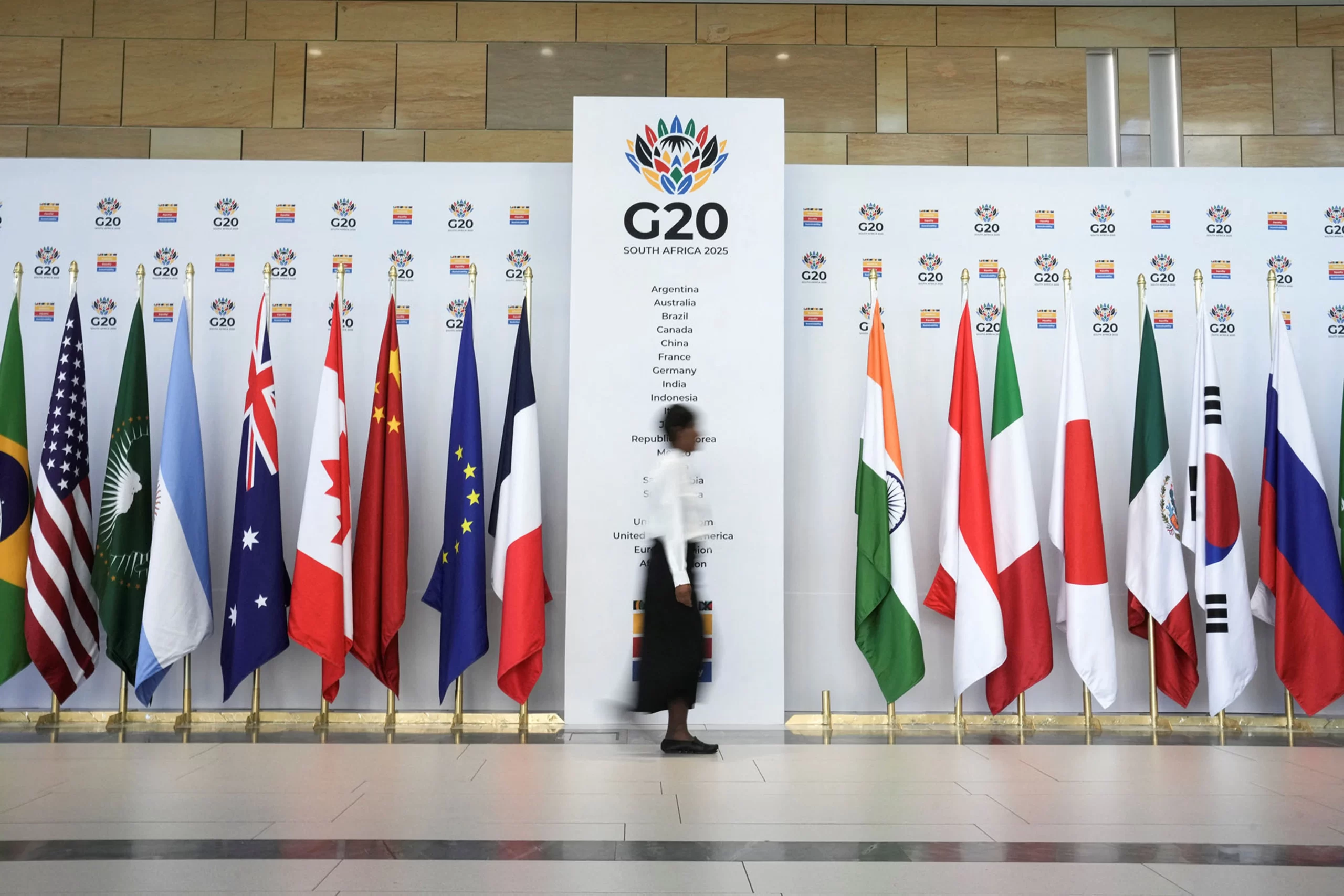
- The U.S. boycott did not prevent G20 envoys from finalizing a draft declaration focused heavily on climate adaptation and development financing.
- South Africa leveraged the moment to highlight Africa’s growing diplomatic weight and push for reforms in global debt architecture.
- Qatar’s participation was praised as strengthening multilateralism and amplifying the Global South’s voice.
- Analysts note the G20’s agenda—not who skipped the meeting—remains the real driver of global policy direction.
JOHANNESBURG—Leaders of the world’s major economies gathered in South Africa on Saturday for a G20 Summit marked not by who attended, but by who chose to stay away. The United States’ decision to boycott the meeting—criticizing the host nation’s political environment and rejecting its climate-focused agenda—initially cast a shadow over President Cyril Ramaphosa’s efforts to showcase South Africa’s diplomatic leadership. Yet as discussions got underway, a more important dynamic emerged: the agenda itself continued to shape global priorities, with or without Washington in the room.
G20 envoys had already agreed on a draft leaders’ declaration ahead of the Johannesburg summit, drawing international attention because it was formulated without U.S. input. Senior White House officials labeled the move “shameful,” but the absence of American consensus did not slow the negotiation process. Several officials familiar with the deliberations confirmed that the document includes references to climate change, an area where the Trump administration remains deeply skeptical of scientific consensus and strongly opposed to global commitments.
This disconnect underscores a broader truth about multilateral diplomacy: the agenda, not the attendance list, ultimately determines the summit’s value. With the United States choosing to sit out, other members moved swiftly to preserve the core issues—climate adaptation, green energy financing, critical minerals governance, and equitable borrowing mechanisms for developing economies.
South Africa placed climate resilience firmly at the top of the agenda. Three of the summit’s four leading discussion points revolve around preparing for climate-induced disasters, financing clean-energy transitions, and ensuring critical mineral development benefits producers rather than external investors. These priorities reflect Africa’s urgent needs and long-standing frustration with global financial architecture that leaves the continent, as UN Secretary-General António Guterres put it, “woefully under-represented.”
The fourth major agenda item—creating a more equitable borrowing system—addresses the crushing debt burden many African countries face. As Ramaphosa and other leaders argued, the current global system reinforces structural inequality, limiting the ability of poor countries to invest in resilience and growth. Guterres echoed this concern, calling on the G20 to triple multilateral development bank lending capacity and reduce borrowing costs.
Despite the political noise surrounding Washington’s boycott, the summit continued to attract influential participation. Qatar’s Amir Sheikh Tamim bin Hamad Al-Thani received strong praise from South Africa’s Minister of Planning, Monitoring and Evaluation, Maropene Lydia Ramokgopa, who said Qatar’s involvement adds “depth and credibility” to global deliberations. She highlighted Doha’s rising profile in international diplomacy, infrastructure development, and conflict mediation—areas that have positioned Qatar as an increasingly significant voice in shaping multilateral outcomes.
Ramokgopa emphasized that the G20, meeting on African soil for the first time, represents a historic opportunity for the Global South to assert its interests in global governance. She noted that high-level engagement between South Africa and Qatar continues to expand across energy, infrastructure, and development sectors, illustrating how non-Western partnerships are reshaping international diplomacy.
Analysts observing the summit argue that the absence of the U.S. president has symbolic implications—especially given Washington will host the G20 in 2026. But in practical terms, the ongoing negotiations demonstrate that the multilateral process remains resilient. Even without a major power at the table, the agenda itself continues to move forward, driven by collective priorities rather than individual political positions.
The White House had objected to any mention of climate change, renewable energy, or adaptation financing in the declaration. Yet, as sources confirmed, these themes remain embedded in the draft. This reflects a broader shift: global consensus on climate action is now too broad to be derailed by a single dissenting participant. The world’s largest economies are increasingly investing in clean energy, with $2 trillion in global clean-energy investments recorded last year, though only a sliver reached Africa. South African officials argue that this summit is an opportunity to correct that imbalance.
As Guterres urged, the G20 must push for peace and economic stability at a time when conflicts—from Ukraine to Sudan—are escalating and global institutions remain paralyzed by geopolitical rivalries. The UN chief’s message reinforced the summit’s central theme: leadership and vision matter more than political theatrics or diplomatic boycotts.
In the end, the U.S. absence may be notable, but it did not derail the G20’s work. The summit moved ahead, the agenda held firm, and global issues—from climate adaptation to equitable finance—remained at the forefront. For the Global South, this was not a summit defined by who didn’t show up, but by the issues that must be addressed, urgently and collectively.