



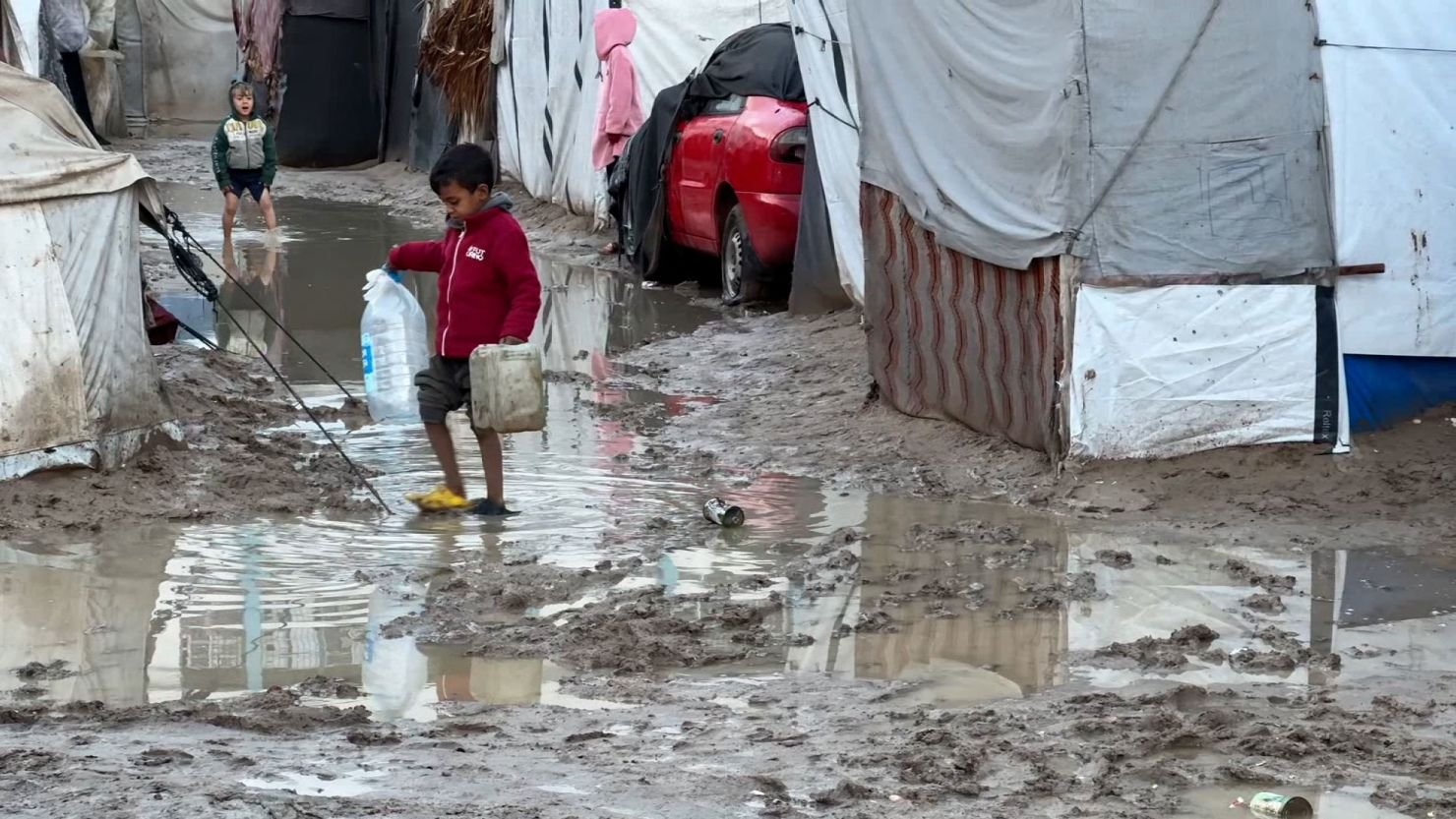
- Gaza humanitarian crisis deepens as winter approaches, leaving millions exposed to cold, hunger, and disease.
- Fourteen-year-old Ahmed Khaled, paralyzed in an airstrike, is one of thousands waiting for urgent surgeries amid Gaza’s collapsing health system.
- Only half of Gaza’s hospitals remain partially functional, crippled by shortages of medicine, fuel, and electricity.
- Doctors forced to make life-and-death decisions, prioritizing who receives surgery while others die waiting.
- Ceasefire aid insufficient: Israel claims 600 aid trucks enter daily, but Gaza authorities say only 150 cross.
- Over 1,700 medical workers killed and hundreds detained, further crippling Gaza’s fragile healthcare system.
As winter edges closer to Gaza, the winds carry not just the chill of the Mediterranean but the deeper, heavier cold of despair. In the shattered hospitals of Khan Younis and Gaza City, thousands of patients wait in silence — not for peace, but for a chance to live long enough to feel it.
Fourteen-year-old Ahmed Khaled, once a bright student who dreamed of becoming a doctor, now lies motionless in a hospital bed. His spine was torn apart in an Israeli airstrike that killed his cousin and left him partially paralyzed. For nearly two months, Ahmed has been waiting for spinal surgery in Gaza’s broken health system — one that has been brought to its knees by blockade, bombardment, and the cruel indifference of the world.
“I’m still young, at the start of my life,” he whispers, his eyes fixed on the ceiling of Nasser Hospital. Around him, patients cry out in pain as overworked nurses rush from one stretcher to another.
Israel’s relentless military campaign — launched after the Hamas attacks of October 2023 — has injured more than 170,000 Palestinians, according to Gaza’s health authorities. But the statistics barely tell the story. The war has reduced entire neighborhoods to rubble, displaced nearly two million people, and left tens of thousands living in flimsy tents that offer no protection from the approaching cold.
Now, as the rains begin to fall, Gazans find themselves sandwiched between winter and the fear of being attacked again.
A Health System on Life Support
Nasser Hospital, the largest in southern Gaza, used to serve 300,000 people. Today, with dozens of medical facilities destroyed, it struggles to serve more than a million. “We are forced to choose who lives and who dies,” says Dr. Mahmoud Saqr, the hospital’s head of surgery. “Even urgent cases are being postponed because we have no capacity left. Some patients die waiting for their turn.”
Doctors perform surgeries by the dim light of emergency generators, with shortages of anesthesia and antibiotics forcing them to improvise. The World Health Organization says that only half of Gaza’s hospitals are partially functional, crippled by a lack of electricity, fuel, and medical supplies.
In northern Gaza, the situation is far worse. At the once-renowned al-Shifa Hospital in Gaza City, Dr. Samir Abu Salem, the director, faces impossible moral choices. “There are 40,000 delayed surgeries,” he says. “Every day we decide whose life to save and whose to postpone. It is the worst test a doctor can face.”
The Human Cost of Delay
For patients like Eyad al-Baqari, a 50-year-old father of five, the delay means living with pain and uncertainty. His leg was shattered when an Israeli missile struck a nearby building. He needs surgery to insert metal pins, but has been waiting for three months. “The doctors say my bones are getting worse,” he says. “But what can I do? My children need food. I walk to collect aid even when it hurts.”
These are not isolated cases — they are the daily reality of a besieged population. The collapse of Gaza’s healthcare system is not a natural disaster; it is the direct consequence of war, blockade, and policy choices that have deprived civilians of their basic human rights.
A Ceasefire Without Relief
While the recent ceasefire has allowed limited humanitarian aid to trickle in — with a few more hospitals reopening and vaccines being distributed — the flow remains far below what is needed. Israel claims it allows 600 trucks of supplies daily, but Gaza’s authorities report that barely 150 cross the borders. Fuel shortages continue to cripple hospital generators, ambulances, and water pumps.
“The health sector remains in a state of total collapse,” says Dr. Abu Salem. “We have lost 1,700 medical workers to airstrikes, and hundreds more are in Israeli detention. We are treating patients with nothing but courage.”
Between Fear and Frost
This winter, Gaza faces a humanitarian crisis of unimaginable scale. Families huddle in tents made of plastic sheets, children cough in the cold night air, and hospitals ration electricity by the hour.
The world cannot look away. Gaza does not need sympathy; it needs sustained humanitarian access, an end to collective punishment, and a chance for its people — especially its children — to heal.
Fourteen-year-old Ahmed still dreams of becoming a doctor one day. But as the nights grow colder, his chances fade with the flickering light above his bed.
In Gaza, the war never truly ends. It just changes form — from fire to frost, from bombs to hunger. And this winter, the people of Gaza are once again left to survive both.