



- Greenland is now being framed by the Trump administration as a core national security interest that is “actually part of North America.”
- The President stunned world leaders at the World Economic Forum by confidently referring to the island as “Our Territory.”
- This bold assertion of sovereignty signals a dramatic shift in the Transatlantic relationship and the established global order.
- While European leaders expressed silent shock, the U.S. delegation urged calm, framing the move as a step toward global prosperity.
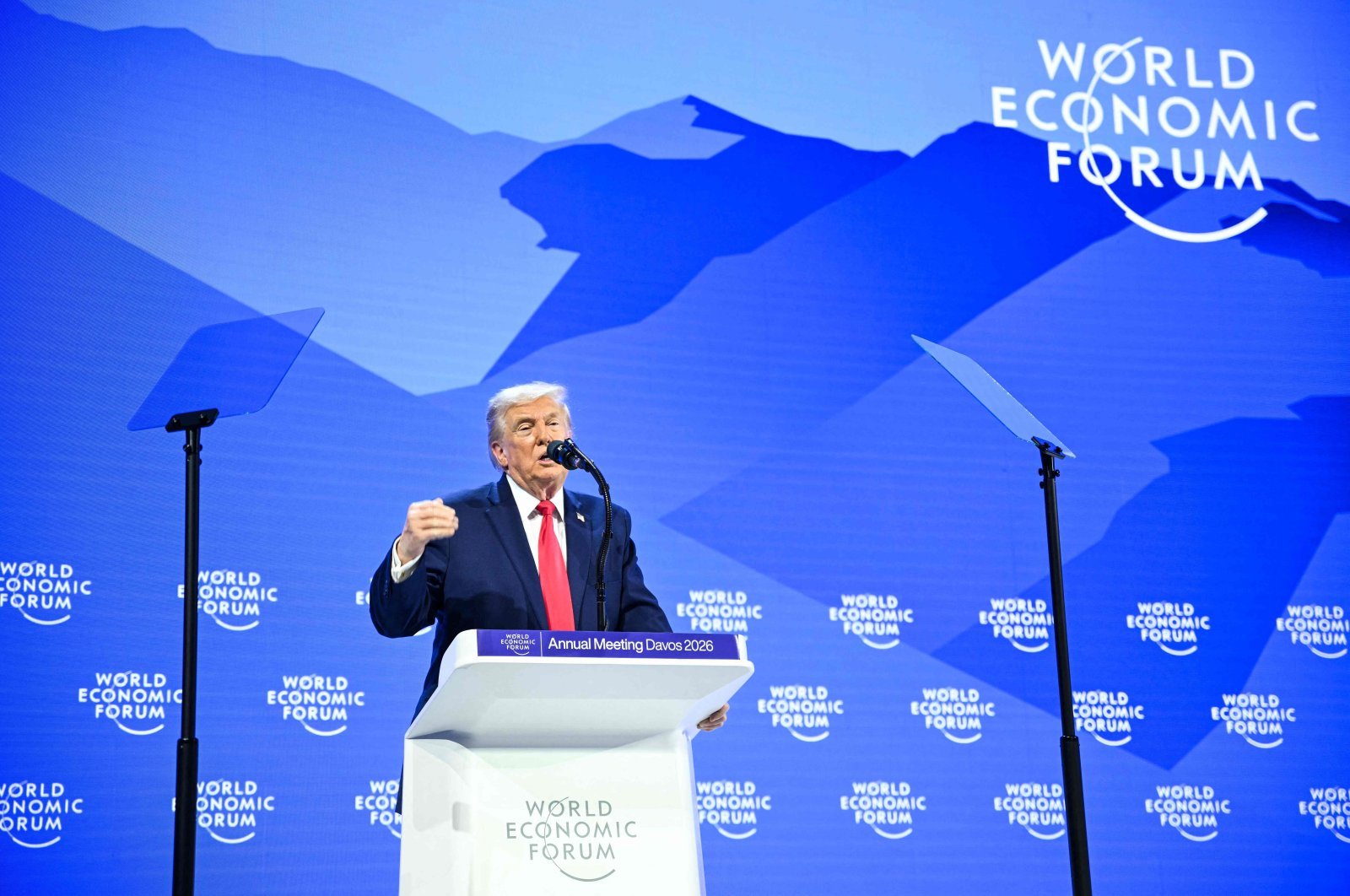
The crisp mountain air of Davos usually plays host to measured diplomatic platitudes, but the 2026 World Economic Forum was shattered by a moment of pure geopolitical theater. Stepping onto the stage looking remarkably fresh, fully prepared, and radiating a level of confidence that bordered on the imperial, President Donald Trump did the unthinkable.
He didn’t just suggest an interest in the world’s largest island; he laid a symbolic claim to it. With world leaders from Europe, Russia, and the U.S. watching in a heavy, stunned silence, Trump referred to Greenland as “Our Territory.”
Davos 2026: A World Divided by Geopolitics and AI Innovation
The President’s demeanor was one of absolute certainty. Unlike the tentative inquiries of his first term, this was a commander-in-chief putting a firm American stamp on the Arctic. He asserted that Greenland is “actually part of North America” and, by extension, a “core national security interest of the United States of America.”
The rhetoric moved beyond real estate and into the realm of manifest destiny. By calling it “Our Territory,” Trump bypassed decades of Danish sovereignty and E.U. diplomatic norms, treating the High North as a natural extension of the American frontier.
Unlocking Humanity: A Revolutionary Campaign Emerges at Davos to Redefine Access to Assistive Technology
As he spoke, the room was a tableau of disbelief. Leaders like Emmanuel Macron and Ursula von der Leyen sat in a state of “silent merely,” as if witnessing a permanent shift in the tectonic plates of international law.
To the gathered elite, this wasn’t just a policy speech; it was a vivid illustration of a “New World Order” where traditional borders are secondary to American strategic needs. Trump’s confidence was bolstered by a visual offensive; he had already circulated an AI-generated image of G7 leaders huddled in the Oval Office, gazing at a map where Greenland, Canada, and Venezuela were colored with the stars and stripes.
Davos live: Trump rules out taking Greenland by force but calls for ‘immediate negotiations’
The “Greenland gambit” overshadowed every other topic at the forum. While Treasury Secretary Scott Bessent attempted to “calm the hysteria” by urging counterparts to take a deep breath and follow Trump’s lead for “global prosperity,” the damage to the status quo was evident. The President’s insistence that “America First” does not mean “America alone” felt like a hollow comfort to European allies who now feel like targets of a “new imperialism.”
The silence in the hall reflected a profound fear. For Denmark and its E.U. partners, the rhetoric was not a “kerfuffle,” but an existential threat to the integrity of the NATO alliance. European Commission President Ursula von der Leyen’s response was a rallying cry for independence, noting that “the world has changed permanently.” The silence of the leaders was the sound of a continent realizing its old protector had become its most unpredictable rival.
Trump’s performance was a masterclass in disruption. By framing the acquisition as a matter of “immediate negotiations” and national security, he signaled that the U.S. no longer views the Arctic through the lens of cooperation, but through the lens of ownership. As he stepped off the stage, the message was clear: in the eyes of the White House, the map of the world is being redrawn, and Greenland has already been claimed. The silence of Davos was not agreement; it was the paralyzed shock of a world order that no longer knows how to respond to a United States that simply takes what it considers “ours.”