



-
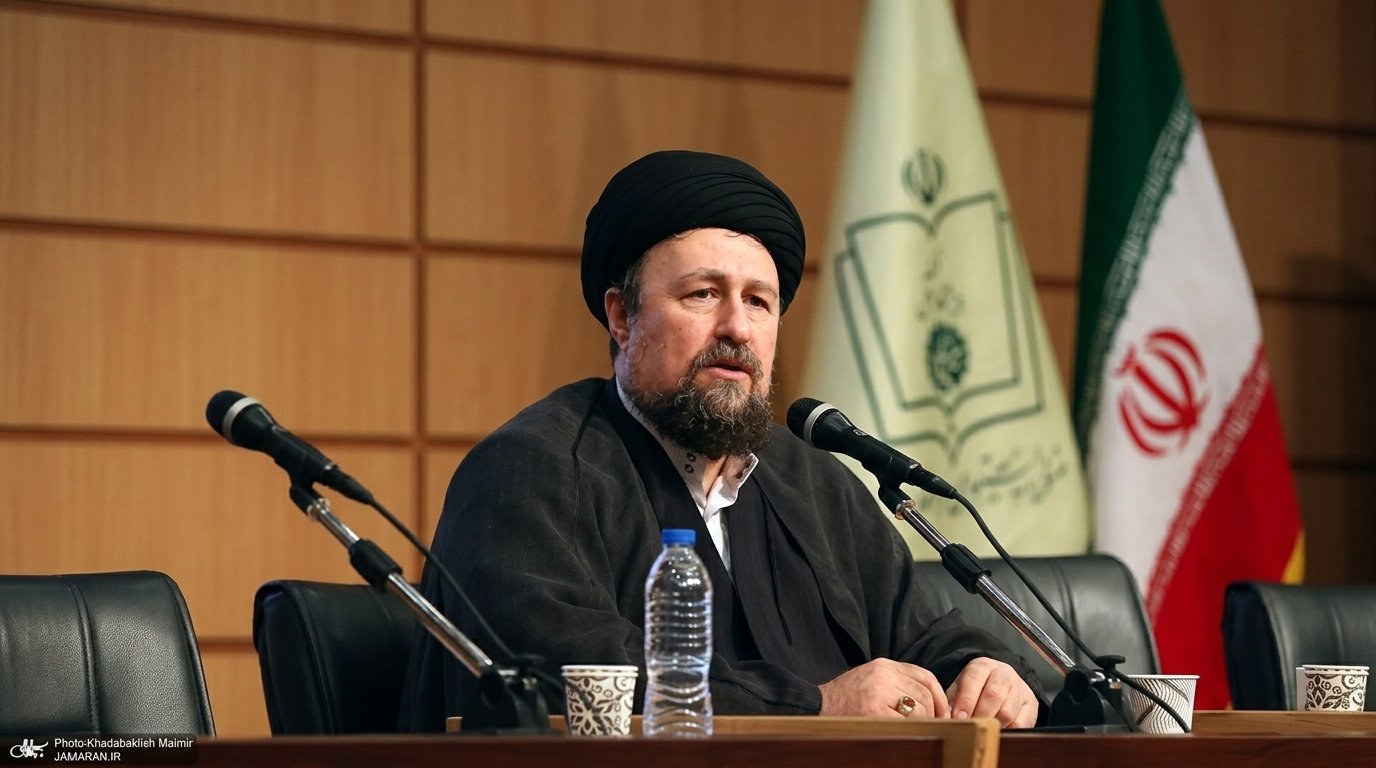
Hassan Khomeini, grandson of Iran’s founding Supreme Leader, publicly urged the IRGC to support a potential deal with the United States, citing the Treaty of Hudaybiyyah as a model of strategic compromise.
-
Iran’s economy is under severe strain from US sanctions: the rial hit a record low of 2.02 million per dollar, petrol shortages are widespread, inflation exceeds 88%, food prices have soared, and unemployment has climbed to multi-year highs.
-
Pakistan continues to play a key mediation role, encouraging Iranian leaders to finalize an agreement while the speech draws attention among pragmatic voices inside Iran and international observers.
Seyyed Hassan Khomeini, grandson of the founder of the Islamic Republic, Ayatollah Ruhollah Khomeini, has made an unusually direct appeal for the Islamic Revolutionary Guard Corps to support a potential agreement with the United States, placing one of Iran’s most influential establishment families at the centre of an increasingly consequential internal debate over diplomacy.
In a recent address delivered before senior officials, including figures linked to President Masoud Pezeshkian’s administration, Khomeini argued that compromise should not automatically be interpreted as surrender. Instead, he presented a negotiated settlement as a potential instrument of strategic patience at a moment when Iran faces mounting economic and geopolitical pressure.
A widely circulated video of Khomeini’s speech has drawn significant attention inside Iran and among observers of the country’s political establishment.
Khomeini invoked one of the most consequential episodes in Islamic history: the Treaty of Hudaybiyyah, the 628 agreement between the Prophet Muhammad and the Quraysh of Mecca. His historical reference was intended to demonstrate that temporary compromise can sometimes produce greater strategic gains than continued confrontation.
READ NEXT: Pakistan’s High-Stakes Gambit: Can Asim Munir Make a U.S.-Iran Deal Possible?
“The clear victory is not connected to the battles of Uhud, Badr, Khandaq, or Tabuk; it is connected to the Treaty of Hudaybiyyah,” he said. “Sometimes a correct compromise bears more fruit than hundreds of wars.”
The significance of the remarks lies not simply in their religious reference, but in the political audience to which they were directed. By invoking Hudaybiyyah before senior establishment figures, Khomeini was effectively arguing that accepting a difficult agreement does not necessarily amount to abandoning revolutionary principles.
That argument could become increasingly important as Tehran weighs whether continued confrontation with Washington remains economically sustainable.
Economic strain reaches a breaking point
Khomeini’s intervention comes as Iran confronts one of the most severe economic crises in decades.
The Iranian rial has suffered a dramatic collapse on the informal market. On August 24, the currency fell to approximately 2.02 million rials per U.S. dollar, compared with roughly 1.53 million earlier in the year.
For ordinary Iranians, the parallel-market exchange rate is often more relevant than the official central-bank rate because it reflects the actual cost of imported goods, foreign currency and many essential commodities.
READ MORE: Iran’s new leader has never been tested. He now faces an existential battle
The rapid deterioration of the rial has therefore become more than a financial statistic.
It has become a measure of public purchasing power.
The currency’s collapse is occurring alongside severe restrictions on Iran’s ability to generate and repatriate oil revenues. With sanctions limiting access to international financial markets and complicating energy exports, Tehran’s traditional source of foreign exchange has become increasingly unreliable.
The Wall Street Journal has closely followed the deterioration of Iran’s currency and the wider economic consequences of the sanctions regime.
The pressure is also visible at petrol stations.
Fuel shortages have reportedly become increasingly common in Tehran and other Iranian cities, with long queues forming as motorists attempt to secure supplies before shortages deepen or prices rise. Estimates of the daily petrol deficit have reached approximately 14–15 million litres.
For a country that possesses some of the world’s largest oil and gas reserves, such shortages carry an additional political significance.
They suggest that the problem is no longer simply a lack of natural resources.
It is increasingly a problem of sanctions, infrastructure, logistics, foreign exchange and state capacity.
Inflation is turning the economic crisis into a social crisis
The broader economic indicators are equally severe.
The International Monetary Fund has projected a 5.4 percent contraction in Iran’s GDP for 2026, while inflation has remained extraordinarily high. Food inflation has reached levels that are particularly damaging to households already facing declining incomes and a collapsing currency.
Prices of meat, poultry, cooking oil and vegetables have surged, with some categories recording increases approaching or exceeding triple digits in year-on-year measurements.
For Iranian families, the economic crisis is therefore no longer confined to currency traders or businesses involved in international commerce.
It is being experienced at supermarkets, petrol stations and household dining tables.
The Washington Post and The Guardian have documented the pressure that inflation and economic disruption are placing on ordinary Iranian households.
The combination of falling purchasing power and rising food prices creates a political problem for the Iranian establishment that cannot easily be solved through ideological messaging.
Governments can ask citizens to tolerate hardship for national security.
They have considerably less room when citizens cannot reliably afford basic necessities.
Employment adds another layer of pressure
The labour market has also deteriorated.
Official unemployment figures that had previously remained around 7.5 percent have moved toward approximately 9.1 percent, while youth unemployment has remained considerably higher, approaching 15 percent in some estimates.
The distinction between unemployment and underemployment is also important.
Many Iranians may technically have employment while working fewer hours, earning less or operating in informal sectors where income is highly vulnerable to inflation.
This creates a particularly difficult environment for younger Iranians.
A generation already exposed to economic restrictions, limited international opportunities and political uncertainty is confronting a future in which the value of its earnings can deteriorate rapidly.
That reality strengthens the argument of those inside the establishment who believe that some form of economic accommodation with Washington may be necessary.
Why Hassan Khomeini’s intervention matters
Khomeini’s political significance comes from his family name.
He is the grandson of Ayatollah Ruhollah Khomeini, the revolutionary leader whose political and religious legacy remains deeply embedded in the architecture of the Islamic Republic.
His intervention therefore carries symbolic weight that would not necessarily accompany a conventional reformist statement.
At the same time, Hassan Khomeini has long occupied a complicated position within Iran’s political establishment. He is connected to the revolutionary tradition but has also been associated with criticism of excessive political intervention by military institutions.
His appeal to the IRGC is consequently significant.
Rather than presenting diplomacy simply as a government initiative, he is asking one of the most powerful institutions in Iran to view compromise through the lens of regime survival and strategic interest.
The argument is straightforward.
If confrontation produces economic isolation, currency collapse and social pressure, then a carefully negotiated agreement may strengthen rather than weaken the Islamic Republic.
That is the political logic behind the Hudaybiyyah analogy.
Hassan Khomeini And IRGC
Whether the argument changes policy is another matter.
The IRGC is not simply a military institution. It has extensive political, economic and strategic interests and plays a central role in Iran’s national-security decision-making.
For hard-line elements, concessions to Washington carry risks that go beyond economics.
They fear that an agreement could weaken Iran’s regional influence, restrict its strategic capabilities or create political space for further American pressure.
Khomeini’s argument therefore confronts a fundamental disagreement over what constitutes national security.
Pragmatists increasingly view economic stabilisation as essential to national survival.
Hard-liners may view strategic concessions as a greater long-term threat than economic isolation.
That tension is likely to define the next stage of Iran’s internal debate.
Pakistan’s mediation enters the picture
This is where Pakistan’s diplomatic role becomes increasingly relevant.
Islamabad has maintained channels with both Tehran and Washington and has repeatedly positioned itself as a potential bridge between the two sides.
Pakistan’s earlier mediation efforts helped create the framework for the June 2026 Memorandum of Understanding that opened a path toward de-escalation and further negotiations, including arrangements connected to the Strait of Hormuz.
Prime Minister Shehbaz Sharif and senior Pakistani military leadership have continued to encourage Tehran and Washington to return to a comprehensive negotiating process.
The Islamabad Telegraph’s analysis of Pakistan’s mediation role examines how Islamabad has attempted to maintain communication with both sides.
BBC reporting has also followed the wider diplomatic efforts surrounding Iran and the United States. BBC’s Iran coverage provides additional context on the continuing regional negotiations.
Pakistan’s advantage is that it has relationships with Washington while maintaining geographic, political and security links with Iran.
That does not guarantee success.
But it gives Islamabad an unusual diplomatic position at a moment when direct communication between Tehran and Washington remains extremely difficult.
A changing debate inside Iran
Khomeini’s speech has attracted attention among pragmatic and reform-oriented voices who see it as an acknowledgement of Iran’s current limitations.
Its importance lies partly in the fact that the argument is not being framed as capitulation.
Instead, it is being presented as strategic calculation.
The Treaty of Hudaybiyyah provides the historical foundation for that argument: an agreement that initially appeared difficult or disadvantageous could ultimately create conditions for a much larger political and strategic gain.
For Iranian pragmatists, the analogy offers a way to support negotiations without openly embracing the language of surrender.
That distinction could prove politically important.
Iran’s leadership must ultimately balance three competing priorities: preserving the Islamic Republic’s strategic identity, preventing further economic deterioration and avoiding an agreement that could be interpreted domestically as capitulation to Washington.
Khomeini’s intervention attempts to reconcile those objectives.
The economic argument is becoming harder to ignore
Whether the IRGC accepts that logic remains uncertain.
But the economic evidence is becoming increasingly difficult for Tehran to ignore.
A collapsing currency reduces purchasing power.
Fuel shortages undermine confidence.
Food inflation creates immediate household distress.
Unemployment threatens younger generations.
Sanctions restrict investment and international trade.
Oil restrictions undermine the principal source of foreign exchange.
Together, these pressures create a political equation in which continued confrontation carries its own strategic costs.
That does not mean Iran will automatically accept Washington’s demands.
Nor does it mean that the IRGC is preparing to abandon its core strategic positions.
It means that the internal cost-benefit calculation is changing.
The central question for Tehran is increasingly no longer whether an agreement with Washington would involve concessions.
It is whether refusing an agreement could eventually cost Iran more.
The next phase may depend on political timing
That is why Hassan Khomeini’s intervention deserves attention.
He has not simply called for peace.
He has attempted to redefine compromise as a revolutionary strategy.
By invoking Hudaybiyyah, he has offered Iran’s establishment a historical framework through which a difficult agreement can be portrayed as tactical patience rather than ideological retreat.
Pakistan’s mediation provides a parallel diplomatic mechanism outside the immediate U.S.-Iran confrontation.
The economic crisis provides the pressure.
The IRGC provides the institutional obstacle.
Washington provides the negotiating counterpart.
And the Iranian public ultimately bears much of the cost of continued deadlock.
Whether these forces converge toward a new agreement remains uncertain.
But Khomeini’s intervention indicates that the debate inside Iran is moving beyond the simple question of whether to negotiate.
The more consequential question is now whether strategic compromise could preserve the Islamic Republic more effectively than prolonged confrontation.
For an Iranian establishment facing currency collapse, fuel shortages, inflation, unemployment and international isolation, that may become the most important political question of all.