


- Houthis Inflicted Red Sea energy crisis is deepening as Houthi attacks threaten Saudi oil exports and the strategic Bab el-Mandeb.
- Iran and its allies now have leverage over two critical energy chokepoints, Bab el-Mandeb and the Strait of Hormuz.
- The crisis cannot be solved through airstrikes alone; protecting shipping while pursuing a broader regional diplomatic settlement is essential.
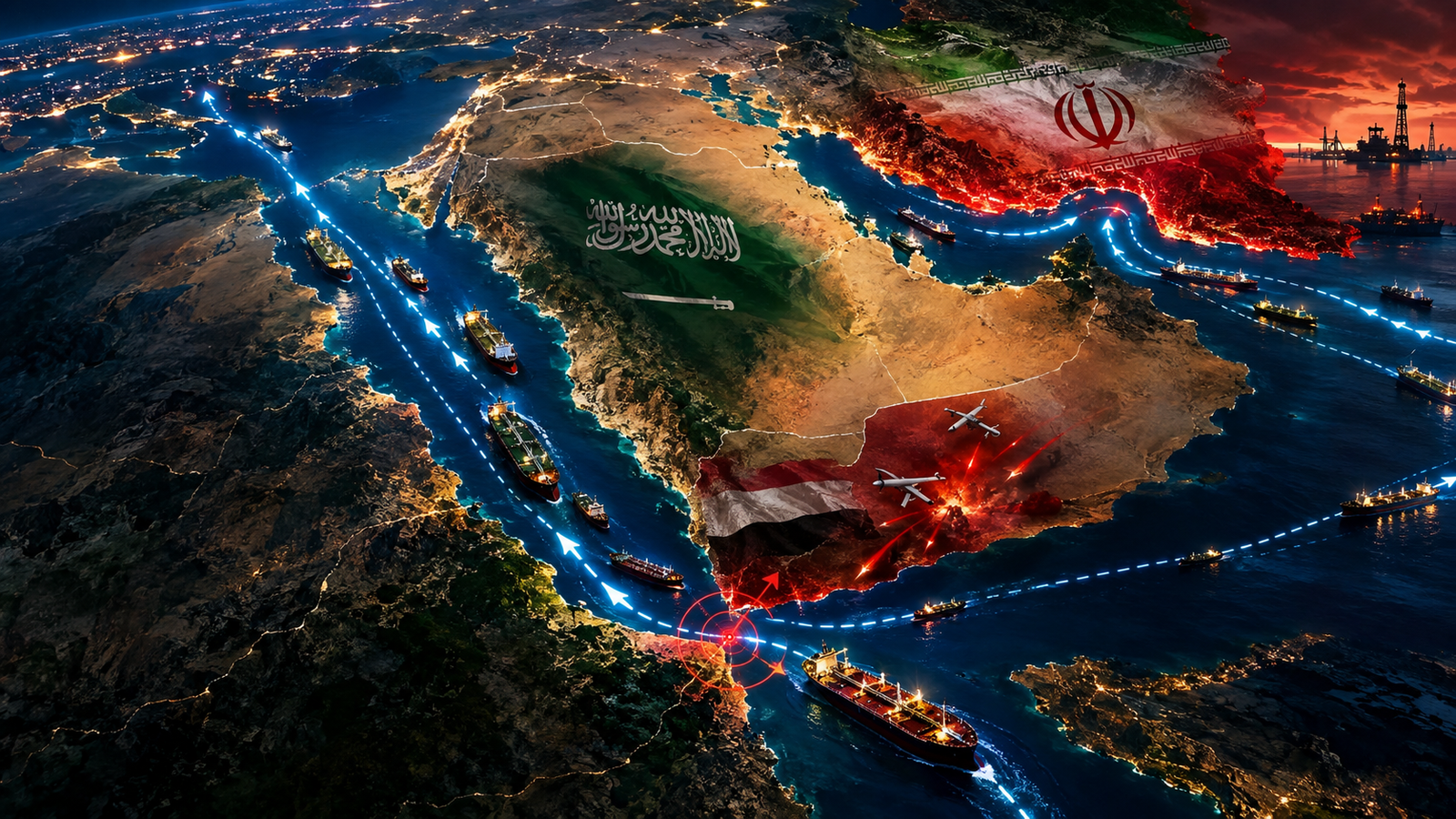
The Red Sea is no longer a secondary theater of the Iran war. It has become the second half of a strategic vise. At one end stands the Strait of Hormuz, through which about 20 million barrels of oil and petroleum products moved daily in 2025, roughly a quarter of global seaborne oil trade. At the other is Bab el-Mandeb, the gateway between the Indian Ocean and the Suez Canal. When both routes are threatened, the issue is global commerce.
Iran does not need to physically close either waterway to create this effect. The ability of Tehran and its partners to make shipping owners fear attack is enough. The Houthis’ advance along Yemen’s Red Sea coast has brought them closer to Bab el-Mandeb and strengthened their ability to threaten Saudi shipping and energy infrastructure. Reuters reported that the Houthis have captured important coastal territory and islands, while Saudi Arabia has responded with airstrikes. The G7 has now called on Iran to stop arming and supporting the group.
This creates a strategic dilemma. Saudi Arabia has an alternative route for some oil through its East-West pipeline to Yanbu, allowing crude to reach the Red Sea without crossing Hormuz. But that route has itself come under attack. Reuters reported that a September 13 drone strike damaged pumping stations and halted crude shipments through Yanbu, forcing Riyadh to redirect more exports through Gulf terminals.
READ NEXT: The U.S. Strikes on Yemen’s Houthis: A New Flashpoint in the Middle East?
Saudi shipments through Hormuz subsequently rose sharply. That is the paradox of the current crisis: pressure on Bab el-Mandeb can push Saudi oil back toward the very chokepoint that Iran is already threatening.
The Houthi-Saudi conflict, however, is not fundamentally about oil. It is rooted in Yemen’s civil war and the struggle over political power. The Houthis seized Sanaa in 2014 and fought the Saudi-led intervention that began in 2015. Riyadh saw a hostile armed movement, backed by Iran, establishing itself on its southern border. The Houthis, meanwhile, portray Saudi Arabia as the principal external power that intervened to prevent their consolidation of power.
READ MORE: Why Houthi offensive in Yemen has implications for Mideast and global trade
The objectives have expanded. The Houthis want military and political leverage, recognition as a decisive Yemeni actor, and control or influence over territory and strategic maritime routes. Their confrontation with Saudi Arabia fits into their wider alignment with Iran. Tehran gains a low-cost instrument capable of imposing costs on Saudi Arabia, threatening international shipping and increasing pressure on Washington without deploying a conventional naval force.
That is why the Red Sea matters to countries beyond the Gulf. Europe is exposed through the Suez Canal, while Asian economies are heavily dependent on Gulf oil. The IEA says about 80% of oil transiting Hormuz is destined for Asia, with China, India and Japan among the major recipients. European refiners are vulnerable when Saudi Arabia cannot maintain normal Red Sea deliveries; Reuters reported that some European refiners have been told October Saudi crude cargoes would be halted following the pipeline attack.
The crisis threatens fragile economies first. Lebanon, Syria and Yemen have limited financial and logistical capacity to absorb higher fuel and shipping costs. Egypt is exposed because the Suez Canal depends on safe Red Sea navigation, while higher energy prices add pressure. Turkey and Jordan can diversify suppliers and routes more effectively but remain vulnerable to prolonged price inflation. Iraq produces substantial crude but still faces domestic electricity and fuel constraints. Even wealthy Gulf states cannot fully insulate themselves from a prolonged global supply shock.
The way out cannot be another cycle of airstrikes alone. Military escorts, intelligence support, air defenses and protection of commercial shipping can reduce immediate risks, but they do not remove the political engine of the conflict. A durable route requires protected navigation, humanitarian access, a revived Yemeni political process, security for Saudi territory, and a Gulf-Iran channel that gives Tehran incentives to restrain the Houthis.
The central lesson is stark. Hormuz and Bab el-Mandeb are not separate crises. They are increasingly connected pressure points in one regional confrontation. If diplomacy fails, the world could face not simply higher oil prices, but a restructuring of shipping, insurance, refining and energy security. The Red Sea is no longer merely a route to Europe. It has become a test of whether regional wars can be prevented from becoming a global economic crisis.