



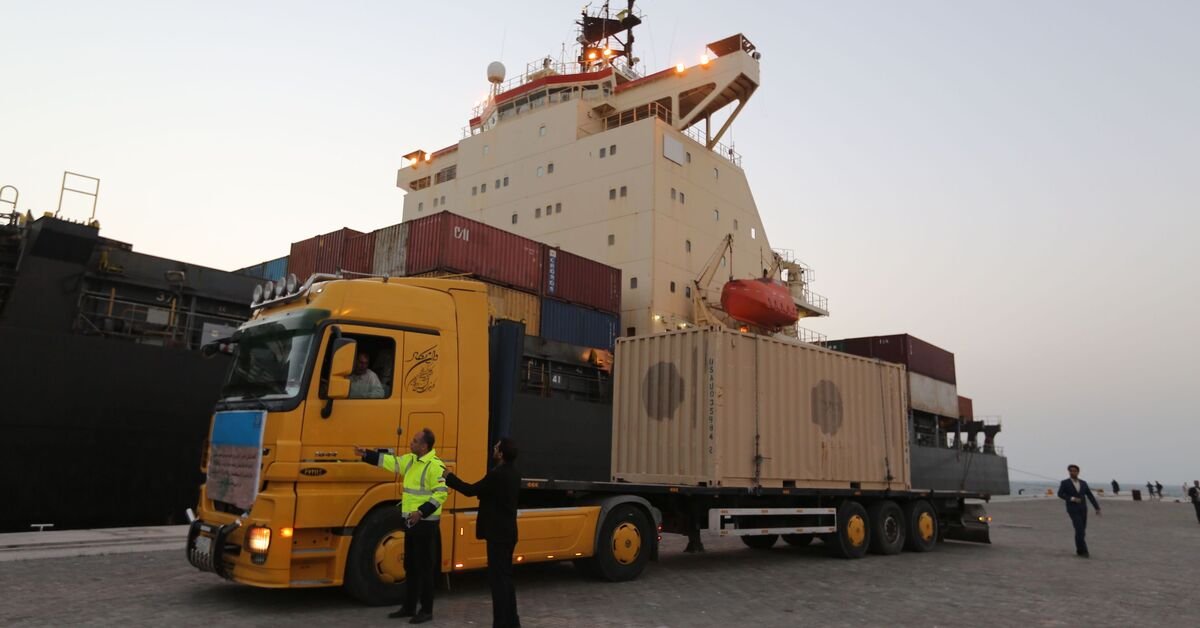
In a stunning capitulation to American economic coercion, India has completed a humiliating withdrawal from Iran’s Chabahar port project, transferring $120 million to Tehran to liquidate all financial obligations and effectively surrendering a decade-long strategic investment that promised to reshape South Asian connectivity. The retreat marks one of the most significant foreign policy reversals in recent Indian history and exposes the fragile foundations of New Delhi’s vaunted “multi-alignment” doctrine.
The Final Exit: Burning Bridges Under Duress
According to The Economic Times, India has transferred approximately $120 million to Iran, representing full settlement of its developmental commitments for Chabahar port—a critical infrastructure gateway to landlocked Afghanistan and Central Asia. A senior government source confirmed India now holds “no liability” in the project, with Iran free to independently utilize the funds.
The state-owned India Ports Global Ltd (IPGL), which had operational responsibility for the project, executed what insiders describe as a “scorched earth” exit strategy. Government-appointed directors resigned en masse, the company’s website was abruptly taken down, and all operational presence was systematically dismantled—calculated moves designed to “insulate everybody associated with the port from potential sanctions,” according to government sources.
One official’s blunt assessment captured the strategic defeat: “India has no choice but to exit the Chabahar port.”
Trump’s 25% Tariff Threat: The Ultimatum That Changed Everything
The catalyst for India’s surrender came on January 12, 2026, when U.S. President Donald Trump issued a stark warning: any nation conducting business with Iran would face punitive 25% tariffs on all exports to the United States. For India, already navigating existing trade tensions with Washington, the mathematics proved devastating.
Indian officials conducted what they describe as a “stark cost-benefit analysis” revealing an existential trade dilemma. Combined with pre-existing tariffs, Trump’s Iran-related penalties could have elevated total duties on Indian exports to the United States to a catastrophic 75%—a level that would cripple India’s export-dependent economy.
The asymmetry was brutal: India’s bilateral trade with Iran totals merely $1.68 billion annually, while the U.S. market represents India’s largest export destination. Iranian trade accounts for a minuscule 0.15% of India’s overall commerce—positioning the Chabahar project as strategically significant but economically expendable when confronted with American ultimatums.
“The value of protecting Chabahar paled in comparison to the risk of losing access to the U.S. market,” one government official acknowledged privately.
Strategic Calculations: Why India Sacrificed Regional Ambitions
The Chabahar port represented far more than infrastructure—it embodied India’s strategic vision for bypassing Pakistani territory to access Afghanistan and Central Asian markets, reducing dependence on rival China’s Belt and Road corridors, and establishing an Indian Ocean presence counterbalancing Beijing’s expanding influence.
India and Iran signed the Chabahar development contract in 2024, granting New Delhi 10-year operational access after years of negotiations. The project promised to transform regional connectivity, offering Indian businesses direct routes to resource-rich Central Asian republics while providing Afghanistan an alternative to Pakistan-dominated supply chains.
However, geopolitical realities intervened. The U.S. had already reimposed sanctions on Chabahar effective September 29, 2025, severely constraining the port’s functionality. India’s subsequent fund transfer and operational wind-down were tactical maneuvers to secure a temporary six-month sanctions exemption from the U.S. Office of Foreign Assets Control (OFAC), attempting to avoid secondary sanctions that could devastate Indian financial institutions and corporations.
Additional factors diminished Chabahar’s appeal. The Taliban’s consolidation of power in Afghanistan significantly reduced the port’s utility as a gateway, with the new Kabul regime maintaining closer ties to Pakistan and China than to India. Simultaneously, Iran’s internal upheaval—including the recent protests and brutal government crackdown—created uncertainty about the country’s stability and ability to maintain critical infrastructure.
The Multi-Alignment Illusion Shattered
India’s withdrawal brutally exposes the limitations of its celebrated “multi-alignment” foreign policy—the doctrine that New Delhi could simultaneously maintain productive relationships with competing global powers including the United States, Russia, China, and Iran without choosing sides.
When confronted with a binary ultimatum from Washington, India’s choice proved unambiguous: capitulate to American demands, regardless of damage to partnerships elsewhere or erosion of India’s reputation as an independent, reliable strategic actor.
Analysts warn this precedent-setting retreat damages India’s credibility. “When push comes to shove, India will always prioritize Washington over its stated strategic partnerships,” observed Dr. Rajesh Kumar, a foreign policy expert at the Observer Research Foundation. “This sends a clear signal to other nations about the limits of Indian commitments under U.S. pressure.”
China’s Strategic Windfall
India’s forced withdrawal creates an immediate vacuum in Chabahar’s development—one that China appears perfectly positioned to fill. With significantly deeper financial resources, greater tolerance for U.S. sanctions (already extensively sanctioned itself), and existing infrastructure investments throughout Iran and Pakistan, Beijing can seamlessly expand its Indian Ocean footprint exactly where India retreats.
This outcome represents a double strategic defeat for New Delhi: abandoning a project designed specifically to counter Chinese influence, while simultaneously handing Beijing an opportunity to further consolidate its regional dominance through Iran.
Economic Collateral Damage
While overall India-Iran trade remains modest, specific sectors face immediate disruption. India’s basmati rice exports—for which Iran represents the largest single market—encounter payment delays and shipment uncertainties. Agricultural exporters, many operating on thin margins, face financial stress as banking channels close and transaction mechanisms collapse.
A Painful Lesson in Power Asymmetry
Indian government sources insist the Chabahar withdrawal represents not capricious policy reversal but forced pragmatism. The episode illuminates an uncomfortable truth about contemporary geopolitics: when middle powers like India face direct confrontation between relationships with economic superpowers and strategically valuable but economically secondary partners, economic survival trumps strategic ambition.
India secured short-term economic relief by protecting access to American markets. The price? Abandonment of long-term regional connectivity vision, diminished strategic credibility, and public acknowledgment that New Delhi’s vaunted strategic autonomy remains subordinate to Washington’s economic leverage.
In an increasingly polarized international order where great powers demand exclusive loyalty rather than balanced partnerships, India’s Chabahar retreat may preview difficult choices ahead—each one forcing New Delhi to sacrifice pieces of its strategic independence on the altar of economic necessity.