



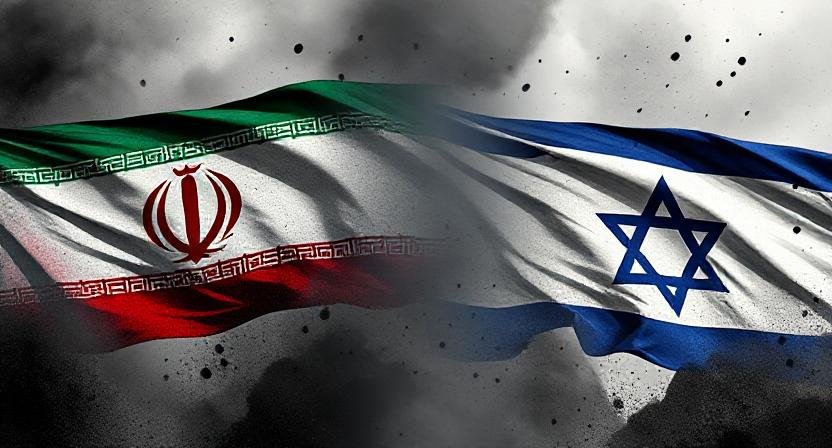
- Iran refuses to negotiate a ceasefire while Israeli strikes continue, despite mediation efforts by Qatar and Oman.
- Israel’s surprise air campaign has decimated parts of Iran’s military command and targeted nuclear sites, prompting fierce retaliation.
- Cities like Tel Aviv, Haifa, and Tehran are gripped by fear, with civilian casualties rising and shelters overwhelmed.
- U.S. military assets shift toward the region, while Senator Tim Kaine pushes legislation to prevent Trump from launching war without congressional approval.
TEL AVIV / TEHRAN – In a dramatic escalation of hostilities that has plunged the Middle East into its most dangerous confrontation in decades, Iran has informed regional mediators Qatar and Oman that it will not entertain any ceasefire talks while Israeli bombs continue to fall on its territory. A senior official, speaking to Reuters on condition of anonymity, revealed that Tehran’s position is unequivocal: no negotiations under fire.
“The Iranians informed Qatari and Omani mediators that they will only pursue serious negotiations once Iran has completed its response to the Israeli pre-emptive strikes,” the source said. “They made it clear: while under attack, diplomacy is off the table.”
The diplomatic freeze comes as both countries trade lethal blows. Since Friday, Israel has launched a wave of coordinated airstrikes targeting Iran’s top military brass and critical nuclear facilities in Isfahan and Natanz. The assault reportedly decapitated sections of Iran’s elite Quds Force, struck command bunkers near Qom, and severely damaged nuclear research centers — actions Israel justifies as necessary to “neutralize existential threats.”
EXCLUSIVE: Trump Rejected Israeli Assassination Plot, Pitched Peace Deal with Iran Instead
Iran’s response was swift and furious. Missiles rained down on Israeli military bases near Haifa and rocket salvos targeted strategic positions close to Tel Aviv. Tehran’s supreme leader, Ayatollah Ali Khamenei, in a nationally televised address, vowed to “open the gates of hell on Zionist aggressors.”
Ground Reality: Fear, Fire, and Fractured Cities
In Tel Aviv, streets once bustling with life are now emptied by air-raid sirens. Schools remain closed, the skies streaked with the trail of Iron Dome interceptors. Residents huddle in bomb shelters beneath apartment blocks. “It’s like the early days of the Gulf War — only worse,” said Naomi Klein, a schoolteacher turned volunteer paramedic. “Everyone knows this is different. This time, we’re hitting Iran directly, and they’re hitting back.”
In Tehran, the mood is both defiant and somber. Mourning banners adorn mosques. Funerals for slain IRGC commanders have become national spectacles, broadcast live on state TV, complete with chants of “Death to Israel” and “Death to America.” Many shops in the capital are shuttered, either due to strikes or precautionary measures. At Imam Khomeini Hospital, doctors brace for more casualties.
READ MORE: US aircraft carrier heads west from South China Sea amid Middle East tensions
“We’ve already received over 200 injured from the western suburbs after the last Israeli strike,” said Dr. Reza Mansouri. “Many are civilians. We’re overwhelmed.”
Haifa has fared no better. On Saturday night, Iranian missiles struck the outskirts of Israel’s third-largest city, damaging industrial zones and sending plumes of smoke into the night sky. Sirens wailed again on Sunday, prompting fears of another barrage. “We don’t sleep anymore,” said Yaakov Ben-David, a retired IDF engineer. “We’re either in the shelters or glued to the news.”
No Room for Diplomacy — Yet
Despite global pleas for calm, diplomacy remains paralyzed. Qatar and Oman, long regarded as quiet interlocutors between the West and Iran, have hit a wall. Both countries maintain warm ties with Tehran, Washington, and Jerusalem, but sources confirm Iran rejected recent entreaties to negotiate through them.
Reports that Iran had sought U.S. mediation through Doha and Muscat were firmly denied by Iranian officials. “These rumors are planted to make us look weak,” said an Iranian diplomat in Vienna, where nuclear talks were once held. “There can be no diplomacy while we are bleeding.”
MUST READ: Middle East on the Edge: Israel-Iran War Escalates, Ground Shakes from Tel Aviv to Tehran
Meanwhile, Oman’s latest attempt to restart nuclear talks — set to take place in Muscat just days before the Israeli air campaign — has been shelved indefinitely.
America’s Position: Watching, Waiting, and Warning
Amid rising tensions, the U.S. Navy’s aircraft carrier USS Nimitz has abruptly left the South China Sea, heading west toward the conflict zone. A planned port call in Vietnam was canceled due to what the U.S. Embassy in Hanoi called an “emergent operational requirement.” Data from Marine Traffic confirmed the carrier group is en route to the Gulf.
The move comes as U.S. policymakers debate America’s role. Senator Tim Kaine, a longtime advocate for congressional oversight of military action, introduced a resolution Monday aimed at preventing President Trump from initiating hostilities against Iran without explicit congressional authorization.
“It is not in our national security interest to get into a war with Iran unless that war is absolutely necessary to defend the United States,” Kaine said. “I am deeply concerned that the recent escalation of hostilities between Israel and Iran could quickly pull the United States into another endless conflict.”
President Trump, however, has praised Israel’s campaign while distancing Washington from Tehran’s accusations of U.S. involvement. “I hope there’s going to be a deal,” Trump told reporters before leaving for the G7 summit in Canada. “Sometimes they have to fight it out.”
Israel , Iran War: The World Reacts
The ongoing war has dominated the G7 agenda. Leaders of the world’s most powerful economies, gathered in Toronto, expressed deep concern about the conflict spiraling out of control. French President Emmanuel Macron called it “a fire that risks consuming the entire region,” while Germany’s Olaf Scholz urged both nations to show “restraint, not resolve.”
Yet on the ground — in Tel Aviv, Haifa, Tehran, and Amman — the sound of diplomacy is drowned by sirens and explosions. Flights are grounded. Markets have tanked. Hospitals are stretched beyond capacity. In Jordan and the UAE, panic buying and fuel shortages reflect a region bracing for the worst.
As Sunday turned to Monday, no one could say how — or when — it might end. What is clear, after two decades covering war and terrorism from Beirut to Baghdad, is that this is no longer just a shadow war. The masks are off. The lines are crossed. And the world may be entering an era of open confrontation between regional giants — with no ceasefire in sight.