



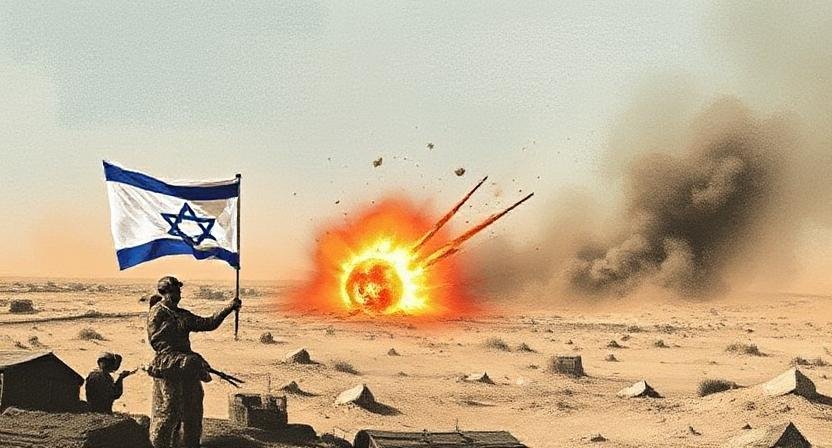
- Israel’s strikes are targeting Iran’s nuclear and political core, with senior scientists killed and sensitive facilities like Fordow and Isfahan under bombardment—Netanyahu signals even Khamenei is “not off-limits.”
- Iran’s retaliatory options are shrinking, with proxy forces weakened and missile strikes largely intercepted—leading Tehran to consider symbolic face-saving actions before agreeing to a U.S.-backed cease-fire.
- Trump and Putin are quietly pushing for de-escalation, with backchannel talks involving Oman and European diplomats—raising the possibility of a new nuclear deal or tactical cease-fire.
- A forever shadow war is looming, with fears of covert retaliation, cyberattacks, global terrorism, and the rebuilding of Iran’s nuclear program in secret—fueling a cycle of simmering conflict.
As Israeli warplanes scream over Tehran and Iranian missiles streak toward Haifa, diplomats, generals, and intelligence chiefs across three continents are scrambling to answer a question they’re afraid to voice aloud: How does this end?
According to senior officials I’ve spoken with in Washington, Tel Aviv, and Tehran—some of whom requested anonymity due to the sensitivity of ongoing intelligence operations—what began as a surgical preemptive strike has now metastasized into a full-scale shadow war. And yet, even as the body count rises, the political chessboard is shifting rapidly. The outcome? Still uncertain, but several endgames are already being quietly discussed in hushed backchannels and encrypted calls.
“Khamenei is Not Off-Limits”
Israeli jets struck deep into Iranian territory for the third consecutive night, hitting the Fordow nuclear enrichment plant, the Isfahan complex, and the Shahran oil depot in western Tehran—one of the capital’s key fuel arteries. Iranian state media confirmed the deaths of at least 78 people. Nine of them were senior nuclear scientists.
“Even [Supreme Leader Ali] Khamenei is not off-limits,” an Israeli intelligence officer told me bluntly. “We are not just dismantling their nuclear capabilities. We’re going for the spinal cord of the regime.”
How the Israel-Iran War Has Turned a Once-Vibrant Middle East into a Chaotic No-Fly Zone
Israel’s Prime Minister Benjamin Netanyahu has vowed to continue the offensive “for as many days as it takes.” Sources in the IDF’s Northern Command say the aim is not just deterrence, but degradation—crippling Iran’s retaliatory ability while breaking the morale of its security architecture.
Iran has fired dozens of ballistic missiles in return, killing at least six Israelis so far. A senior Revolutionary Guard Corps (IRGC) commander was quoted in Fars News saying, “We will turn Tel Aviv into dust if these strikes do not stop.” Yet, within Iranian military circles, there is palpable unease. “We are responding,” one Iranian official admitted over a secure call, “but we are bleeding.”
Trump, Putin, and the Diplomatic Backdoor
President Donald Trump, who has stayed unusually active in crisis diplomacy, confirmed on Saturday that he spoke with Russian President Vladimir Putin. “Putin feels, as do I, this war should end,” Trump posted on Truth Social. “We need a new deal. The time is now.”
READ MORE: How the Israel-Iran War Has Turned a Once-Vibrant Middle East into a Chaotic No-Fly Zone
According to two senior White House aides, Trump has been pushing a quiet trilateral channel between the U.S., Oman, and Iran. But the already-scheduled nuclear talks in Muscat were abruptly canceled after the latest Israeli bombardments.
“There’s still an opening,” said a European diplomat briefed on the situation. “Iran has not shut the door completely. If the airstrikes stop, talks might resume within days.”
But that’s a big if.
Scenarios in Motion: Face-Saving Surrender or Eternal War
One potential off-ramp being explored involves Iran launching a few dramatic but symbolic retaliatory strikes, then accepting a U.S.-brokered cease-fire while claiming victory at home. “Call it Hezbollah 2.0,” said a senior CIA official, referring to Israel’s 2023 campaign in Lebanon. Back then, Hezbollah surrendered after massive losses, but declared moral victory on Al-Manar TV.
Iran’s proxies—especially Hezbollah—are now a pale shadow of their past selves. “Hezbollah is quiet, Iraqi militias are scattered, and the Houthis are licking their wounds after Operation Rough Rider,” an IDF source noted. “Iran’s deterrence is eroding.”
MUST READ: How the Israel-Iran War Might End
A second scenario assumes Iran manages to land a few solid blows—perhaps hitting Dimona or launching a coordinated cyberattack—just enough to build leverage as international pressure forces Israel to de-escalate. France and the UK have already called for calm. The EU is reportedly drafting a resolution condemning “excessive use of force.”
While Israel typically shrugs off European criticism, Trump’s stance matters deeply. If he flips from diplomatic cheerleader to stern negotiator, Netanyahu may accept a tactical pause.
“Bibi listens to Trump more than he listens to anyone,” a former Israeli cabinet minister told me. “If Trump says enough, it’s over.”
The Shadow of a Wider War
But some voices in Tehran aren’t banking on diplomacy.
A senior IRGC strategist warned privately that “any further strikes may force us to hit U.S. bases in Iraq or Qatar.” The U.S. has denied direct involvement, but Iran views Washington as the enabler. “Israel did not act without greenlight,” the official insisted.
The Pentagon is watching closely. A classified U.S. Air Force report—shared with me by a source—suggests that should Iran attack American assets, “full-spectrum retaliation” is on the table, including the use of Massive Ordnance Penetrators (MOPs) against hardened sites like Fordow.
Meanwhile, Jordan has been pulled into the fray. On June 13, the Jordanian Air Force intercepted Iranian missiles entering its airspace. Though Amman insists these were defensive measures, the precedent raises concerns about a broader Arab entanglement if the war expands.
Forever War: The Covert Spiral
There’s a third, darker path: that the war never truly ends.
Even if major strikes cease, Israel could continue clandestine operations—cyber warfare, targeted assassinations, sabotage of centrifuges. Iran might retaliate through global terrorism or proxy warfare.
“Expect to see an uptick in attacks on Israeli and American interests in Africa, Europe, and Southeast Asia,” warned a Western intelligence officer based in Doha. “This will go underground, but it won’t go away.”
Sources inside the Iranian Atomic Energy Organization suggest plans are underway to reestablish parts of the enrichment program “off-grid,” outside of IAEA oversight. “We will build what they cannot find,” a nuclear technician told an Iranian journalist in exile. “This time, there will be no cameras.”
The Endgame, or the Illusion of One
Any of these scenarios—or combinations of them—could unfold in the coming weeks. A cease-fire may be announced, only to be shattered by the next drone strike or assassination. A new round of nuclear talks may begin, only to collapse over uranium purity percentages.
“De-escalation is a mirage until both sides believe they’ve achieved something,” says a senior UN official involved in backchannel diplomacy. “Right now, neither side feels done.”
Trump may yet use his political heft to craft a cease-fire, possibly even reviving a version of the Iran deal as a legacy win ahead of the U.S. presidential election. Iran might play along, especially if sanctions relief comes attached.
But inside Tehran, some IRGC commanders are reportedly arguing for a long war of attrition. “This is not Gaza. This is existential,” one said.
And in Tel Aviv, an IDF general summed it up bluntly: “This war will end when they’re too broken to fight back—or when we are.”
Until then, the Middle East watches, bleeds, and waits.