



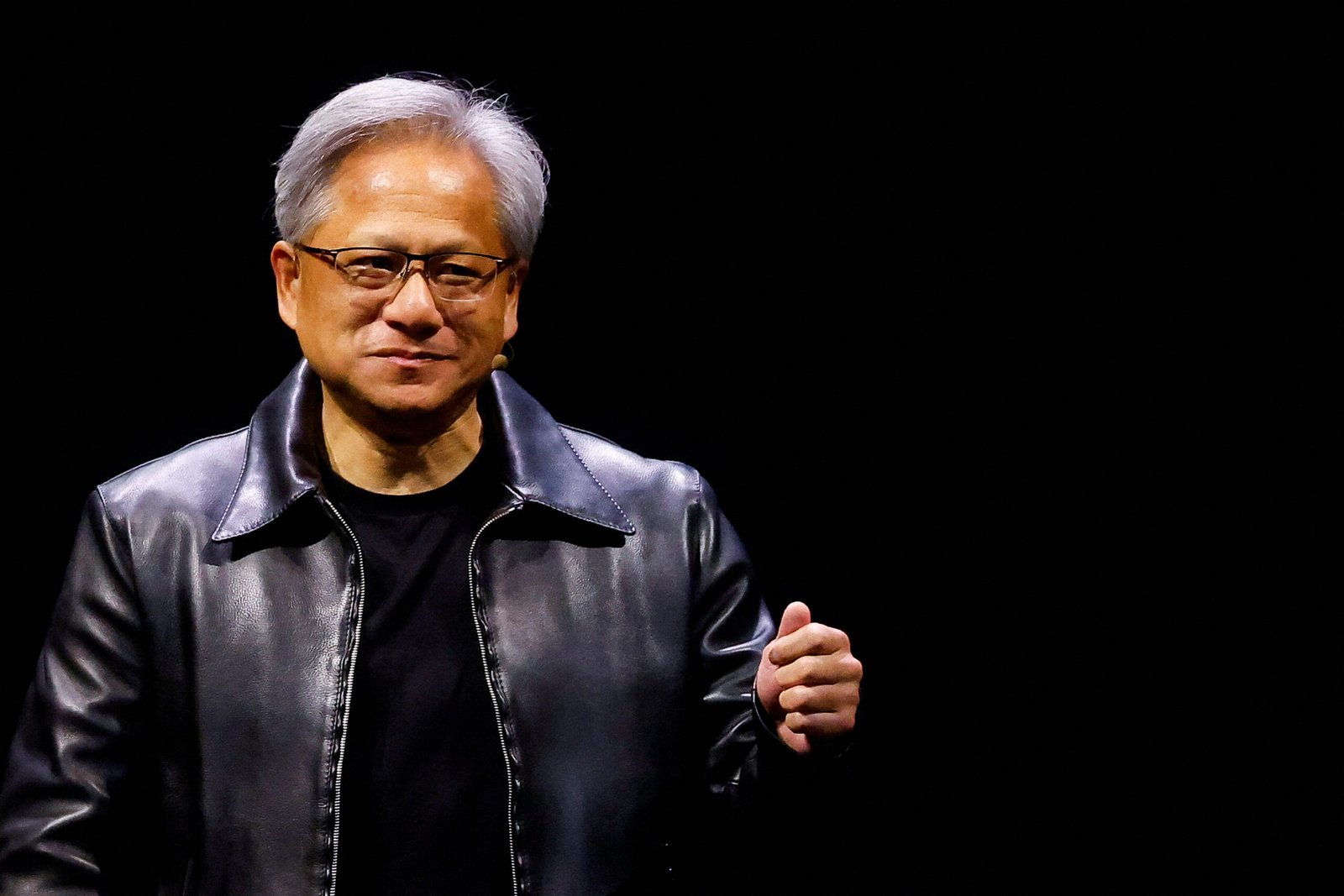
- Jensen Huang’s Shanghai visit marks a critical attempt to normalize trade relations.
- Demand for Nvidia AI Chips remains high among Chinese firms despite domestic competition.
- Export of the H200 model signals a shift in U.S. semiconductor policy toward Beijing.
- Domestic Chinese innovators continue to challenge Nvidia’s long-term market dominance.
This trip comes at a pivotal moment: the U.S. has approved the export of Nvidia’s powerful H200 AI chips to China under certain conditions, but Chinese authorities appear to be hesitating on welcoming these shipments, with customs reportedly blocking imports and suppliers halting production efforts.
That uncertainty reflects broader tensions between global tech leadership, national security priorities, and China’s push toward semiconductor self-reliance. When Nvidia CEO Jensen Huang touched down in Shanghai on Jan. 24, 2026, he didn’t arrive as a casual visitor—but as the most consequential bridge between Washington and Beijing in the global tech standoff.
Huang’s carefully calibrated journey through China’s regulatory labyrinth underscores both Nvidia’s commercial ambitions and the geopolitical tightrope the company now walks.
For Huang, the trip is both a commercial mission and a strategic statement. Nvidia is eager to re-establish a foothold in China—once a huge revenue driver, then nearly closed off due to U.S. export restrictions, and now a market in flux.
That ebb and flow is directly tied to earlier negotiations with the U.S. administration. In late 2025, Huang met with President Donald Trump in the Oval Office to discuss export controls and the mechanics of shipping advanced semiconductors abroad. Trump publicly noted that Huang “knows where he stands” on these issues, signaling the close alignment between Nvidia and the U.S. executive on technology and national strategy.
But even as the U.S. has eased some controls to allow H200 exports to China, Beijing’s response has been cautious at best. The China decision on whether to let Nvidia chips in has been delayed, with some firms readying orders quietly, but without formal public endorsement from regulators. This ambiguity deepens the uncertainty surrounding Huang’s trip, which encompasses engagements with Nvidia employees and potential meetings with Chinese officials in Beijing and Shenzhen.
What Nvidia Can Offer China
At the core of Huang’s pitch to China is technology that underpins the global AI revolution. Nvidia’s AI accelerators have become indispensable to leading cloud providers, research institutions, and enterprise developers worldwide.
For China, which is building its own world-class AI ecosystem, Nvidia’s chips unlock computing power critical for large-scale machine learning, drug discovery, autonomous systems, and cloud infrastructure. Even as Chinese firms race to design homegrown chips, demand for Nvidia’s designs remains “quite high”—with Huang himself acknowledging robust interest that he expects will translate into real purchase orders.
From Beijing’s vantage point, access to H200 chips could significantly boost AI capabilities in sectors ranging from finance to autonomous driving. But that opportunity is weighed against China’s long-term policy goal of technological self-sufficiency in semiconductors.
Beijing has poured tens of billions into domestic chip incentives precisely to reduce reliance on foreign technology and to challenge U.S. leadership in semiconductor innovation. For Huang, the commercial rationale is clear: China represents a massive AI compute market, one that Nvidia once dominated with nearly 95% of high-end GPU sales before export bans pushed that share to almost zero. He has repeatedly argued that losing access to China was a “strategic mistake” that hurt both Nvidia and U.S. interests.
Is Huang Worried About China’s Self-Sufficiency?
The short answer: yes—but with nuance. Huang has publicly warned that cutting off access to U.S. technology can backfire, accelerating China’s domestic innovation push rather than slowing it. In past interviews, he has noted that China produces a significant volume of AI chips domestically and that Beijing will not accept degraded technology—a subtle critique of export controls that force companies to sell less advanced versions.
At the same time, Huang has made it clear that Nvidia supports some degree of export control on national security grounds. He has stated the company is aligned with U.S. policy frameworks that restrict the most cutting-edge chips—but warns that overly stringent limitations are counterproductive. The larger implication is that Nvidia sees China’s march toward semiconductor independence not as an existential threat, but as a strategic reality to manage. China’s AI chip landscape has grown rapidly, yet even as China develops its own capabilities, its ecosystem remains linked to Nvidia’s CUDA software and hardware architectures in meaningful ways.
The Strategic Balance
Huang’s China trip is a microcosm of the broader U.S.–China tech competition. It reflects the push and pull between open markets and geopolitical caution, between the promise of innovation and the perils of strategic rivalry. For Nvidia, success would mean reopening a critical market and reinforcing its leadership in AI hardware.
For China, engagement with Nvidia could accelerate domestic AI ambitions—but at the same time reinforce just how much higher-end capability still depends on foreign ingenuity. As Huang continues his engagements in Beijing and beyond, the industry will be watching for signals of accommodation or resistance. In an era defined by AI’s transformative impact, his trip is one of the most consequential business missions of 2026—and a bellwether for the future of global tech.