



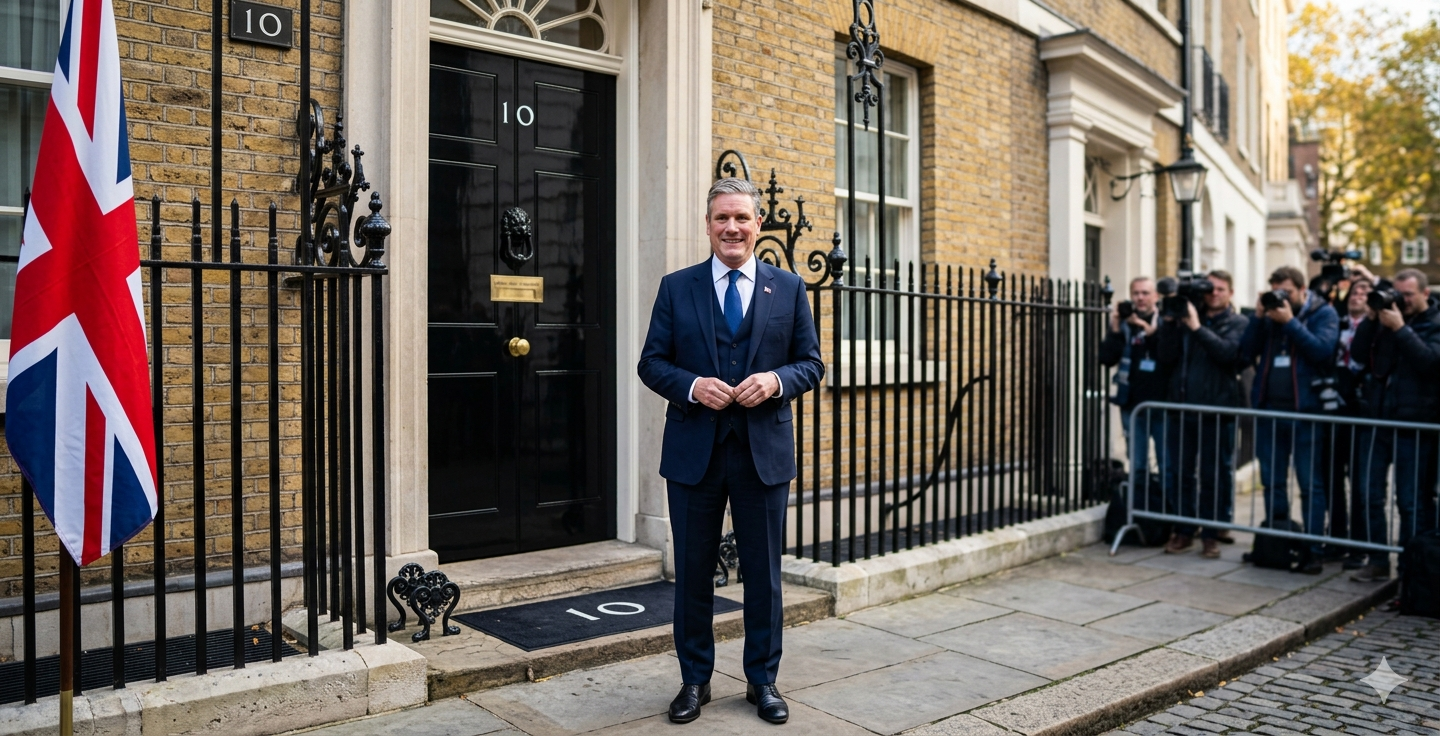
- Keir Starmer resignation crisis intensifies as senior ministers quit and over 80 MPs demand his exit
- Cabinet divisions expose deep fractures within the Labour government following electoral setbacks
- UK political instability raises global concerns amid ongoing Iran conflict and shifting alliances
- Uncertainty looms over UK-China agreements signed under Starmer’s leadership
The political ground beneath Keir Starmer is shifting at a pace few in Westminster can remember in recent years. What began as murmurs of dissatisfaction following bruising local election results has, within days, escalated into a full-blown leadership crisis—one that now threatens to topple the Prime Minister at a moment of profound global instability.
At the heart of the storm are fresh resignations from within his own government. Jess Phillips and Alex Davies-Jones have both walked out, publicly declaring they have lost confidence in Starmer’s leadership. Their departures are not isolated acts of dissent but part of a widening rebellion that has seen more than 80 Labour MPs call on the Prime Minister to step down. The symbolism is stark: a governing party turning inward just as the world looks outward in crisis.
Inside Downing Street, the mood appears equally fractured. Starmer’s defiance at a tense Cabinet meeting—insisting that no formal leadership challenge has been triggered—has done little to calm nerves. Instead, it has reinforced a growing perception that his authority is slipping. Reports that senior figures, including Shabana Mahmood, have privately urged him to consider a “graceful exit” underscore how deeply the crisis has penetrated the upper ranks of government.
The political choreography now resembles a slow-motion coup. Wes Streeting is widely viewed as a central figure in the emerging power struggle, while Angela Rayner is maneuvering carefully, potentially aligning herself with Andy Burnham, whose possible return to Parliament could reshape the leadership race entirely. Meanwhile, veteran left-wing voices like John McDonnell warn that internal maneuvering risks handing political momentum to opposition forces.
The parallels with the fall of Boris Johnson in 2022 are unavoidable. Then, as now, a cascade of resignations created a tipping point where political survival became untenable. The question is no longer whether Starmer faces a challenge—but whether he can outlast it.
Trump Iran War Decision: What Will Trump and Starmer Do as War With Iran Looms?
Yet what makes this crisis uniquely consequential is its timing. Britain’s internal turmoil is unfolding against the backdrop of a volatile international landscape, dominated by escalating tensions linked to the Iran conflict. As one of the world’s most influential diplomatic and military actors, the United Kingdom’s political coherence is not merely a domestic concern—it is a strategic necessity.
If Starmer were to resign or be forced out, the immediate impact would be a vacuum at the heart of British decision-making. Leadership contests in the UK are rarely swift or orderly. A prolonged transition—particularly one marked by factional infighting—could paralyze policy at a time when coordinated Western responses are critical. Allies in Washington, Brussels, and beyond would be forced to recalibrate, uncertain of London’s position on key security questions.
Sir Keir Starmer is on the way out
There are already early signs of international unease. Financial markets have reacted nervously, with borrowing costs rising amid fears of policy shifts. Diplomatic channels, while publicly restrained, are closely monitoring developments. For European partners, Britain’s instability raises concerns about continuity in NATO commitments and broader security coordination. For adversaries, it presents an opportunity—however temporary—to exploit Western distraction.
Domestically, the stakes are equally high. A leadership collapse would mark the fourth prime ministerial upheaval in as many years, reinforcing a narrative of chronic instability in British governance. Such a perception could erode public trust further, particularly as economic pressures mount and political fragmentation intensifies.
An additional layer of uncertainty now surrounds the fate of key agreements and memorandums of understanding signed during Starmer’s high-profile diplomatic outreach, particularly his engagements with China. These deals—ranging from trade facilitation to climate cooperation—were closely tied to his political authority and strategic vision of recalibrating UK-China relations. A leadership change could trigger a comprehensive review of these commitments, especially if a successor adopts a more hawkish stance on Beijing. While institutional frameworks ensure that agreements are not automatically voided, their implementation could slow, be renegotiated, or even quietly shelved amid shifting geopolitical priorities. For Beijing, the uncertainty raises questions about Britain’s reliability as a negotiating partner; for London, it risks undermining economic opportunities at a time of domestic fragility.
So, will Starmer quit?
For now, the Prime Minister appears determined to resist. His message to Cabinet—essentially daring opponents to trigger a formal challenge—suggests he is betting on procedural barriers and the absence of a unified challenger to keep him in office. Under Labour rules, any contender must secure nominations from 20 percent of MPs—a threshold that, while achievable, requires coordination among factions that currently appear deeply divided.
But politics is rarely governed by rules alone. Momentum, perception, and timing often prove decisive. With resignations mounting, public criticism intensifying, and allies wavering, Starmer’s position looks increasingly precarious.
The coming days will be critical. If further Cabinet ministers resign, or if a single challenger consolidates support, the balance could tip rapidly. Conversely, if the rebellion fractures or loses momentum, Starmer may yet survive—though likely weakened and constrained.
What is clear is that Britain stands at a political crossroads. The crisis engulfing its Prime Minister is no longer an internal party matter; it is a question with global implications. At a time when the world confronts war, economic uncertainty, and shifting alliances, the stability of one of its major powers hangs in the balance.
Whether Starmer endures or exits, the consequences will reverberate far beyond Westminster.