


- A new Moscow bomb blast on Yeletskaya Street has killed two police officers and a suspicious individual.
- The explosion occurred in the same vicinity where Lieutenant General Fanil Sarvarov was assassinated via car bomb on Monday.
- Russian investigators are treating the incidents as targeted attacks, with suspicions falling on Ukrainian intelligence services.
- Analysts suggest the spike in urban violence may be intended to derail peace negotiations currently being brokered by the Trump administration.
In a week marked by rising smoke and shattering glass in the heart of the Russian capital, the shadows of the Ukraine conflict have once again lengthened across Moscow. Just days after the high-profile assassination of a top military commander, another explosion on Wednesday morning has left three people dead, including two police officers, further rattling a city that was once considered a secure rear base for the Kremlin’s war efforts.
A Targeted Pattern of Violence
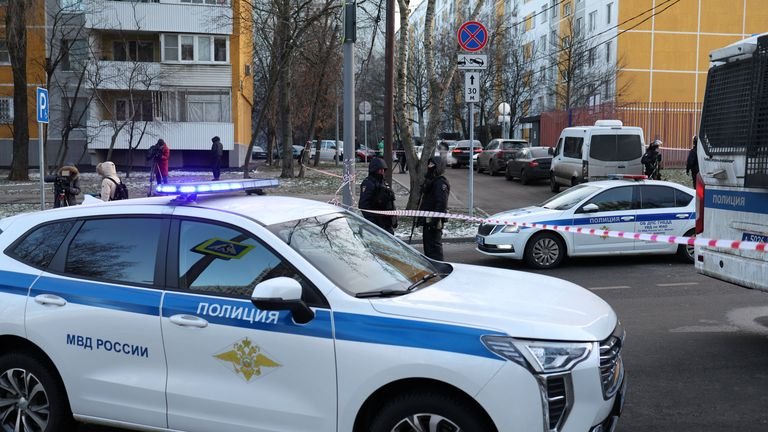
The latest blast occurred on Yeletskaya Street in southern Moscow, an area now synonymous with a burgeoning campaign of urban sabotage. According to the Russian Investigative Committee, the incident began when two traffic police officers approached a “suspicious individual” near a patrol vehicle.
Exclusive: Moscow Car Bomb Kills Top General as Florida Peace Talks Teeter
As they moved to intercept him, an explosive device was triggered. The blast was instantaneous and lethal, killing both officers and the suspect—who many unofficial Russian Telegram channels, such as Baza, suggest was a suicide bomber or an operative who chose detonation over capture.
This latest tragedy follows the Monday morning assassination of Lieutenant General Fanil Sarvarov, the 56-year-old head of the Russian General Staff’s operational training directorate. Sarvarov, a veteran of the Chechen wars and Russia’s intervention in Syria, was killed when a remotely detonated bomb placed under his SUV exploded on the very same street.
READ MORE: https://theislamabadtelegraph.com/moscow-car-bomb-kills-top-general/
While the Ukrainian government has maintained a policy of strategic ambiguity regarding these specific hits, the “Myrotvorets” database—a site with unofficial ties to Ukrainian intelligence—swiftly updated Sarvarov’s profile to mark him as “liquidated.”
Strategic Assassinations and Security Failures
The death of General Sarvarov is not an isolated incident. He is the third high-ranking general to be assassinated in Moscow within the last year, following the deaths of Lt. Gen. Igor Kirillov and Lt. Gen. Yaroslav Moskalik. For the Kremlin, these are not just military losses; they are profound embarrassments for the Federal Security Service (FSB).
Bomb blast in Moscow kills two police officers, days after apparent assassination of general
The fact that assassins can operate with such precision in the capital’s southern residential districts suggests a sophisticated network of “clandestine resistance cells” or deep-cover operatives. These strikes target the “nerve center” of the military—officers responsible for the training and readiness of troops currently on the front lines—sending a clear message: no one is beyond reach.
The “Trump Factor” and the Peace Paradox
The timing of this surge in violence is particularly delicate. In Miami and Florida, the diplomatic machinery of the Trump administration is reportedly working at a fever pitch. With Jared Kushner and U.S. envoy Steve Witkoff engaging in “productive” but “slow” negotiations with both Russian and Ukrainian representatives, the Moscow bombings represent a dangerous “wild card” in the peace process.
Independent analysts, including those cited by The Islamabad Telegraph, suggest that these attacks may be designed to sabotage the momentum of a potential deal. There is a growing school of thought that whoever is behind these strikes—whether Ukrainian hardliners or internal Russian factions—aims to harden the resolve of both Vladimir Putin and Donald Trump’s team, making concessions politically impossible.
For Putin, every bomb in Moscow demands a visible, often violent, retaliation to project strength at home. Indeed, following Sarvarov’s death, Russia launched a massive drone and missile barrage across 13 Ukrainian regions. For Trump, the “art of the deal” becomes infinitely more complex when the negotiation table is metaphorically—and literally—under fire.
A City on Edge
In the neighborhoods of southern Moscow, the reality of the war is no longer a distant television report. Residents like “Alexander” and “Roza” now speak of the “loud bangs” and the “shaking buildings” as part of their morning routine. The Russian State Investigative Committee has opened criminal cases for the murder of law enforcement and illegal bomb trafficking, but for the average Muscovite, the technicalities of the law offer little comfort against the unpredictability of a car bomb.
As the conflict nears its fourth year, the battlefield has blurred. The “liquidations” in Moscow and the retaliatory strikes in Kyiv form a feedback loop of violence that threatens to drown out the quiet voices of diplomacy currently gathering in the Florida sun.