



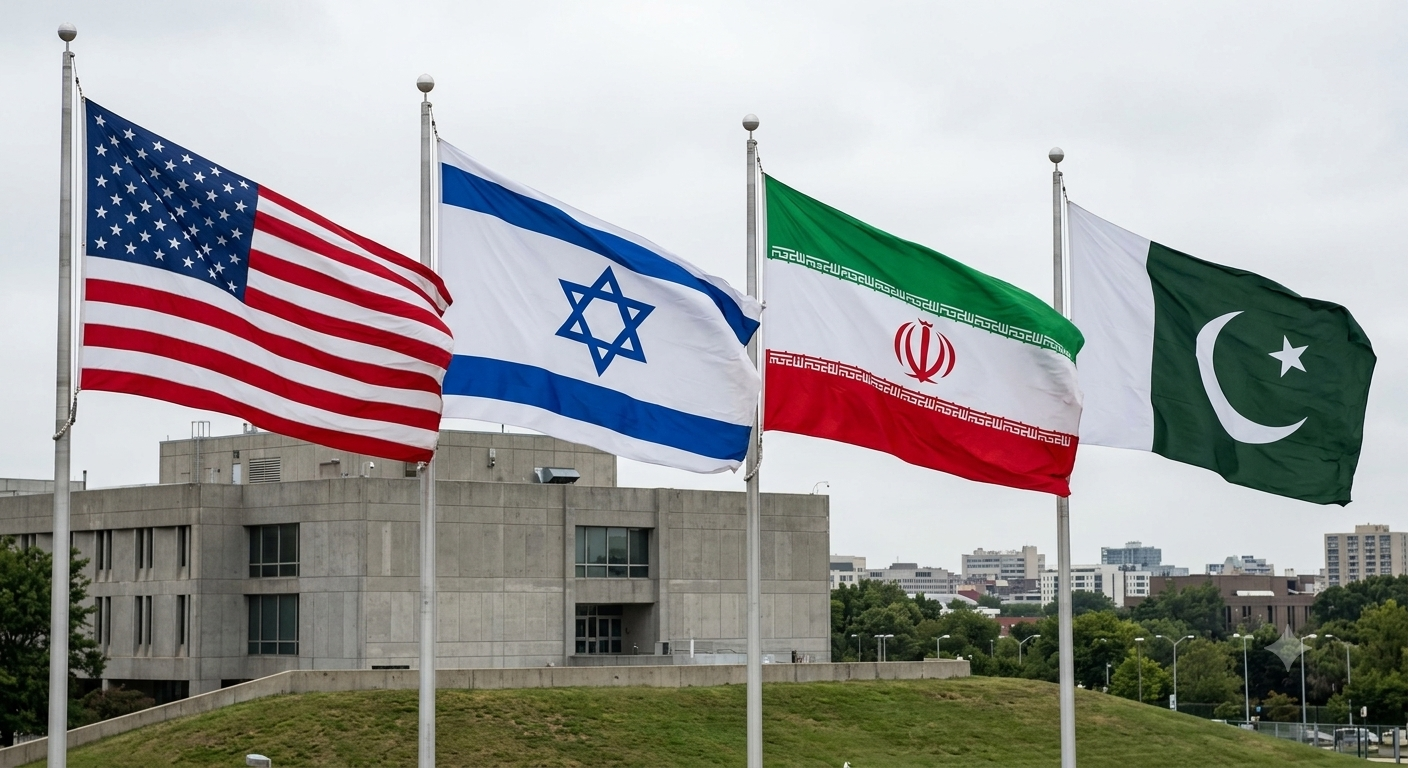
- Multipolar World Order dynamics are rapidly accelerating as recent geopolitical friction exposes the structural limitations of historical unipolar systems.
- External military aggression generated a distinct “rally-around-the-flag” effect within Iran, effectively muting internal political and economic fissures.
- Strategic organizational adaptation, specifically decentralized command structures, enabled the Iranian state to maintain continuity despite losing senior leaders.
- The critical six-month operational window between confrontations allowed Tehran to successfully reassess vulnerabilities and adapt its defensive capacities.
The asymmetrical conflict between the United States–Israel alliance and Iran has significantly altered regional and global power dynamics, potentially accelerating the transition toward a more multipolar world order. The post-Second World War system, which positioned the United States as the principal leader of the so-called “free world,” and the post-Cold War era, which elevated it to the status of the sole superpower, appears to be undergoing a profound redefinition.
While it may be premature to declare the complete end of the existing order, recent developments suggest that the foundations of unipolarity are being increasingly challenged.
Although the twelve-day war only marginally impaired Iran’s war-fighting capabilities, the six-month interval between the two rounds of confrontation provided Tehran with an opportunity to reassess its vulnerabilities, adapt its strategy, and strengthen its defensive and offensive capacities.
As a result, Iran entered the subsequent phase of the conflict with greater preparedness and determination. The cumulative effect of these developments may further accelerate the erosion of an already fragile international order and contribute to the emergence of alternative centres of power.
The pre-war and post-war Iranian state appear to operate within markedly different political and strategic landscapes. Contrary to expectations in many Western capitals, Iran emerged from the conflict more defiant, politically resilient, and regionally influential than many observers had anticipated. While challenges remain, the war demonstrated the state’s remarkable capacity for adaptation under pressure and reinforced its role as a significant actor in shaping regional and, potentially, global realignments.
Rear More: Multipolar world: What Xi and Putin announced after Beijing summit
Before the conflict, Iran faced a range of internal challenges, including political divisions, social discontent, economic hardship, persistent inflation, and criticism of the extensive influence exercised by the clerical establishment. Yet, external military pressure appears to have temporarily muted many of these internal fissures. Rather than weakening the state from within, the attacks generated a rally-around-the-flag effect, fostering a renewed sense of national unity and resistance.
The aggression against Iran’s sovereignty not only consolidated public opinion against the external attackers but also strengthened a narrative that the Iranian establishment has advanced for nearly five decades: that the United States and Israel ultimately seek to undermine the Islamic Republic regardless of its conduct.
Related: “Sit Down, Loser”: Inside Trump’s War Room as Iran Strategy Shocks Washington
In the eyes of many Iranians, the attacks appeared to validate this longstanding warning. Consequently, significant segments of society rallied behind the state. Despite losing several senior military and political figures, the Iranian leadership structure and broader society displayed a degree of cohesion that surprised many external observers.
A key aspect of Iran’s response was the apparent decentralisation of command and leadership functions. Drawing lessons from the experiences of states such as Iraq, Libya, and Yemen, where the elimination of top leadership often precipitated systemic collapse, Iranian planners seem to have invested considerable effort in developing institutional redundancy and succession mechanisms. This enabled the state to maintain continuity even after suffering significant losses among its senior ranks.
The conflict also exposed what may prove to be a major miscalculation by some of the world’s most sophisticated intelligence agencies. The assumption that the elimination of top-tier leadership would automatically paralyse the Iranian state underestimated the depth of its institutional networks and its capacity for rapid adaptation. Tactical successes on the battlefield did not necessarily translate into strategic victory. On the contrary, the conflict demonstrated that modern states facing existential threats can often regenerate leadership structures faster than external actors anticipate.
Critics, of course, argue that Iran continues to face substantial economic constraints, sanctions pressure, technological limitations, and regional challenges. These concerns remain valid and should not be dismissed. Nevertheless, the conflict revealed that assessments portraying Iran as internally fragile and strategically vulnerable were, at the very least, incomplete. Rather than collapsing under pressure, the state displayed a resilience that has compelled both allies and adversaries to reassess their assumptions.
Whether these developments ultimately mark the definitive end of the unipolar moment remains to be seen. However, the conflict has undoubtedly raised fundamental questions about the effectiveness of military coercion, the durability of Western strategic dominance, and the future distribution of power in the international system. If the war has demonstrated anything, it is that the global balance of power is no longer as predictable as it once appeared, and that emerging centres of resistance are increasingly capable of shaping the course of international affairs.