



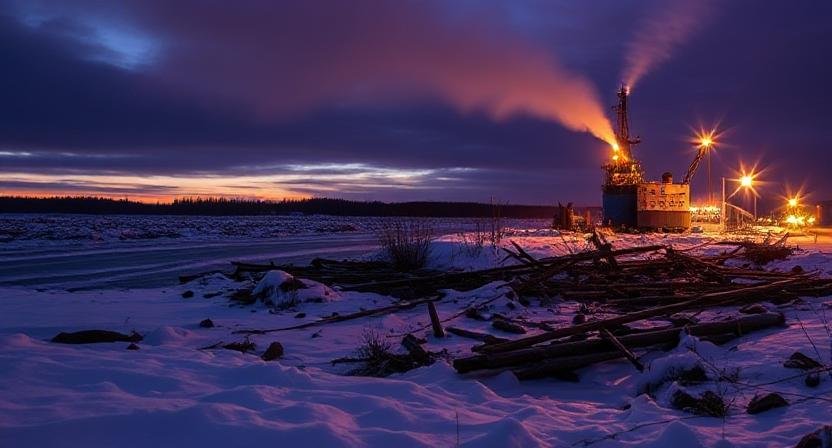
- Italian police arrest 49-year-old Ukrainian national linked to 2022 Nord Stream pipeline explosions.
- Blasts destroyed major Russian gas routes to Europe, triggering energy crisis and geopolitical tensions.
- Arrest may expose sabotage network, raising questions about Ukraine’s possible role despite denials.
- Incident reshaped Europe’s energy security, accelerating shift away from Russian gas supplies.
Nearly three years after a series of undersea explosions crippled the Nord Stream gas pipelines in the Baltic Sea, European investigators have made a breakthrough. Italian police, acting on a European arrest warrant, detained a 49-year-old Ukrainian national in the Rimini province, accusing him of orchestrating part of the 2022 sabotage operation that severed a vital energy lifeline between Russia and Europe.
The man, identified by German prosecutors as Serhii K., faces charges of causing an explosion, sabotage, and the destruction of key infrastructure. According to authorities, he was part of a team that planted explosives on Nord Stream 1 and 2 after allegedly hiring a sailing yacht with forged documents, departing from Germany’s Rostock coast.
German Justice Minister Stefanie Hubig hailed the arrest as an “impressive investigative success”, signaling a new phase in the long-stalled probe. Investigators believe the arrest could help unravel the operational chain behind one of Europe’s most perplexing energy security incidents in modern history.
The Blasts That Shook Europe’s Energy Security
On September 26, 2022, a series of underwater explosions ripped through the Nord Stream pipelines near Denmark’s Bornholm Island. Within hours, satellite imagery revealed plumes of gas bubbling in the Baltic Sea, while pressure readings confirmed catastrophic ruptures in Nord Stream 1, Russia’s main gas artery to Germany, and Nord Stream 2, a project completed but never activated after Berlin froze certification in February 2022.
At the time, Europe was already grappling with an energy crisis triggered by Russia’s invasion of Ukraine and Moscow’s decision to sharply reduce gas flows to Europe.
- Nord Stream 1 had supplied nearly 40% of Europe’s natural gas imports before the war.
- Russia had halted deliveries through the pipeline weeks before the explosions, citing maintenance disputes with European operators.
- Nord Stream 2, though fully built, remained idle under Western political pressure after Russia launched its full-scale invasion.
- The blasts not only destroyed billions of dollars’ worth of infrastructure but also shattered hopes of restoring Russian gas flows to Europe amid record-high energy prices and fears of winter shortages.
Geopolitical Shockwaves: Europe Scrambles, Russia Points Fingers
In the aftermath, European leaders quickly labeled the incident an act of sabotage but refrained from naming suspects as investigations stretched across multiple jurisdictions.
Russia, for its part, blamed the United States, Ukraine, and NATO allies, accusing them of wanting to sever Europe’s dependence on Russian energy. Moscow argued that the destruction of Nord Stream gave Washington the perfect pretext to push liquefied natural gas (LNG) exports to Europe while isolating Russia economically.
Ukraine has consistently denied involvement, while Western intelligence agencies hinted at “pro-Ukrainian groups” possibly acting independently. The arrest of Serhii K. now brings fresh scrutiny to those claims, potentially confirming long-standing suspicions about non-state actors with geopolitical motives.
Impact on Russia and Europe
The Nord Stream attack marked a strategic turning point in the continent’s energy map:
-
For Russia: It eliminated a key bargaining chip with Europe. Even if political relations thawed, the destroyed pipelines meant Moscow lost its most direct gas route to the European market it once dominated. Energy revenues plunged as Europe pivoted to Norway, Qatar, and the U.S. for supplies.
-
For Europe: The incident accelerated the EU’s energy diversification drive, prompting massive investments in LNG terminals, renewable energy, and storage facilities. However, it also deepened Europe’s energy vulnerability, exposing how easily critical infrastructure could be sabotaged in hybrid warfare scenarios.
By winter 2023, Europe had largely stabilized gas supplies through alternative sources, but at a much higher cost. Some industries dependent on cheap Russian gas shut down or relocated, while households endured soaring energy bills.
What Comes Next
With Serhii K. set to be extradited to Germany, prosecutors hope his testimony will unravel the operational chain—who funded the mission, who ordered it, and whether state actors were involved.
European intelligence officials believe the arrest could also trigger diplomatic tensions. If links to Ukrainian operatives emerge, it risks straining Kyiv’s ties with European allies at a time when Ukraine relies heavily on Western military and financial aid.
For Russia, the arrest offers partial vindication. Moscow has long claimed Western or Ukrainian complicity, and now the narrative could shift toward calls for accountability from European publics who bore the brunt of energy shortages.
As the investigation moves forward, one thing is clear: the Nord Stream blasts were not just an act of sabotage but a defining moment in Europe’s post-war energy order, with repercussions still unfolding across the continent.