



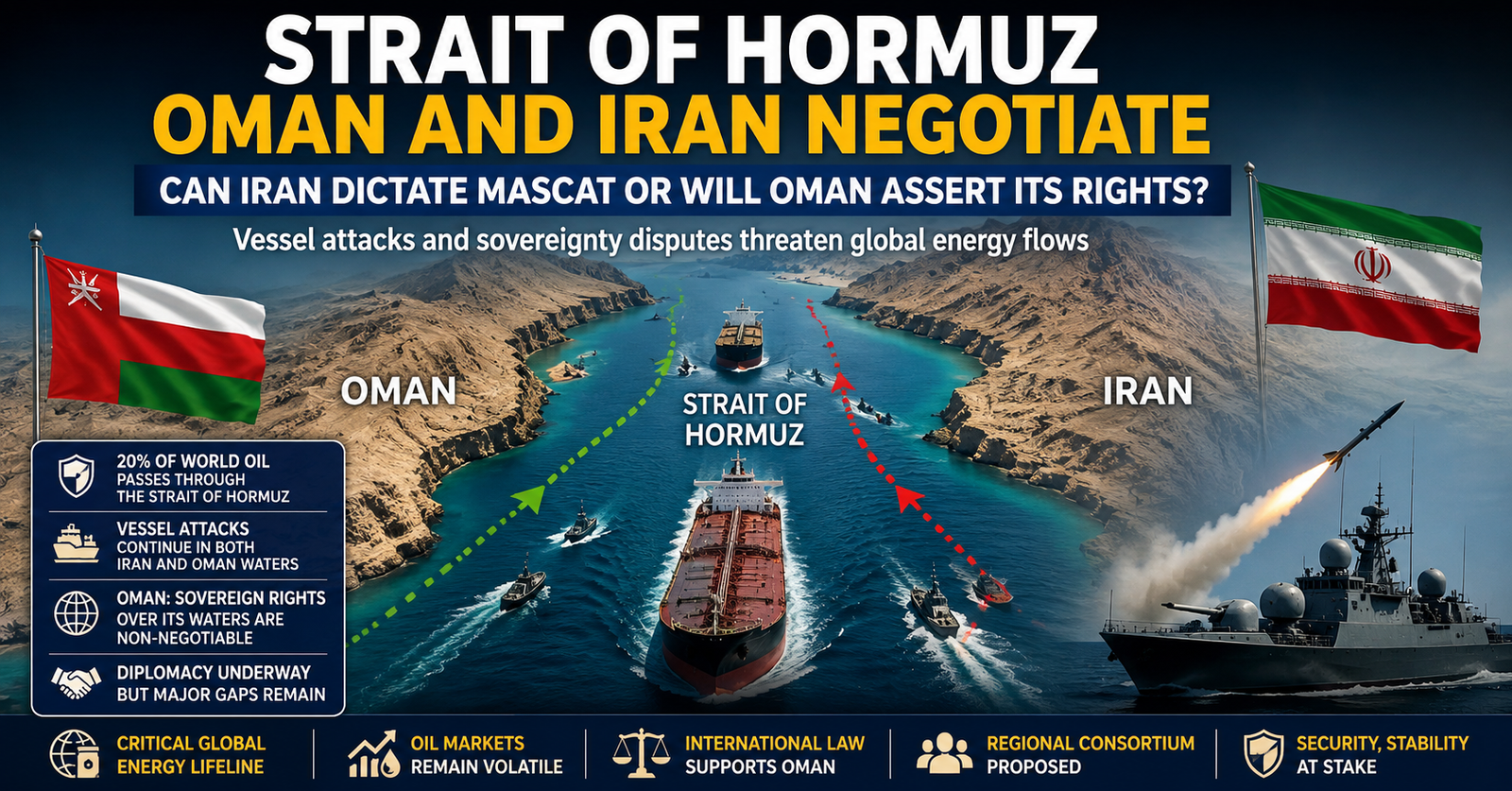
- Strait of Hormuz dispute intensifies as Oman rejects Iran’s attempt to dictate shipping routes.
- Iran continues targeting vessels even in Oman-controlled waters of the Strait of Hormuz.
- Global oil markets remain vulnerable as Strait of Hormuz tensions threaten energy flows.
A lull in fighting between the United States and Iran has accelerated diplomacy focused on one of the most critical flashpoints in the global energy system: the Strait of Hormuz. As Oman and Iran negotiate reopening vital shipping lanes, the Strait of Hormuz has once again become the center of geopolitical tension, legal dispute, and economic uncertainty.
The talks, held over the weekend and continuing into early this week, are narrowly focused on restoring safe passage through the Strait of Hormuz, a waterway that previously handled nearly 20 percent of global oil shipments. However, beneath the diplomatic engagement lies a deeper and unresolved question: who truly controls access to the Strait of Hormuz?
Analysts argue that Iran’s position is increasingly untenable. While Tehran insists on asserting authority over transit routes in the Strait of Hormuz, experts say Iran cannot dictate terms to Oman, particularly regarding waters internationally recognized under Muscat’s jurisdiction. The notion that Iran could impose unilateral control over the Strait of Hormuz is being widely challenged.
“Oman has sovereign rights over its portion of the Strait of Hormuz,” a regional maritime analyst noted. “Iran cannot dictate Muscat’s policies, especially in waters that fall under Omani control.”
The dispute escalated after Iran resumed attacks not only on vessels passing through waters it claims but also on ships navigating through Oman’s side of the Strait of Hormuz. These incidents have alarmed global shipping operators and raised concerns about the militarization of a key international transit route.
Despite Iran’s insistence on controlling movement within the Strait of Hormuz, Oman has maintained that maritime passage in its waters remains its sovereign decision. Analysts emphasize that whether ships are allowed safe passage through Oman’s corridor of the Strait of Hormuz is entirely up to Muscat—not Tehran.
The current negotiations aim to define clear routes for vessels transiting the Strait of Hormuz, particularly after tensions escalated when U.S.-guided shipping lanes began hugging the Omani coastline to avoid Iranian-controlled areas. Iran has objected strongly, insisting ships should pass through its designated zones within the Strait of Hormuz.
However, Oman’s position reflects international maritime norms. By facilitating alternative routes, Muscat has effectively challenged Iran’s attempts to dominate the Strait of Hormuz. This has triggered a series of retaliatory actions by Tehran, including attacks on commercial vessels—actions that have further complicated negotiations.
Diplomatic sources indicate that while progress has been made, significant gaps remain. One contentious issue is Iran’s proposal to impose transit fees on vessels crossing the Strait of Hormuz. Oman, supported by the United States, has rejected this idea, arguing that international waterways like the Strait of Hormuz should remain free and open.
The stakes are immense. The Strait of Hormuz is not merely a regional concern but a global economic lifeline. Disruptions in the Strait of Hormuz have already pushed oil markets toward volatility, with prices hovering near critical thresholds. Any prolonged instability could trigger broader economic consequences.
Omani officials have proposed the creation of a regional maritime consortium to oversee security and cooperation in the Strait of Hormuz. This initiative aims to depoliticize control and ensure collective management of one of the world’s most strategic waterways. Iran has shown tentative interest but continues to push for dominant control.
The broader geopolitical context also shapes these talks. While the United States is not directly participating, it remains closely involved through coordination with Oman. Washington’s strategic objective is clear: ensure uninterrupted flow of energy supplies through the Strait of Hormuz while limiting Iran’s ability to weaponize maritime access.
Iran, meanwhile, faces mounting economic pressure. Sanctions, internal economic challenges, and the impact of ongoing conflict have constrained Tehran’s options. Yet its aggressive posture in the Strait of Hormuz risks further isolation.
The central question remains unresolved: will Iran accept Oman’s sovereign rights in the Strait of Hormuz, or will it continue to challenge them through coercive tactics?
For now, the talks represent a fragile but important step toward de-escalation. But as long as Iran continues to attack vessels—even in Oman-controlled waters of the Strait of Hormuz—the path to a sustainable agreement remains uncertain.
Ultimately, the future of the Strait of Hormuz hinges not just on diplomacy, but on whether regional actors respect established norms of sovereignty and international law. Until then, the world watches closely as Oman and Iran navigate one of the most consequential maritime disputes of our time.