



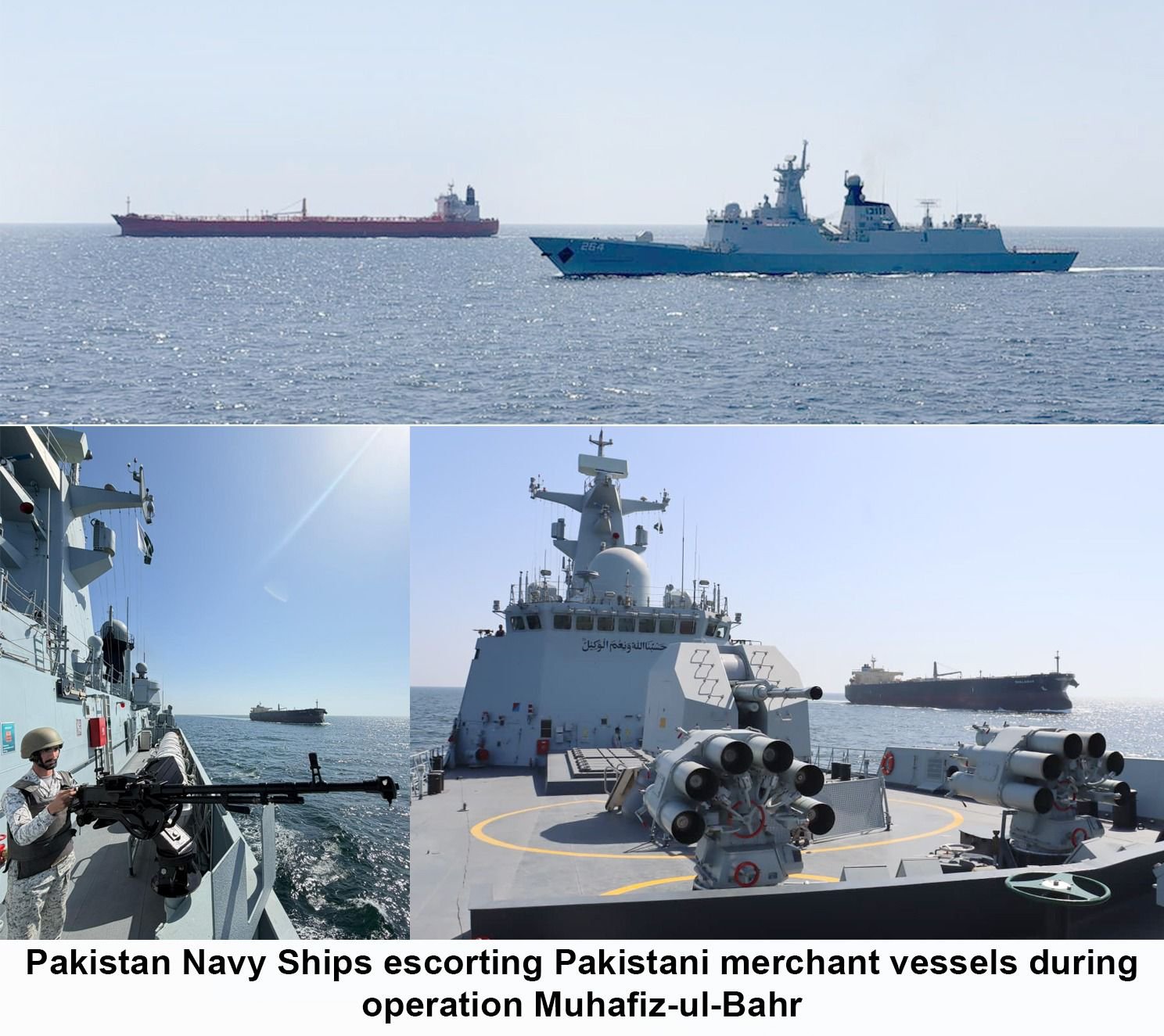
- Pakistan Navy Secures Strait of Hormuz: Protects merchant vessels amid Iran war threats.
- Operation Muhafiz-ul-Bahr ensures uninterrupted maritime trade and energy security.
- Close coordination with Pakistan National Shipping Corporation strengthens shipping safety.
- Global insurers warn of environmental catastrophe risks if tankers are attacked.
In a decisive move amid escalating regional tensions, Pakistan has emerged as one of the first countries to deploy its navy to protect merchant vessels navigating critical sea lanes. This comes as the ongoing Iran war has brought global shipping to a virtual standstill in the Strait of Hormuz, with thousands of oil tankers stranded in international waters awaiting clearance.
The geopolitical and economic stakes are enormous, and Pakistan’s proactive naval deployment underscores its growing role in safeguarding national and regional maritime trade.
The Pakistan Armed Forces confirmed the operational deployment of naval assets to secure maritime trade. The first escorted merchant vessel reached Karachi port yesterday, March 10, 2026, marking a significant milestone in Pakistan’s efforts to maintain uninterrupted trade flows during a period of heightened risk.
US–Iran War Shakes Global Markets as Oil Prices Surge and Strait of Hormuz Crisis Deepens
The operation, officially named Operation Muhafiz-ul-Bahr, is designed to counter multidimensional threats to national shipping and ensure the safety of Sea Lines of Communication (SLOCs). With approximately 90% of Pakistan’s trade conducted via sea, the initiative reflects the strategic necessity of protecting maritime commerce from disruptions that could have ripple effects on energy security and the wider economy.
Pakistan Navy officials reported that escort operations are being conducted in close coordination with the Pakistan National Shipping Corporation (PNSC). Active monitoring and control of merchant vessel movements are in place to guarantee safe passage through a region increasingly prone to attacks and political instability. Currently, the Navy is escorting two merchant vessels, one of which is scheduled to dock in Karachi today.
US says 16 Iranian mine-laying ships ‘eliminated’, as four injured by drones near Dubai airport
The move by Pakistan contrasts with the broader global response, as even the world’s largest naval powers face mounting challenges in securing commercial shipping in the Persian Gulf. Insurance, logistics, and physical security concerns have combined to stall maritime traffic, leaving key energy and trade flows vulnerable.
Global insurers and brokers are particularly concerned about environmental hazards should a tanker be damaged or sunk in the region. The Persian Gulf — stretching from Kuwait to Qatar — hosts some of the world’s most economically vibrant coastal zones, with high-rise developments, luxury resorts, and bustling ports. Yet, unlike the United States, the region lacks comprehensive oil spill response infrastructure, increasing the risk of catastrophic environmental and financial consequences.
Marine insurance coverage for hulls, machinery, and cargo remains available but has skyrocketed in cost, reportedly four to six times higher than previous levels, according to major brokers including Marsh and Howden Group. Pollution coverage, critical in the event of tanker accidents, remains limited and underregulated, exposing shipping companies to potentially uninsurable environmental liabilities.
In response, the U.S. administration under President Trump recently announced a $20 billion reinsurance facility to underwrite losses for tankers and other maritime traffic through the Strait of Hormuz. Managed by the International Development Finance Corporation (DFC) in cooperation with the U.S. Treasury and Central Command, the program is intended to alleviate financial risk and reassure markets. President Trump emphasized that U.S. insurance support and potential naval escorts would facilitate the safe transit of oil, LNG, jet fuel, and other essential commodities.
Yet analysts warn that insurance alone cannot resolve the crisis. Physical security remains the primary obstacle. Tankers are reluctant to traverse the strait due to attacks and escalating hostilities following U.S. and Israeli airstrikes against Iran. With crude oil prices surging over 35% in the past week and some Gulf nations curtailing production, the economic pressure is mounting globally.
Looking ahead, Pakistan’s maritime initiative may serve as a stabilizing factor in an otherwise volatile scenario. By ensuring the safe arrival of essential imports and exports, the country not only protects its national interests but also signals its capacity to contribute to regional security. Analysts forecast that if Pakistan continues its escort operations, other nations may follow suit, creating coordinated corridors that minimize disruptions and reduce insurance and operational costs for international shipping companies.
Operation Muhafiz-ul-Bahr also positions Pakistan as a key player in safeguarding the SLOCs at a time when global powers grapple with strategic and environmental uncertainties. Should the Iran war persist, or if attacks on commercial shipping intensify, Pakistan’s naval presence may prove critical in maintaining the flow of energy supplies and stabilizing trade routes that underpin both regional and global economies.