



-
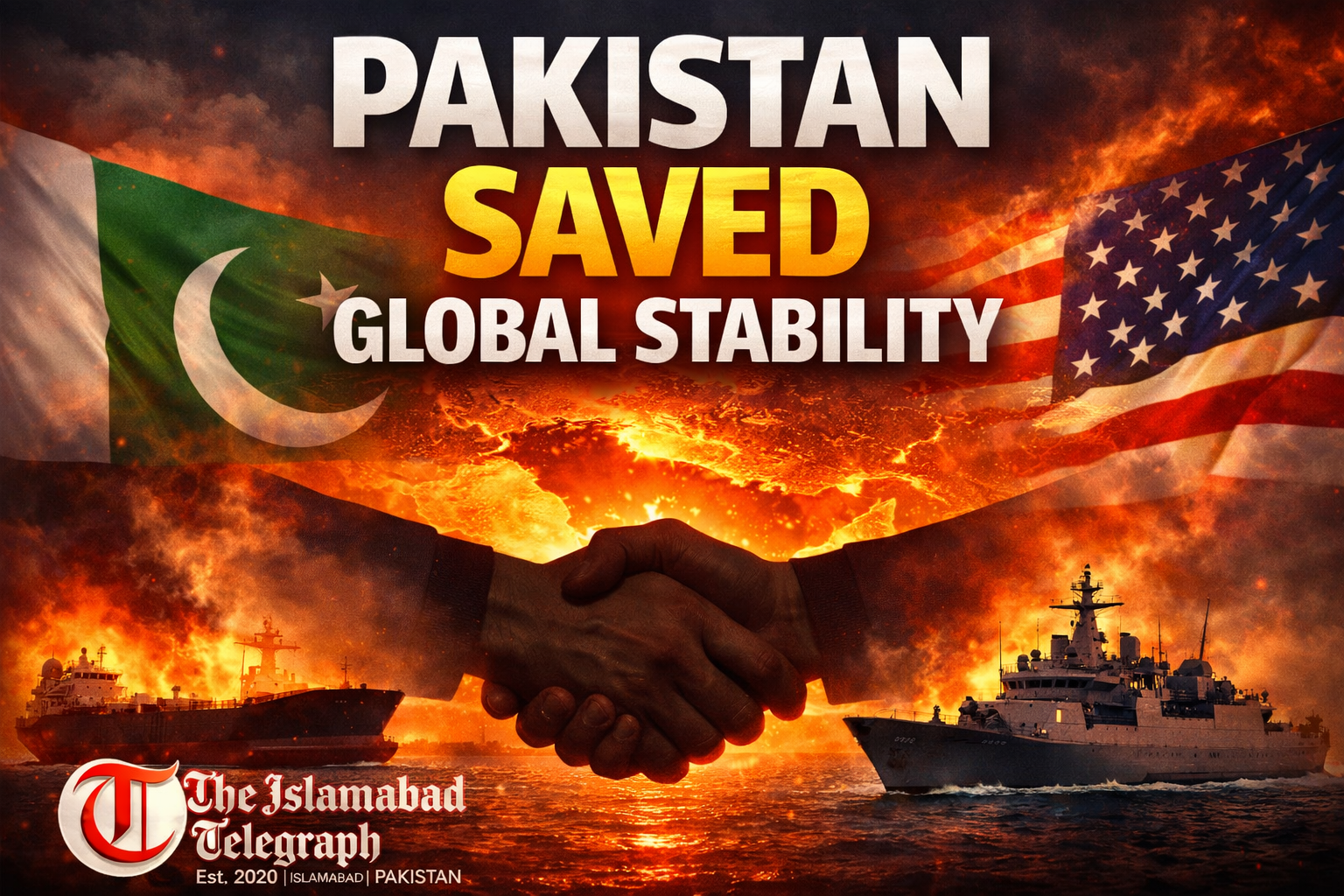
Pakistan Quiet Diplomacy positions Islamabad as a global peace broker
-
Islamabad Accord bridges decades-long US-Iran hostility
-
Strait of Hormuz reopening signals restored regional stability
-
Strategic leadership boosts Pakistan’s global diplomatic stature
In the high-stakes theater of global geopolitics, the loudest voices are rarely the most accurate. Not long ago, the international commentariat was quick to pen the obituary of regional stability. Pundits in Washington and London spoke of a “collapse” in communication, a point of no return between bitter adversaries. I did not share that pessimism. While the public discourse leaned toward the inevitable drumbeat of conflict, I maintained that the threads of dialogue had not snapped; they had merely moved beneath the surface.
Today, that perspective stands validated. The “Islamabad Talks” were never dead; they were evolving. As we prepare for a second, and what I believe will be the final, round of negotiations, the reality is clear: Pakistan has not only maintained the peace but has rewritten the history of the 21st century by bringing two foes to the table who had not looked each other in the eye for over four decades.
A New Strategic Recognition
The shift in the global atmosphere was perhaps best captured by an unexpected but significant gesture from the United States. When Donald Trump openly praised Pakistan’s Chief of Defence Forces (CDF), Field Marshal Asim Munir, describing him as a “fantastic person,” it was more than a personal pleasantry.
It was a calculated recognition of Pakistan’s renewed strategic weight. When Trump rhetorically asked why the U.S. should seek engagement elsewhere when no foundation exists, he was acknowledging a fundamental truth: Pakistan has emerged as the indispensable stabilizing force in a volatile region.
For the international community—from the Chancellery in Berlin to the halls of the Kremlin and the Great Hall of the People in Beijing—this signals a paradigm shift. Pakistan is no longer a state merely reacting to the dictates of global powers; it is a state asserting its own measured conduct to shape outcomes.
Asim Munir Iran Ceasefire: Pakistan Secures Historic US-Iran Truce, War Halted at Last Minute
This sense of honor is felt by every Pakistani globally. There is a profound dignity in knowing that our nation, guided by the grace of the Almighty, has been bestowed with the responsibility of being the world’s peacemaker. This recognition extends to our dual leadership: the military brilliance and restraint of Field Marshal Asim Munir, and the diplomatic stamina of Prime Minister Shehbaz Sharif. Together, they have restored the sanctity of the Pakistani passport and the pride of its people.
The Symbolism of the Straits
Nothing illustrates this newfound stature more vividly than the recent reopening of the Straits of Hormuz. After a tense pause that threatened the jugular vein of global energy markets, maritime traffic has been restored. It was no mere coincidence that a Pakistani-flagged tanker was the first to traverse those vital waters upon their reopening.
The Hour of Diplomacy — Pakistan’s Historic Hand in Turning War into a Ceasefire
While some may call it a stroke of luck, we see it as a powerful, symbolic gesture. The Pakistani flag leading the way through the world’s most sensitive maritime chokepoint served as a visual testament to our role as a bridge-builder. It was a moment of immense national pride, signaling that Pakistan is the key that unlocks regional gridlock.
This breakthrough was paved by the CDF’s pivotal three-day visit to Tehran. By engaging directly with the Iranian leadership, Pakistan bridged a chasm that had remained uncrossed for forty years. The success of the Islamabad Talks is not a joke or a fluke; it is the result of persistent, quiet, and courageous diplomacy.
Pakistan Quiet Diplomacy: The Riyadh-Doha-Beijing Consensus
The world’s capitals have taken notice. In Riyadh and Doha, the red carpet is no longer just a formality; it is a sign of genuine partnership. The flurry of Memorandums of Understanding (MOUs) being signed across the Gulf is a direct result of Pakistan’s repositioning. Regional powers now acknowledge that a stable, influential Pakistan is the prerequisite for a prosperous Middle East and Asia.
Iran war updates: Trump says US in ‘very deep’ negotiations with Tehran
From Moscow to Paris, the realization has dawned: Pakistan is playing a decisive role in returning peace to a world on the brink. We have demonstrated that even the most “unlimited” global powers operate within constraints. The United States, for all its might, found that engagement through the Islamabad channel was not just an option—it was a strategic necessity.
The Iranian Contribution and Collective Effort
It would be remiss not to acknowledge the seriousness with which our neighbors in Iran approached this dialogue. They entered these negotiations not with rhetoric, but with clear intent and a team of capable, intelligent individuals. These negotiators, who prioritized the complexities of peace over the simplicity of confrontation, will be remembered in “golden words” in the annals of history. Their readiness to talk, despite forty years of silence, proves that dialogue is the only path forward.
Furthermore, we extend our heartfelt gratitude to every nation that contributed to de-escalation. Peace is a collective endeavor, and the efforts of our international partners to stop the slide into conflict deserve our sincerest recognition.
Islamabad: The New Center of Gravity
The question is no longer whether global leaders visit Pakistan; the question is the success of the peace they seek here. Whether or not Donald Trump arrives in Islamabad is secondary to the fact that history is being made within our borders. We are witnessing the birth of a new era of “Strategic Patience.”
Real diplomacy does not always unfold in the glare of camera flashes or the 24-hour news cycle. It happens in the quiet rooms of Islamabad, through the persistence of our civilian leadership under Prime Minister Sharif and the strategic vision of Field Marshal Munir.
Pakistan has gained its due pride. We have repositioned ourselves not as a frontline state in someone else’s war, but as the frontline state for the world’s peace. This is, perhaps, the biggest moment in our history. We have proven that with courageous leadership and a unified national will, a nation can rise from the shadows of doubt to become the beacon of global stability.
The world once looked at the rift between these foes and saw an impossible divide. Pakistan looked at the same rift and saw a bridge. Today, the world is crossing that bridge.