



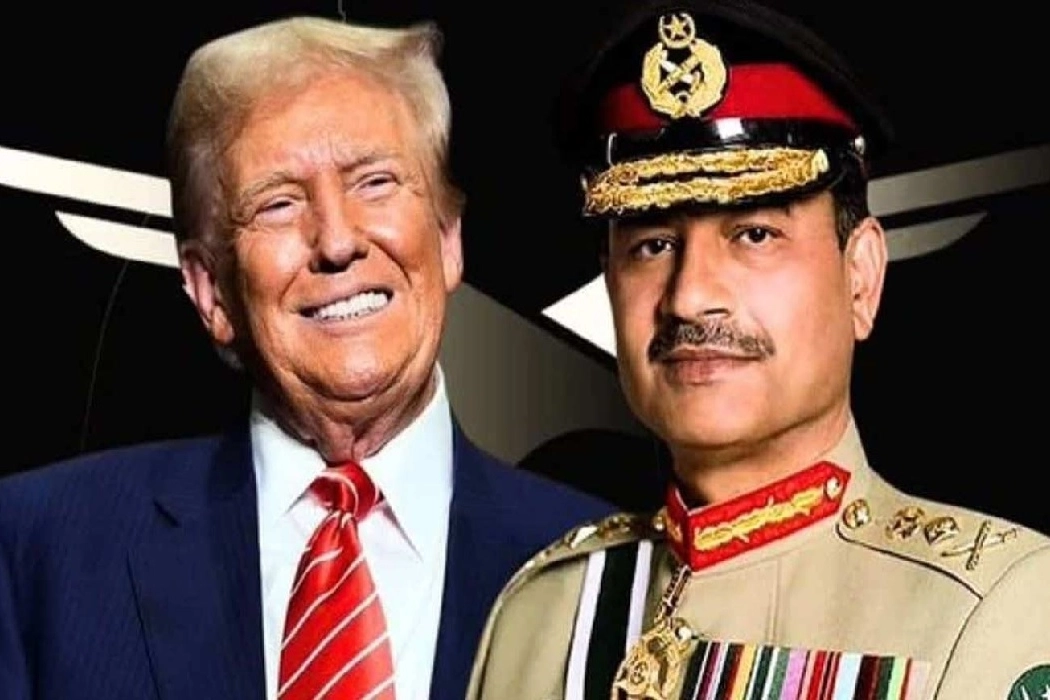
- Trump–Munir Bond: U.S. President Donald Trump and Pakistan’s Field Marshal Asim Munir have developed a strong personal rapport, credited with revitalizing bilateral counterterrorism cooperation.
- Joint Strategy Against Militants: Both sides reaffirmed commitment to dismantling BLA, ISIS-K, and TTP networks, sharing intelligence, and countering emerging technology misuse by terrorists.
- Recognition of Sacrifice: Washington openly acknowledged Pakistan’s role as a frontline state in the War on Terror, honoring the loss of 90,000 lives since 2001.
- Geopolitical Ripples: The renewed alliance is watched closely by India, welcomed quietly by China, and could reshape regional stability dynamics.
Two longtime partners in the global fight against terrorism have drawn closer than they have in years — and at the center of this unexpected warmth stand two men who could hardly be more different: Donald J. Trump, the brash American president in his second term, and Pakistan’s Field Marshal Asim Munir, a career intelligence officer turned national hero.
Their rapport has become the talk of diplomatic circles in Washington and Islamabad alike — a relationship forged through blunt conversation, shared strategic interests, and a mutual willingness to sweep away years of accumulated mistrust. Senior officials on both sides say much of the credit belongs to Field Marshal Munir, whose vision and disciplined diplomacy have helped pull Pakistan back into Washington’s inner circle after years of drift.
Trump’s Warm Welcome to Field Marshal Asim Munir Signals New Era in Pakistan-U.S. Ties
That shift was on vivid display when Mr. Trump welcomed Munir to the White House’s Oval Office for a meeting that ran nearly an hour longer than scheduled. Aides say the atmosphere was unusually personal: the two men exchanged warm praise, laughed about each other’s reputations for “getting things done,” and, at one point, studied an annotated map of South and Central Asia that Mr. Trump had marked with a thick black Sharpie. “You know this terrain better than anyone,” Trump reportedly told Munir, leaning across the Resolute Desk. “We trust your judgment.”
From Friction to Friendship
The meeting was more than just optics. According to officials briefed on the discussions, the two leaders agreed on a blueprint for deeper counterterrorism cooperation, particularly against the Balochistan Liberation Army (BLA), ISIS-Khorasan, and the Tehreek-e-Taliban Pakistan (TTP) — groups that have cost Pakistan tens of thousands of lives and threaten U.S. interests in the region.
READ MORE: A Razor’s Edge Between India and Pakistan
Only days after the Washington talks, the momentum carried into Islamabad, where senior officials from both countries convened for the latest round of the U.S.-Pakistan Counterterrorism Dialogue. Co-chaired by Pakistan’s Special Secretary for the United Nations, Nabeel Munir, and U.S. Department of State Acting Coordinator for Counterterrorism Gregory D. LoGerfo, the meeting produced a joint statement reaffirming a “shared commitment to combating terrorism in all its forms and manifestations.”
For Washington, this is more than rhetoric. The statement went out of its way to applaud Pakistan’s “continued successes” in containing terrorist entities, and to offer condolences for recent attacks, including the Jaffar Express bombing and the school bus tragedy in Khuzdar. Such explicit recognition of Pakistan’s sacrifices — an estimated 90,000 lives lost since 2001, including soldiers, police officers, and civilians — was once rare in American statements.
Field Marshal Munir’s Quiet Diplomacy
Diplomats say the shift owes much to Munir’s quiet but relentless work since taking over Pakistan’s military at a time of economic strain and complex regional threats. He has invested heavily in building direct lines of communication with U.S. counterparts, insisting that counterterrorism cooperation be treated as a shared responsibility rather than a one-sided demand.
ALSO READ: South Asia on the Brink: General Asim Munir and Pakistan’s New Doctrine of Deterrence
The White House visit was just the public culmination of months of back-channel talks. According to a senior Pakistani official, Munir arrived in Washington with a meticulously prepared dossier, detailing recent operations against militant groups and intelligence on emerging threats. The approach impressed American counterparts, who have long complained of vague assurances from Islamabad.
“Munir brought clarity, hard data, and a willingness to be candid about challenges,” said one U.S. official familiar with the talks. “It made a difference.”
The Counterterrorism Dialogue
The Islamabad meeting that followed was more than ceremonial. Officials discussed ways to counter the misuse of emerging technologies by extremists — from drone attacks to encrypted communications — and to strengthen institutional frameworks for rapid response. Both sides committed to work closely in multilateral forums like the United Nations, promoting strategies that tackle not only the military dimension of terrorism but also its ideological and financial underpinnings.
For Pakistan, this renewed alignment with Washington is part of a broader strategy to stabilize its borders and economy while diversifying diplomatic partnerships. For the U.S., it is a pragmatic acknowledgment that Pakistan’s cooperation is indispensable in preventing Afghanistan from again becoming a terror haven.
A Reset With Global Implications
The drama of the Trump–Munir meeting and the symbolism of the counterterrorism talks are not just bilateral milestones; they have ripple effects across the region. India, already wary of Pakistan’s revived stature in Washington, is watching closely. China, Pakistan’s all-weather ally, has quietly welcomed the thaw, seeing it as a stabilizing factor in a volatile neighborhood.
“This is not a transactional moment,” a retired Pakistani ambassador observed. “It’s the return of a strategic partnership that had been battered by years of suspicion. And it comes at a time when both countries need each other more than they admit publicly.”
For now, at least, the mood is one of cautious optimism. The next test will be whether the promises made in the Oval Office and the conference halls of Islamabad translate into sustained cooperation on the ground — and whether two strong-willed leaders can keep their unlikely friendship on course.