



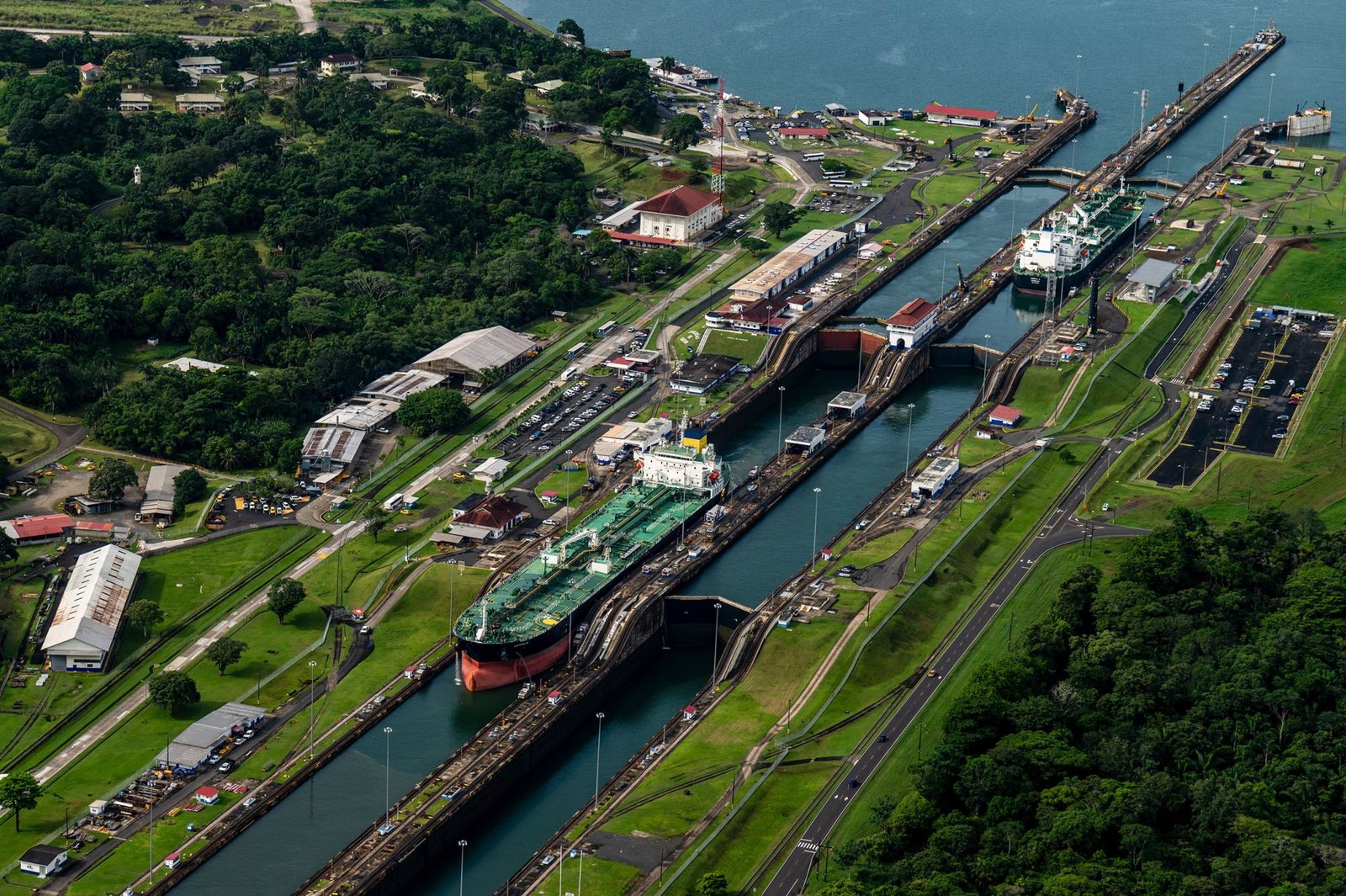
- The Panama Canal Port Deal involving a $23 billion asset sale is stalled after a major court ruling.
- CK Hutchison has initiated international arbitration against Panama following the annulment of its port licenses.
- President Trump views the removal of Chinese-linked operators as a strategic victory for U.S. national security.
- China has threatened “heavy prices” for Panama, citing the disruption of its maritime trade interests.
As of February 2026, the Panama Canal has evolved from a vital maritime shortcut into the epicenter of a high-stakes three-way collision between the United States, China, and Panama’s own judicial system. The quiet efficiency that characterized the waterway for decades has been replaced by legal warfare and aggressive rhetoric that threatens to upend global supply chains.
The Legal Flashpoint
The current crisis was ignited on January 29, 2026, when Panama’s Supreme Court delivered a stunning blow to international investment. The court annulled the long-standing licenses of the Panama Ports Company (PPC), a subsidiary of the Hong Kong conglomerate CK Hutchison.
The ruling declared that the contracts, which allowed the firm to operate the strategic ports of Balboa and Cristobal at either end of the canal, were unconstitutional because they granted “exclusive privileges” and tax exemptions.
By February 4, 2026, CK Hutchison retaliated by launching international arbitration proceedings through the International Chamber of Commerce in Paris. The conglomerate, controlled by Hong Kong’s wealthiest family, warned that the “absurd” ruling jeopardizes billions in investment. For now, the Panamanian government has tapped APM Terminals, a subsidiary of Maersk, to manage the ports temporarily, but the legal vacuum has paralyzed a planned $23 billion sale of CK Hutchison’s global port assets to a consortium led by BlackRock and MSC.
Trump’s “Take Back” Doctrine
For President Donald Trump, the chaos in Panama is not a crisis but an opportunity. Since his return to the White House, Trump has intensified his “Americas First” approach to the region, framing the 1977 Torrijos-Carter Treaties—which handed the canal to Panama in 1999—as a “foolish giveaway.”
Trump’s interest is fueled by two primary motives. First is economic leverage: he has repeatedly complained that American shippers are being “ripped off” by high transit fees, particularly during the 2023–2025 drought cycles when prices surged. He has threatened to “take back” the canal or exercise “something very powerful” to protect U.S. interests. Second is geopolitics: Trump views the presence of Hong Kong-based operators at the canal’s mouths as a “Trojan Horse” for the Chinese Communist Party. His administration, led by Secretary of State Marco Rubio, has characterized the port contracts as a direct national security threat, aiming to replace Asian influence with American or allied management.
China’s High-Stakes Gambit
Beijing has responded to the court ruling with uncharacteristic vitriol, warning Panama it will pay “heavy prices” for the decision. China’s stake in the canal is monumental; it is the waterway’s second-largest user and views the canal as a central node in its “Global Maritime Monopoly.”
The tension is exacerbated by reports that the Chinese state-owned giant COSCO has been lobbying for a majority stake in the CK Hutchison sale. China views any attempt by the U.S. to reclaim the canal as a return to 20th-century imperialism. For Beijing, the goal is to maintain a “maritime chokehold” that ensures its goods have priority access to the Atlantic while simultaneously challenging U.S. hegemony in the Western Hemisphere.
A Delicate Balance
Panamanian President José Raúl Mulino finds himself in an impossible position. While he has moved to satisfy U.S. security concerns by allowing the port contracts to be voided, he remains a fierce defender of Panamanian sovereignty. “The soul of a country is not up for discussion,” Mulino stated, flatly rejecting Trump’s calls to hand back control.
As 2026 progresses, the canal faces a dual threat: a legal quagmire that could take years to resolve and a geopolitical tug-of-war between two superpowers. With 40% of U.S. container traffic hanging in the balance, the Panama Canal is no longer just a feat of engineering—it is the world’s most dangerous chessboard.
How this arbitration might affect the $23 billion BlackRock-MSC port deal?
The $23 billion port deal between CK Hutchison, BlackRock, and Mediterranean Shipping Company (MSC) has hit a critical stalemate as of February 2026. What was once hailed as a masterstroke of maritime consolidation is now a primary front in the U.S.-China cold war.
1. The “Poison Pill” in the Portfolio
The deal involves 43 ports across 23 countries, but the two Panama Canal terminals (Balboa and Cristobal) were the crown jewels.
-
The Conflict: China initially “torpedoed” the deal by demanding that its state-owned giant COSCO receive a controlling stake in the buying consortium—a demand BlackRock and MSC flatly rejected.
-
The Court’s Blow: With Panama’s Supreme Court annulling the licenses on January 30, 2026, CK Hutchison may no longer even own the assets it is trying to sell. This has led to a “stalemate” where analysts speculate the portfolio may have to be split, or the Panama ports excluded entirely to save the remaining $19+ billion in assets.
2. Impact on Global Shipping Insurance
The instability has sent “shockwaves” through the maritime insurance sector. In 2026, the industry is already reeling from Red Sea disruptions and drought-related slot restrictions at the Canal.
-
Increased Risk Premiums: Insurers are now pricing in “political and judicial risk” for any vessel utilizing ports under dispute.
-
Alternative Routes: The uncertainty is driving a 12% increase in demand for alternative routes, such as the Mexican Interoceanic Corridor, as shippers look for “legal predictability” that the Panama Canal currently lacks.
3. Geopolitical Fallout: Trump vs. Xi
The deal has become a zero-sum game for the superpowers:
-
For Trump: The court ruling is a “win for America.” By preventing a Chinese-linked firm from selling to a consortium that Beijing wanted to infiltrate, the U.S. has effectively neutralized Chinese commercial leverage at the Canal’s mouth.
-
For Xi Jinping: Beijing has labeled the ruling “shameful and pathetic,” promising “heavy prices” for Panama. This suggests that China may use economic sanctions or “maritime gray-zone tactics” (such as rerouting state-owned COSCO vessels to bypass Panama) to punish the Mulino administration.
| Factor | Current Status | Impact on Deal |
| Panama Ports | Licenses Annulled; Under Arbitration | Assets may be removed from the $23B sale. |
| China (COSCO) | Demanding Control | Blocking completion; threatening Panama with sanctions. |
| BlackRock/MSC | Re-evaluating | Considering a “restructured” deal excluding Panama. |
| U.S. Position | “Take Back” Rhetoric | Encouraging the legal removal of Chinese influence. |