



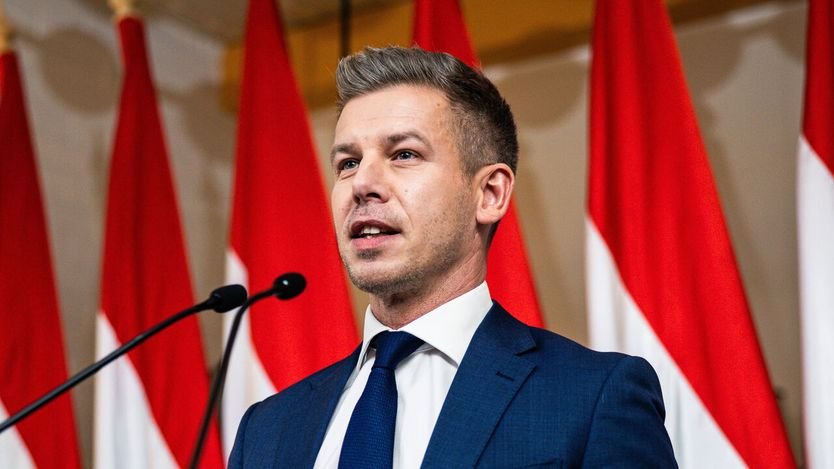
- Peter Magyar landslide victory Hungary signals a decisive public rejection of Viktor Orban’s long rule
- Record voter turnout highlights widespread demand for political and economic change
- Orban concedes defeat gracefully, ensuring a peaceful democratic transition
- Hungary set for major domestic reforms and a renewed relationship with the European Union
In what many observers are calling less an election and more a national reckoning, Hungarian voters have delivered a sweeping mandate to Peter Magyar, ending the 16-year dominance of Viktor Orban and his Fidesz party.
With more than 96 percent of ballots counted, Magyar’s Tisza Party is projected to secure 138 seats in Hungary’s 199-seat parliament—well above the two-thirds threshold required for constitutional authority. Orban’s Fidesz, once the unchallenged political force in the country, is set to win just 55 seats.
The scale of the victory has prompted analysts to describe the vote not as a routine democratic exercise, but as a referendum on Orban’s long rule—one marked by centralized power, repeated clashes with the European Union, and growing domestic discontent.
Standing before thousands of jubilant supporters along the Danube, Magyar framed the result in historic terms. “Today we have worked a miracle. Hungary has written history,” he said. “Truth triumphed over lies.”
Hungary Elections 2026: Viktor Orbán Faces His Toughest Challenger in 14 Years of Rule
Yet amid the political earthquake, Orban’s response stood out for its restraint. In a brief concession speech, the veteran leader acknowledged the “clear” outcome and thanked his supporters, calling on his party to rebuild. “We never give up,” he said, striking a tone of dignity that earned him quiet respect even among critics. After years of polarizing politics, his peaceful concession offered Hungary a rare moment of democratic grace.
For voters, the message was unmistakable. After more than a decade and a half under one leader, many Hungarians sought change—driven less by ideology and more by everyday concerns. A sluggish economy, underfunded public services, allegations of corruption, and fatigue with a familiar political script all contributed to the shift.
Hungary Elections 2026: A Strategic Referendum on War, Sovereignty, and Europe’s Future
Magyar’s campaign capitalized on that sentiment. Crisscrossing the country and engaging directly with voters, he promised to restore democratic norms and rebuild institutions weakened under Fidesz rule. His central pledges included re-establishing checks and balances, strengthening judicial independence, and ensuring transparency in government spending.
Equally significant was his commitment to reorient Hungary’s foreign policy. Under Orban, Budapest often clashed with Brussels, using its veto power to block key European Union initiatives, including financial support packages for Ukraine. Magyar, by contrast, has vowed to restore Hungary as a “strong ally” within both the European Union and NATO, signaling a potential shift in the bloc’s internal dynamics.
Hungary’s Viktor Orban, ally of Trump and Putin, concedes election defeat
His promises extended to domestic reform as well. Magyar pledged increased investment in healthcare and education, anti-corruption measures targeting procurement systems, and policies aimed at revitalizing Hungary’s struggling economy. Importantly, he also positioned himself as a unifying figure—offering a bridge for disillusioned former Fidesz supporters seeking change without abandoning conservative values.
The implications of this political transformation extend far beyond Hungary’s borders. For the European Union, Orban’s departure from power removes one of its most persistent internal challengers. His government had frequently stalled collective decisions, complicating consensus on issues ranging from sanctions on Russia to migration policy.
Magyar’s victory could therefore usher in a more cooperative Hungary within the EU framework, potentially easing long-standing tensions in Brussels. It may also recalibrate the balance of power within Europe, weakening populist networks that once viewed Orban as a model for “illiberal democracy.”
At the same time, the transition presents formidable challenges. Orban’s influence remains embedded across key state institutions, including the judiciary and constitutional bodies. Dismantling or reforming these structures will require not only political will but careful navigation to avoid institutional paralysis.
For Hungary, the road ahead is both uncertain and full of possibility. The election has opened a new chapter—one defined by expectations of renewal but also by the weight of delivering meaningful change.
As the celebrations fade and governance begins, Magyar faces the task of translating promises into policy. His success or failure will determine whether this moment is remembered as a turning point or a missed opportunity.
What is clear, however, is that Hungary has spoken with unusual clarity. This was not merely an election—it was a collective decision to close one era and cautiously step into another.