



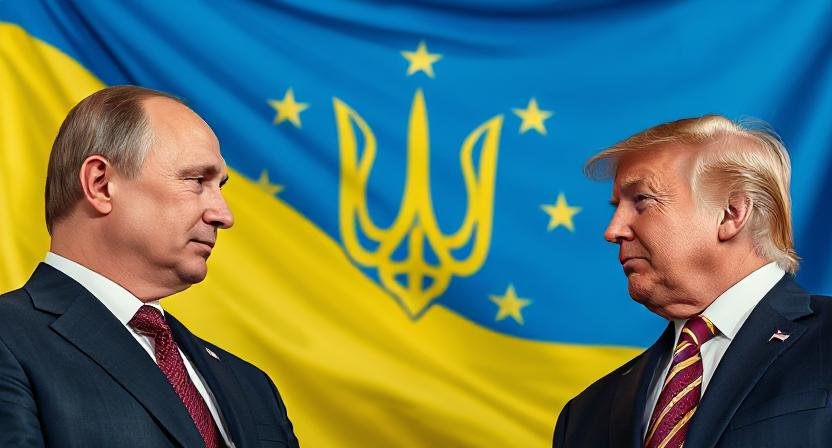
- Putin demands Ukraine cede the Donbas, renounce NATO, and remain neutral in exchange for peace.
- Trump signals readiness to negotiate on Moscow’s terms, arranging a trilateral summit with Zelenskiy.
- Kyiv rejects surrender, calling the Donbas essential for national security and territorial integrity.
- Security guarantees for Ukraine remain the biggest unresolved issue in any potential peace deal.
The three-hour closed-door summit between Russian President Vladimir Putin and U.S. President Donald Trump in Anchorage, Alaska, has produced what Kremlin insiders describe as the clearest Russian peace offer since the war in Ukraine began more than three years ago. Yet, despite the high-stakes diplomacy, one question looms over the entire process: if Ukraine concedes territory and neutrality, who guarantees its sovereignty and security?
According to multiple Russian sources familiar with the negotiations, Putin made clear to Trump that Russia would agree to halt the war only if Ukraine fulfills a set of sweeping demands: surrender all remaining territory in the eastern Donbas region, abandon ambitions to join NATO, legally commit to neutrality, and bar any foreign troops from its soil.
In a striking development, senior U.S. officials—and Trump himself—have signaled readiness to accept Putin’s framework as the basis for future negotiations. Trump, seeking what he calls “the biggest peace deal of the century,” is reportedly arranging a trilateral summit with Putin and Ukrainian President Volodymyr Zelenskiy to finalize a potential settlement.
Yet, Kyiv remains defiant. Zelenskiy insists Ukraine will not surrender internationally recognized territory or its NATO ambitions, calling the Donbas region a “fortress” against further Russian expansion.
Putin’s Calculated Concessions
Moscow’s new proposal marks a shift from its maximalist stance in June 2024, when Putin demanded Kyiv cede four regions—Donetsk, Luhansk, Kherson, and Zaporizhzhia—while halting all military cooperation with the West.
Now, according to Russian sources, Putin is willing to limit demands to the Donbas in exchange for freezing front lines elsewhere. Russia currently controls about 88% of the Donbas and 73% of Kherson and Zaporizhzhia.
“Putin is ready for peace—for compromise,” said one Kremlin insider. “The message to Trump was clear: end the war on these terms, or the fighting continues.”
Moscow also floated the possibility of handing back small occupied territories in Kharkiv, Sumy, and Dnipropetrovsk as a goodwill gesture if Kyiv agrees to its core demands.
The U.S. Dilemma: Ending the War vs. Guaranteeing Peace
Trump has cast himself as a peacemaker president eager to stop what he calls the “bloodbath” in Ukraine. His team, led by envoy Steve Witkoff, has been instrumental in reopening communication channels between Washington and Moscow.
Yet, even if Trump brokers a deal, the million-dollar question remains: Who guarantees Ukraine’s security once it renounces NATO and cedes territory?
One option discussed involves reviving the failed 2022 Istanbul framework, under which Ukraine would adopt permanent neutrality in exchange for security guarantees from the five permanent members of the U.N. Security Council: the U.S., U.K., France, China, and Russia.
But critics note that Russia itself, as a veto-wielding Security Council member and a direct party to the conflict, cannot be a credible guarantor. Western European powers remain skeptical of Putin’s intentions, warning that any deal lacking enforcement mechanisms would only give Moscow time to regroup militarily.
Ukraine’s Red Lines
For Kyiv, the stakes could not be higher. Zelenskiy argues that surrendering the Donbas would not bring peace but rather embolden Moscow to demand more later.
“Withdrawal from the east is not an option,” he said. “This is about our country’s survival.”
Moreover, NATO membership remains enshrined in Ukraine’s constitution as a strategic objective. Abandoning it would require a two-thirds parliamentary majority—a political impossibility under current conditions.
Analysts like Samuel Charap of RAND say Putin’s offer may be less about compromise and more about testing Western resolve.
“Openness to ‘peace’ on terms categorically unacceptable to Ukraine could be more of a performance for Trump than a genuine concession,” Charap noted.
The Road Ahead
Trump plans to host both Putin and Zelenskiy in a trilateral summit, but serious obstacles remain. Russia controls roughly one-fifth of Ukraine’s territory—an area the size of Ohio—and has shown no willingness to discuss Crimea, annexed in 2014.
European leaders remain wary. Britain, France, and Germany have all expressed skepticism about Putin’s intentions, warning that any premature deal could undermine international law and reward aggression.
For now, the war grinds on as diplomats weigh imperfect compromises against the risk of endless conflict. As one Russian source bluntly put it:
“There are two choices: war or peace. If there is no peace, there will be more war.”