



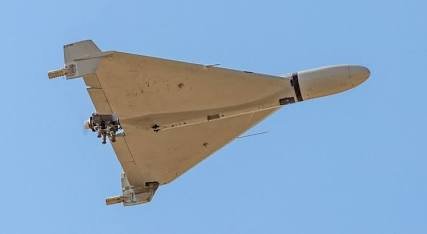
- Russia drone army Ukraine War: Moscow is deploying increasingly sophisticated and faster Geran drones in large numbers, creating a new challenge for Ukraine’s air-defence network.
- Ukraine war: The conflict is increasingly becoming an industrial battle over drones, missiles, interceptors, ammunition and the ability to sustain prolonged warfare.
- Patriot missile shortage: Ukraine’s limited supply of high-end air-defence interceptors is becoming a major vulnerability as Russia combines drones with ballistic and cruise missiles.
Russia’s war in Ukraine has entered a new and potentially decisive phase. Moscow is increasingly using mass-produced attack drones, including faster jet-powered variants derived from Iran’s Shahed technology, to overwhelm Ukrainian air defences, exhaust expensive interceptors and keep Ukrainian cities under almost continuous pressure.
For more than four years, the Ukraine war has largely been described as a grinding conflict of artillery, infantry, tanks and missiles. That description is becoming increasingly incomplete. The decisive contest is now also taking place in the air—and Russia appears to have developed a formidable advantage in the mass production and deployment of unmanned weapons.
The latest attacks on Kyiv illustrate the transformation. Russia launched about 1,500 long-range drones against Ukraine over four days, according to President Volodymyr Zelenskyy, with roughly 800 of them reportedly jet-powered. Instead of concentrating attacks into a single nighttime barrage, Moscow is increasingly sustaining pressure throughout the day and night. The result is a new form of aerial warfare designed not merely to destroy targets but to exhaust an entire society.
The Wall Street Journal has described the development as a new generation of Russian drones and all-day attacks designed to wear down Ukrainians. Russia Turns to New-Generation Drones and All-Day Attacks to Wear Down Ukrainians
From Iranian Shahed to Russian Geran
Russia’s drone revolution began with Iran.
Moscow started using Shahed-type one-way attack drones extensively in 2022. Their attraction was obvious: they were substantially cheaper than sophisticated cruise missiles and could be launched in large numbers to force Ukraine to expend far more expensive air-defence ammunition.
Russia subsequently established domestic production and modified the Iranian design for its own requirements. The result is the Geran family.
The latest development is particularly significant: jet-powered Gerans are reportedly capable of reaching speeds approaching 300 miles per hour, roughly three times the speed of older propeller-driven Shahed-type drones.
READ NEXT: Russia-Ukraine War Enters a New Phase as Drone Conflict Reaches the Baltic
This has altered the economics of interception.
Ukraine had become increasingly effective against older Gerans. By the summer, Ukrainian defences were reportedly destroying around 90% of many older propeller-powered drones, sometimes using relatively cheap interceptor drones.
Russia’s answer has been speed, scale and persistence.
The Wall Street Journal reported that the newer jet-powered Gerans are becoming a much more important part of Moscow’s long-range strike campaign. In some recent attacks, Ukrainian officials said, jet-powered drones accounted for as much as two-thirds of the Gerans being launched.
The transformation of the Shahed is itself a lesson in modern warfare. Iran supplied the foundational technology, but the weapon has subsequently been transformed through Russian production and a broader international supply chain. The WSJ has reported that Chinese manufacturing has played an important role in supplying engines, components and other technologies used in newer versions.
READ MORE: Russia Turns to New-Generation Drones and All-Day Attacks to Wear Down Ukrainians
The story is therefore not simply one of Iranian assistance to Russia. It is the emergence of a global low-cost weapons ecosystem in which relatively inexpensive components can be combined to produce increasingly sophisticated attack systems.
Russia drone army Ukraine War: The economics of saturation warfare
Russia does not need every drone to reach its target.
It needs enough drones to force Ukraine to spend more money and scarce ammunition defending itself than Moscow spends attacking it.
That is the essence of saturation warfare.
A relatively inexpensive one-way drone can force defenders to launch an interceptor costing many times more. Even when the drone is destroyed, Russia may still have achieved its strategic objective by exhausting Ukraine’s defensive resources.
This is why the drone war is increasingly becoming an industrial war.
Russia’s advantage is not necessarily that every Russian weapon is technologically superior to its Western equivalent. Its advantage is that Moscow has built the capacity to manufacture and deploy large numbers of weapons continuously.
That is the central lesson explored in The Islamabad Telegraph’s analysis of the emerging global missile gold rush: modern warfare is increasingly being determined by who can produce missiles, interceptors and drones at scale.
Russia drone army Ukraine War: Patriot shortage exposes Ukraine
Russia is simultaneously attacking Ukraine with ballistic missiles and cruise missiles.
That combination creates a particularly difficult problem.
Ukraine can increasingly use comparatively inexpensive systems against slower drones, but ballistic missiles require sophisticated air-defence systems. The American-made Patriot remains Ukraine’s principal system capable of intercepting many of Russia’s most advanced ballistic threats.
And Kyiv is running short of Patriot interceptors.
The Washington Post reported that Ukraine’s shortage has become critical, with Russian ballistic missiles increasingly penetrating Ukrainian air defences.
The problem is part of a wider Western ammunition crisis.
The United States and its allies have consumed substantial quantities of advanced interceptors during both the Ukraine conflict and the subsequent Middle East war. The Washington Post reported in August that U.S. Patriot stocks had fallen sharply, while European allies were also struggling with limited inventories.
The Islamabad Telegraph’s analysis of Patriot versus SAMP/T and the future of European air defence highlights the broader strategic problem: Europe cannot instantly replace American air-defence capacity.
Factories require years to expand production.
This is where Russia’s low-cost drone strategy becomes strategically dangerous.
Europe is spending—but time is the problem
The European Union and its member states have provided enormous military and financial assistance to Ukraine.
But the battlefield is exposing the difference between financial commitment and immediate military availability.
Europe can allocate billions of euros to Ukraine and still face shortages of specific missiles and air-defence interceptors.
Russia, meanwhile, has spent years expanding its defence-industrial base.
The Kremlin has increasingly integrated drones, electronic warfare, artificial intelligence, missiles and battlefield intelligence into a single industrial system.
The result is a war in which industrial capacity may matter as much as battlefield courage.
Ukraine’s drones have hurt Russia
It would nevertheless be wrong to portray Ukraine as technologically helpless.
Kyiv has built an increasingly formidable long-range drone capability.
Ukrainian drones have struck Russian oil refineries, military facilities, logistics centres and industrial infrastructure deep inside Russia. Ukraine has demonstrated an ability to manufacture large numbers of long-range unmanned systems and use them to impose economic and military costs on Moscow.
Recent Ukrainian attacks have demonstrated that Russia itself has serious air-defence vulnerabilities. The Wall Street Journal reported that Ukrainian long-range drones have increasingly penetrated deep into Russian territory and targeted critical energy infrastructure.
The Ukrainian drone campaign therefore remains one of the most important constraints on Russia.
But Moscow has responded.
And that response may be changing the balance.
Russia’s drone army changes the battlefield
The most important Russian achievement is not simply the development of a faster drone.
It is the ability to produce and deploy an army of drones.
Russia can now combine hundreds of attack drones with cruise missiles, ballistic missiles and other weapons. The objective is to overload Ukraine’s decision-making and air-defence network.
The new jet-powered Gerans make the equation more difficult because the defender has less time to identify, track and destroy the incoming aircraft.
On August 6, Ukraine reportedly intercepted only about 65% of 101 mostly jet-powered Gerans, according to the Centre for Information Resilience. That was significantly below the interception rates Ukraine had achieved against older variants.
If that trend continues, the implications are profound.
A 90% interception rate means one in ten weapons gets through.
A 65% interception rate means more than one in three gets through.
When hundreds or thousands of drones are launched, that difference becomes enormous.
Has Russia gained the upper hand?
There is a strong argument that Moscow has gained an upper hand in the long-range aerial campaign, although declaring that Russia has won the war would be premature.
Russia continues to suffer heavy battlefield losses and has struggled to achieve rapid territorial breakthroughs. The war remains extraordinarily costly for Moscow.
But the nature of the Russian offensive is changing.
By replacing some of the burden previously carried by infantry assaults with drones, missiles and stand-off weapons, Russia can impose costs on Ukraine while reducing the need to expose soldiers directly to enemy fire.
It would therefore be misleading to claim that Russian troop deaths have definitively fallen because of the new drone army. Public battlefield casualty estimates are too uncertain to establish such a direct causal relationship.
The more defensible conclusion is that Russia is increasingly able to substitute machines for manpower in portions of its long-range offensive campaign.
That could become one of the most consequential developments of the war.
Ukrainian war fatigue is becoming harder to ignore
There is another battlefield that Moscow may increasingly be targeting: Ukrainian public morale.
After more than four years of war, millions of Ukrainians have experienced displacement, economic disruption, mobilisation, deaths of relatives and repeated attacks on civilian infrastructure.
Recent political protests have also demonstrated that wartime unity is no longer unconditional.
It would be wrong to claim that Ukrainians collectively oppose President Zelenskyy or want surrender. Ukraine’s resistance remains substantial.
But political pressure is increasing.
The longer the war continues without a decisive breakthrough, the more difficult it becomes for Kyiv to maintain the same level of public mobilisation.
Every night of air-raid sirens, every destroyed apartment building, every power disruption and every family separated by mobilisation adds to the social cost.
Russia’s strategy may therefore be broader than destroying military targets.
It may be attempting to create a permanent sense of insecurity in Ukrainian cities.
The Wall Street Journal has reported that Kyiv residents are increasingly dealing with repeated air-raid alerts, disrupted transport, closed businesses and an inability to plan ordinary daily life.
That is precisely the kind of pressure Moscow hopes can eventually translate into political demands for negotiations.
NATO is under pressure—but not breaking apart
Claims that the United States and NATO have already broken up would be inaccurate.
The alliance remains intact.
But the Ukraine war, combined with the Middle East conflict, has exposed serious weaknesses in Western stockpiles and production capacity.
The United States has had to balance support for Ukraine with its own global requirements. Europe is being pushed toward greater responsibility for its own defence.
Russia is exploiting this transition.
The Telegraph has reported that Moscow has established secret drone bases capable of putting high-powered drones within striking distance of NATO territory.
That development illustrates why the drone revolution extends far beyond Ukraine.
The next phase will be industrial
The central question of the Ukraine war is increasingly becoming: who can manufacture weapons faster, cheaper and in greater quantities?
Ukraine possesses highly innovative engineers, increasingly sophisticated long-range drones and substantial Western backing.
Russia possesses a large industrial base, battlefield experience, access to Iranian drone technology and increasingly sophisticated production networks.
The West possesses extraordinary technological capabilities but faces production bottlenecks in missiles and interceptors.
The answer may ultimately determine the war.
Russia’s new drone army has not won Ukraine for Moscow. But it has changed the strategic equation.
The era when Ukraine could rely on destroying most incoming drones with relatively inexpensive interceptors is ending.
The age of continuous, industrial-scale drone warfare has arrived.
And if Russia can sustain the production of fast, cheap and lethal drones while Ukraine continues to struggle for Patriot interceptors and other high-end air-defence weapons, Moscow could convert its advantage in the air into a broader strategic advantage on the ground.
The Ukraine war may therefore be entering its most dangerous phase yet—not because Russia has achieved a decisive military breakthrough, but because Moscow appears to have discovered how to make the war increasingly expensive, exhausting and difficult for Ukraine to sustain.
The ultimate weapon may not be the most sophisticated missile.
It may be the ability to produce thousands of adequate weapons every month while forcing the enemy to spend millions stopping them.