



-
Saudi Arabia Abraham Accords participation remains highly unlikely in 2025.
-
Riyadh insists on a credible roadmap to Palestinian statehood before normalization.
-
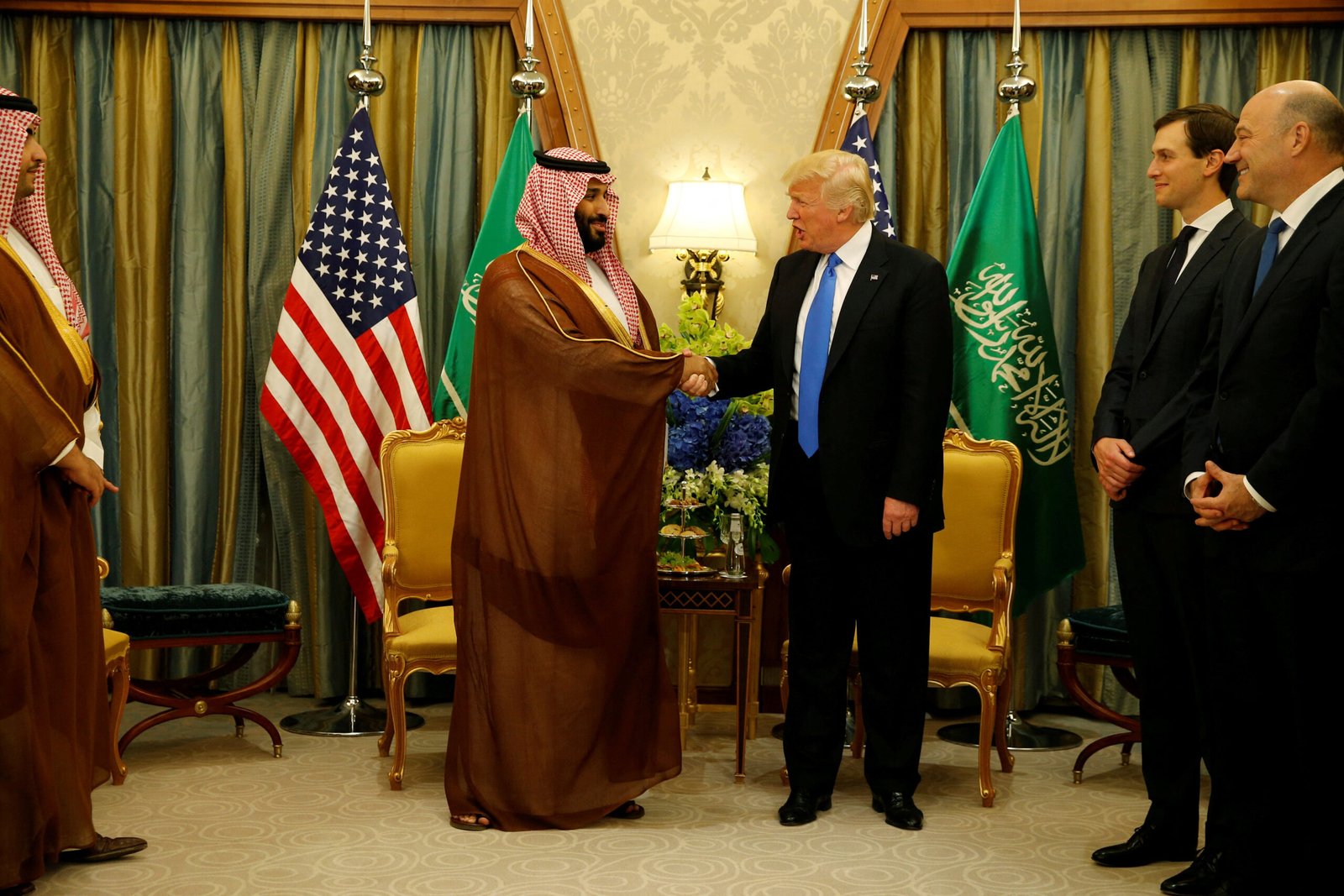
The Trump-MBS meeting will focus on defence and investment, not Israel.
-
A scaled-down defence pact may evolve into a treaty later, but normalization is off the table for now.
United States President Donald Trump has been talking up the prospects of Saudi Arabia joining the Abraham Accords, hoping to crown his return to global diplomacy with a major Middle East breakthrough. Yet, according to exclusive information obtained by The Islamabad Telegraph from sources in Riyadh, the Kingdom has no immediate plans to normalize ties with Israel — at least not during Crown Prince Mohammed bin Salman’s upcoming visit to Washington this month.
Despite months of covert U.S. diplomacy, Riyadh has privately communicated to Washington that its stance remains unchanged: no recognition of Israel until a credible roadmap toward Palestinian statehood is established. The sources confirm that Saudi leadership is keen to avoid any diplomatic missteps that might overshadow its evolving defence and economic relations with the U.S.
Trump’s Vision and MBS’s Calculus
For President Trump, expanding the Abraham Accords is central to his vision of reshaping the Middle East — projecting U.S. influence and isolating Iran. “We’re going to get Saudi Arabia very soon,” he declared earlier this month, implying that the Kingdom’s inclusion would trigger a domino effect across the Muslim world.
From Riyadh With Power: Trump’s First Trip Back Puts MBS at the Center of U.S. Strategy
But MBS — a pragmatic strategist — sees normalization differently. To him, the issue is inseparable from the Palestinian question. In his internal deliberations, the Crown Prince has reportedly told advisers that “no formal ties with Israel can be forged without justice for Palestine.”
Jonathan Panikoff, former U.S. deputy national intelligence officer for the Middle East, told The Islamabad Telegraph that MBS “is not likely to entertain any possible formalizing of ties without a credible pathway to a Palestinian state.”
Trump’s Historic Saudi Visit: How MBS Positioned the Kingdom as a Global Powerhouse
Riyadh’s cautious stance reflects not just political prudence, but deep public sentiment across the Arab world. Following Israel’s devastating offensive in Gaza after the October 2023 conflict, Arab anger remains raw. Any gesture toward normalization would carry domestic and religious risks, particularly as Saudi Arabia remains the custodian of Islam’s two holiest cities, Makkah and Madina.
The Strategic U.S.–Saudi Relationship
To understand why Saudi Arabia Abraham Accords remain elusive, one must revisit the long and complex U.S.–Saudi relationship. Established in 1945, the alliance has weathered decades of geopolitical storms — from Cold War oil politics to counterterrorism and Iran containment.
Saudi Crown Prince MBS to visit Trump on Nov 18: White House
Trump’s earlier presidency revitalized the relationship in a striking way. His historic 2017 visit to Riyadh marked the first foreign trip of his term, where he signed contracts worth over $400 billion, including $110 billion in defence deals. The visit signaled a new era of economic and strategic partnership, with Saudi Arabia portrayed as America’s anchor in the Muslim world.
Now, in 2025, Trump hopes to revive that momentum. His administration is preparing a scaled-down defence pact with Riyadh, which stops short of a full, Senate-ratified treaty but includes vital provisions for joint military exercises, arms sales, and technological cooperation. This pact could be seen as a stepping stone toward a broader security architecture — but not the grand normalization Trump envisioned.
Why Riyadh Is Saying “Not Yet”
For Riyadh, normalizing ties with Israel is not a political trophy but a national security decision with vast implications. The Kingdom’s foreign ministry has consistently reiterated that a two-state solution and Israeli withdrawal from occupied territories are prerequisites for any normalization.
“Saudi Arabia’s national security priorities will determine its regional stance, including on Israel,” said Dr. Abdelaziz al-Sagher, head of the Gulf Research Center in Jeddah. “The Abraham Accords cannot be divorced from Palestinian statehood.”
This nuanced position underscores MBS’s attempt to balance between strategic autonomy and regional leadership. While Saudi Arabia wants to maintain strong defence ties with Washington, it also seeks to preserve growing trade and technology cooperation with China — a relationship that complicates U.S. expectations of exclusivity.
According to diplomatic sources, the proposed defence deal includes clauses limiting Riyadh’s military-industrial ties with Beijing — a condition Saudi officials are negotiating cautiously.
Changing Threat Perceptions
Another key reason Riyadh is not rushing into the Abraham Accords lies in the shifting regional power dynamics. Iran — once the biggest motivator for Gulf-Israel alignment — has been strategically weakened by Israeli strikes on its nuclear facilities and setbacks for its proxies in Lebanon, Gaza, and Yemen.
As the perceived Iranian threat recedes, the urgency for a NATO-style defence pact with the U.S. has diminished. Without that pressing security incentive, Riyadh feels no compulsion to pay the political price of recognizing Israel prematurely.
A Diplomatic Tightrope
Sources close to the Saudi leadership told The Islamabad Telegraph that the upcoming White House talks will focus squarely on defence cooperation, investment, and regional stability, not the Abraham Accords. MBS aims to reinforce Saudi Arabia’s reputation as a rising global player, not one bound by American expectations.
While Trump seeks a symbolic victory to strengthen his foreign policy narrative, MBS is pursuing a long game — one that intertwines domestic reform, strategic balance, and Arab leadership.
For now, the Abraham Accords will remain on hold, as Riyadh sees no credible path toward peace between Israelis and Palestinians. Until that changes, Saudi Arabia will not trade its moral and political capital for a diplomatic handshake that risks alienating its people and destabilizing the region.