



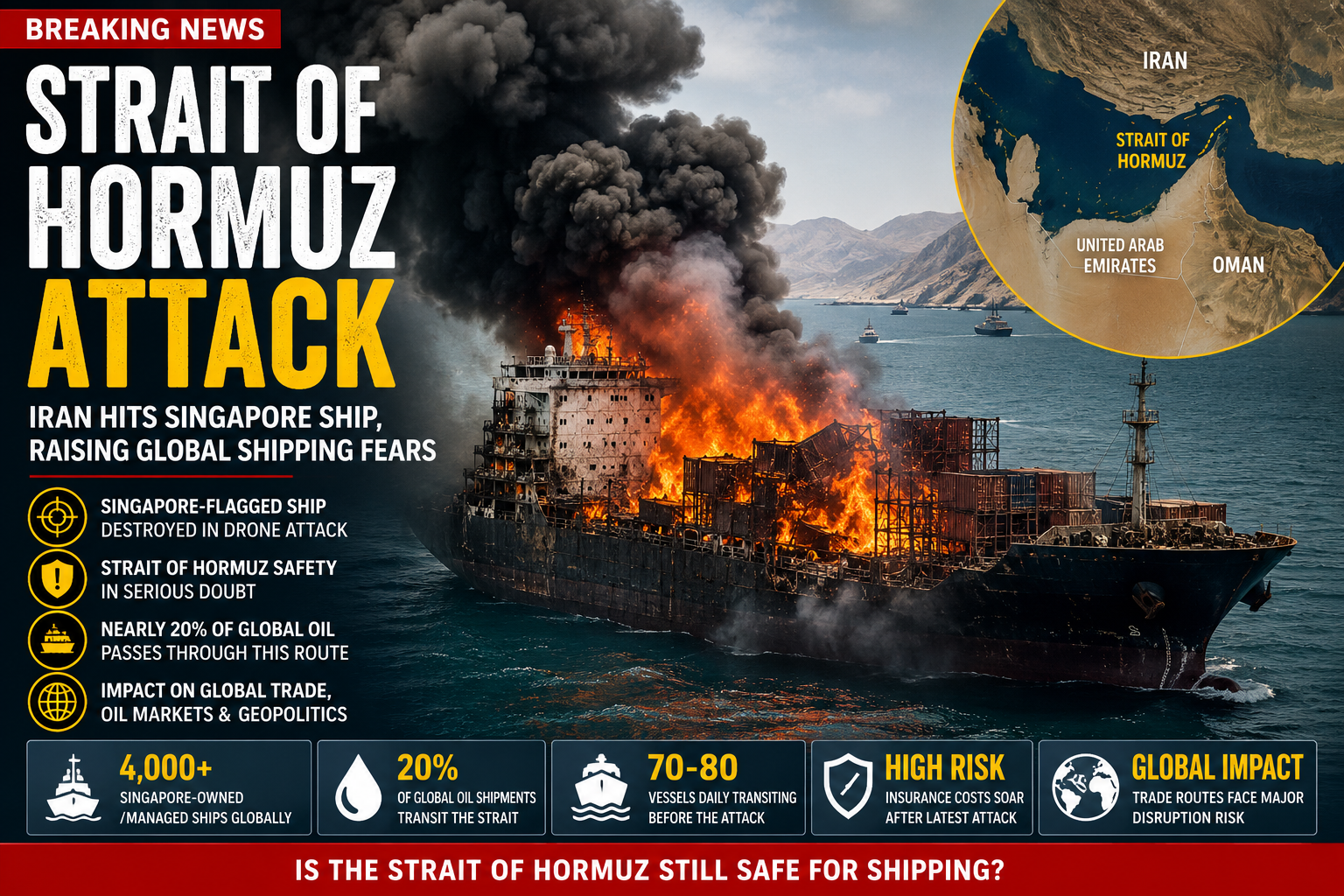
- Strait of Hormuz attack exposes vulnerabilities in global shipping routes
- Iran deliberately targeted a Singapore-flagged vessel using a drone strike
- Rising insurance costs and shipping risks threaten global trade flows
- Maritime tensions could disrupt 20% of global oil passing through the strait
The Strait of Hormuz attack has once again jolted global maritime security, after Iran’s Islamic Revolutionary Guard Corps (IRGC) struck a Singapore-flagged cargo vessel in a calculated drone assault, raising alarm over the safety of one of the world’s most critical energy chokepoints. The targeted vessel, sailing under an internationally recognized evacuation corridor, was damaged severely—reportedly reduced to ashes mid-sea—marking a dangerous escalation just days after a U.S.-Iran deal intended to stabilize the region.
The attack was not accidental. U.S. officials confirmed that a one-way drone deliberately maneuvered toward the vessel before impact, indicating premeditation. The strike came hours after Iran warned ships against using routes not sanctioned by its own maritime authority, effectively challenging the International Maritime Organization (IMO) and testing the credibility of the newly signed 60-day agreement with Washington.
Why Did Iran Attack? Strategic Signaling and Control
At the heart of this incident lies Iran’s long-standing objective: asserting control over the Strait of Hormuz. Despite agreeing to ensure safe passage in exchange for sanctions relief, Tehran appears determined to enforce its own rules of navigation. By targeting a Singapore-linked vessel—widely seen as neutral and commercially oriented—Iran sent a broader message to global shipping: comply with Iranian-designated routes or face consequences.
Oil Shock Risk Meets Singapore Resilience: Markets Navigate Geopolitical Heat and Supply Tightening
The attack also reflects internal contradictions within Iran’s power structure. While diplomatic channels agreed to reopen the strait, the IRGC, which operates semi-autonomously, continues to pursue a hardline strategy aimed at leveraging maritime pressure for geopolitical advantage. This dual-track policy creates uncertainty and undermines trust in any negotiated framework.
Why a Singapore Ship? Collateral or Calculated?
Singapore is one of the world’s largest maritime hubs, with over 4,000 ships registered under its flag and thousands more linked through ownership or management. Estimates suggest that between 10% to 15% of Singapore-owned or managed vessels regularly transit the Strait of Hormuz, given its centrality to global oil and gas trade.
The targeted ship, reportedly en route from Iraq to Singapore, had been stranded in the الخليج for over 100 days. Its decision to follow the IMO-sanctioned Omani route—rather than Iran’s preferred corridor—likely made it a symbolic target. By striking it, Iran effectively warned all shipping nations, including Singapore, that neutrality does not guarantee safety.
Is the Strait of Hormuz Still Safe?
The Strait of Hormuz handles nearly 20% of global oil shipments, making its security vital to international markets. While traffic had begun to recover—reaching up to 70–80 vessels per day earlier this week—the latest attack threatens to reverse that trend.
Iran Attacks Cargo Ship, Testing Trump’s Deal to Reopen Strait
Shipping firms are already reassessing risk premiums, insurance costs, and routing decisions. The IMO has paused its evacuation operations, signaling a lack of confidence in current safety guarantees. Maritime intelligence reports indicate several vessels have already turned back following Iranian warnings.
The fundamental issue is fragmentation of authority. With Iran refusing to fully endorse IMO routes and insisting on its own framework, ship operators are caught between conflicting directives—each carrying significant risk.
Will This Strain Iran-Singapore Relations?
While Singapore has not issued a strong public response yet, the attack could strain diplomatic ties. Singapore maintains a policy of neutrality and relies heavily on secure sea lanes for its trade-dependent economy. Any perception that its vessels are being targeted unfairly may prompt calls for international action or alignment with broader maritime coalitions.
However, Singapore is also likely to tread carefully, avoiding direct confrontation while pushing for multilateral solutions through the IMO and United Nations frameworks.
What Comes Next?
The Strait of Hormuz attack underscores a deeper reality: the waterway is not just a التجاري route but a geopolitical battleground. Iran’s actions suggest it seeks not just participation in global trade, but control over its terms.
If attacks continue, the consequences could be severe—ranging from disrupted oil markets to potential naval escalations involving global powers. For now, the question remains unresolved: can the Strait of Hormuz truly be considered safe when competing authorities dictate its rules?
Until that question is answered, every ship entering the narrow corridor does so under a growing shadow of uncertainty.