



-
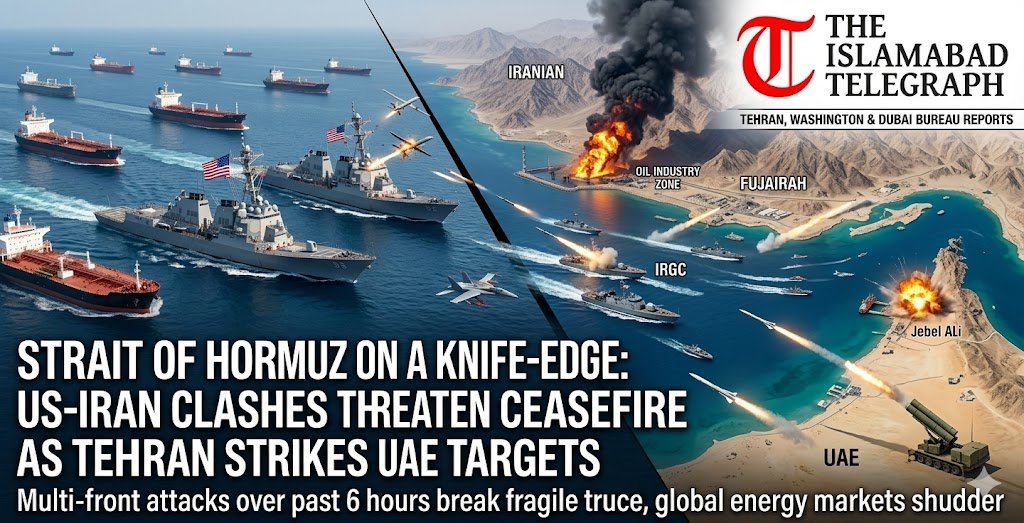
Strait of Hormuz Crisis: US forces destroy Iranian speedboats and intercept missiles during Project Freedom escort mission
- Iran launches drones and missiles targeting UAE oil facilities in Fujairah and Jebel Ali
- Fragile US-Iran ceasefire on the brink of collapse amid fresh clashes
- Oil prices surge past $110 as global shipping faces renewed chaos
WASHINGTON — Tensions in the Strait of Hormuz erupted into fresh exchanges of fire on Monday as the United States pressed ahead with “Project Freedom.” The naval operation aims to escort stranded commercial vessels, but Iran responded with retaliatory strikes on U.S.-flagged ships and missile attacks on key oil facilities in the United Arab Emirates.
The incidents have pushed the fragile April ceasefire—which halted direct U.S.-Iran combat after months of war—to the brink of collapse. Both sides are now trading accusations as the global oil market shudders in response.
Conflicting Reports from the Waterway
In the past six hours, conflicting claims have flooded in from the narrow waterway that carries one-fifth of the world’s oil. U.S. Central Command announced it had sunk at least six Iranian fast-attack boats and intercepted multiple drones and cruise missiles targeting American and commercial vessels.
President Donald Trump described the action as defensive and part of a humanitarian mission to free hundreds of neutral ships trapped since February. “We are guiding innocent ships out — nothing more,” Trump posted, warning that any further Iranian interference would be met with overwhelming force.
Iranian state media, citing the Islamic Revolutionary Guard Corps, countered that two missiles struck a U.S. warship near Jask Island after it ignored warnings. Tehran described the incident as a legitimate defense of its territorial waters. U.S. officials immediately denied any vessel was hit, calling the claim “fabricated propaganda.”
U.S. Troop Withdrawal from Germany Signals Deepening Rift Over Iran War
Simultaneously, UAE authorities reported intercepting four Iranian cruise missiles targeting Jebel Ali port. While three were downed, a separate drone strike ignited a major fire at the Fujairah oil industry zone, injuring at least three foreign workers and forcing emergency shutdowns at storage facilities.
Strait of Hormuz Crisis: The Origins of Project Freedom
The sequence unfolded rapidly after the announcement of Project Freedom on Sunday evening. Within hours, U.S. warships began accompanying tankers through the strait. Iranian speedboats swarmed the area, prompting the American response.
Shipping giant Maersk confirmed one of its vessels exited safely, but several others remain stalled amid the chaos. Oil prices spiked above $110 a barrel on fears of renewed disruption. This flare-up follows a grim pattern established since the war began on February 28.
Israel, Lebanon Talks Set for Washington as Iran–U.S. Dialogue in Islamabad Faces Uncertainty Amid Escalating Maritime Tensions
Initial U.S. and Israeli strikes targeted Iranian nuclear sites and senior leadership, including the late Supreme Leader Ali Khamenei. Iran retaliated by effectively sealing the Strait of Hormuz, triggering a global energy crisis. While a ceasefire took hold in April, Iran never fully reopened the waterway, demanding sanctions relief instead.
Washington billed Project Freedom as a temporary measure to alleviate economic fallout, but Tehran views it as a violation of the truce. Pakistani mediators have shuttled a 14-point peace proposal to the White House, though Trump has signaled dissatisfaction over Iran’s nuclear stockpile.
The Risk of Miscalculation
Experts warn the situation is inherently unstable. Alan Eyre, a fellow at the Middle East Institute, noted that the U.S. seems focused on Iranian capitulation rather than negotiation. He warned that an “escalatory predisposition” could easily lead both sides back into a full-scale shooting war.
Middle East war latest: Iran warns Trump over Strait of Hormuz plan
Ali Vaez of the International Crisis Group highlighted Iran’s newfound leverage. He noted that by trying to prevent a weapon of mass destruction, the U.S. handed Iran a “weapon of mass disruption.” Tehran’s ability to choke the strait is now seen as a more potent tool than a nuclear deterrent.
Residual Capabilities and the Path Ahead
Retired Vice Admiral Kevin Donegan told NBC News that Iran retains “residual capabilities” despite significant losses. He warned that they can still create chaos with low-cost assets. Looking ahead, the crisis hinges on whether back-channel talks in Islamabad can produce a diplomatic breakthrough.
The risk of miscalculation remains high. Any further attack on shipping or U.S. naval assets could trigger a full resumption of hostilities. With global supply chains strained, the coming days will determine if the fragile truce holds or if the region descends back into open war.