



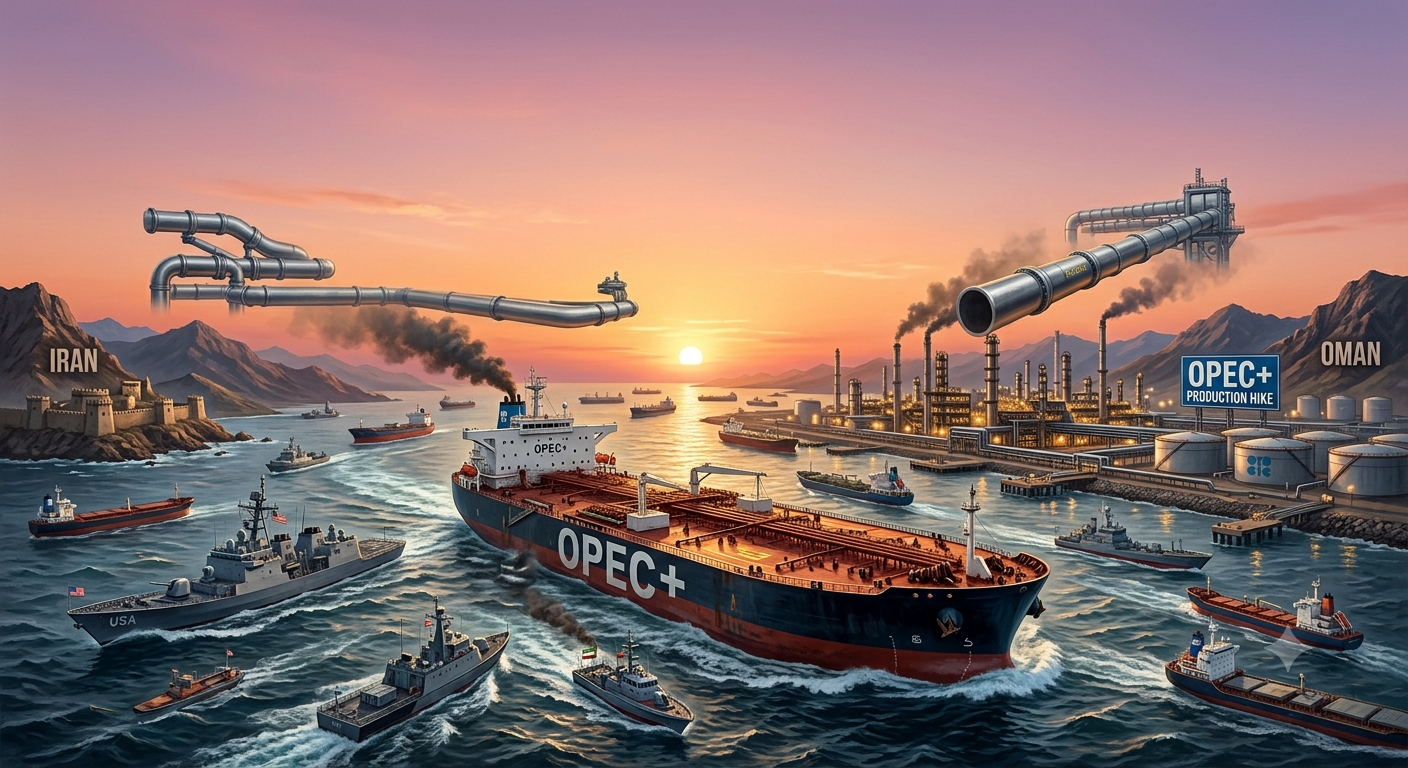
- OPEC+ core architects finalize an online agreement to increase production quotas by 188,000 barrels per day starting in August, signaling a calculated post-conflict paradigm.
- The absolute cohesion maintained by the Riyadh-Moscow axis effectively neutralizes institutional fractures following the United Arab Emirates’ high-profile exit from the cartel.
- The recovery of maritime transit through the Strait of Hormuz rests on a fragile, transactional temporary understanding between Washington and Tehran rather than a permanent peace.
- Global strategic leverage flows back to Gulf Arab capitals, forcing both Western and Asian superpowers to treat regional maritime bottlenecks as absolute national security priorities.
The global energy landscape is undergoing a profound structural realignment. On Sunday, the core architects of OPEC+ finalized an online agreement to increase production quotas by 188,000 barrels per day (bpd) starting in August. On paper, this adds to the phased rollback of the 1.65 million bpd supply cuts initiated in 2023. In reality, it signals the dawn of a highly calculated, post-conflict geopolitical paradigm following the devastating 2026 Strait of Hormuz crisis.
With Brent crude retreating to near $72 per barrel—effectively erasing the premium from the regional war triggered on February 28—the financial press is quick to declare a return to market normalcy. However, an analytical look below the surface reveals that this output hike is far more than an economic balancing act. It is a sophisticated exercise in diplomatic leverage, maritime brinkmanship, and cartel survival.
READ MORE: NATO Arms Supply Shortages: Translating the ‘Trump Trillion’ into Transatlantic Teeth
1. The Geopolitical Redefinition of OPEC+ Unity
The decision to press ahead with a gradual, cautious output expansion serves as a powerful diplomatic message. The alliance is deliberately prioritizing long-term market dominance over short-term price spikes, providing a veneer of stability to a deeply unsettled global economy.
The Russia-Saudi Axis Indivisible
Despite intense Western diplomatic pressure and the unprecedented regional volatility of the past five months, Riyadh and Moscow maintain an ironclad grip on the cartel’s steering wheel. By co-authoring this quota expansion, both capitals are demonstrating that their strategic energy alignment transcends external geopolitical friction.
OPEC+ approves further oil output increase as Hormuz exports start to recover
Managing Internal Fractures
The August adjustment is the first major policy test since the United Arab Emirates (UAE) formally exited OPEC+ on May 1 to pursue an independent production strategy. By projecting absolute cohesion among the remaining seven core managing members—Saudi Arabia, Russia, Iraq, Kuwait, Kazakhstan, Algeria, and Oman—the group has neutralized fears of a wider institutional collapse.
OPEC+ Core Managing Architecture (Post-May 2026)
├── Riyadh-Moscow Strategic Axis (Core Steering)
└── Core Quota Managers: Iraq, Kuwait, Kazakhstan, Algeria, Oman
However, internal friction persists. Iraq is actively pressing for higher baseline quotas, a reality that will test the cartel’s internal discipline as production slowly inches back toward pre-war baselines.
2. The Fragile Peace of Hormuz
The resumption of commercial tanker traffic through the Strait of Hormuz is the single biggest catalyst easing global economic panic. Between February and May, the conflict saw intense aerial and long-range drone attacks targeting oil depots, refineries, and maritime supply routes. This effectively choked off transit for vital producers and caused a severe domestic shortage of diesel and gasoline.
The recovery from May’s dramatic output trough of 33.13 million bpd—down from February’s 42.77 million bpd—is structurally tied to a delicate geopolitical equilibrium.
Global Oil Flow Recovery Chokepoint
[May Trough: 33.13m bpd] ──(US-Tehran MoU & Naval Escorts)──> [August Expansion]
The 60-Day Clock: The current normalization is not a permanent peace; it is a transactional truce. Tanker transit relies entirely on a temporary Memorandum of Understanding (MoU) between Washington and Tehran alongside highly complex naval escort dynamics. With unresolved questions regarding structural redefinitions of the Strait and potential transit fees, global energy security remains legally fragile and highly conditional.
3. The Structural Shift in Global Leverage
When the Strait was blocked, global supply vulnerabilities were laid bare. The crisis was only mitigated by a coordinated, record-breaking strategic stock release by the International Energy Agency (IEA), coupled with declining Chinese crude imports and a surge in non-Middle East production.
Now, as the Chokepoint reopens alongside the OPEC+ quota hikes, vital geopolitical leverage is flowing back to the Gulf Arab capitals.
| Strategic Vector | Pre-Crisis Vulnerability | Post-Conflict Status Quo |
| Maritime Control | Subject to sudden kinetic blockades and severe supply disruption. | Secured via transactional diplomacy, establishing local capitals as vital security guarantors. |
| Cartel Leverage | Undermined by the UAE’s high-profile exit from the alliance. | Consolidated around a disciplined seven-member core managing global spare capacity. |
| Superpower Posture | U.S. and China acting via unilateral security or economic pressure. | Both Washington and Beijing forced to treat Gulf regional stability as an absolute strategic priority. |
By successfully navigating a hot war on their doorstep, the core producers have proven that the modern global economy cannot function without their maritime bottlenecks and spare capacity. This operational reality forces both the United States and China to treat the security architectures of the Persian Gulf not as areas of peripheral influence, but as absolute national security priorities.
For The Islamabad Telegraph, the takeaway is clear: this is not an ordinary story of market recovery. The unwinding of these production cuts is the economic framework being used to cement a fragile, post-conflict status quo across the world’s most critical energy corridor.