



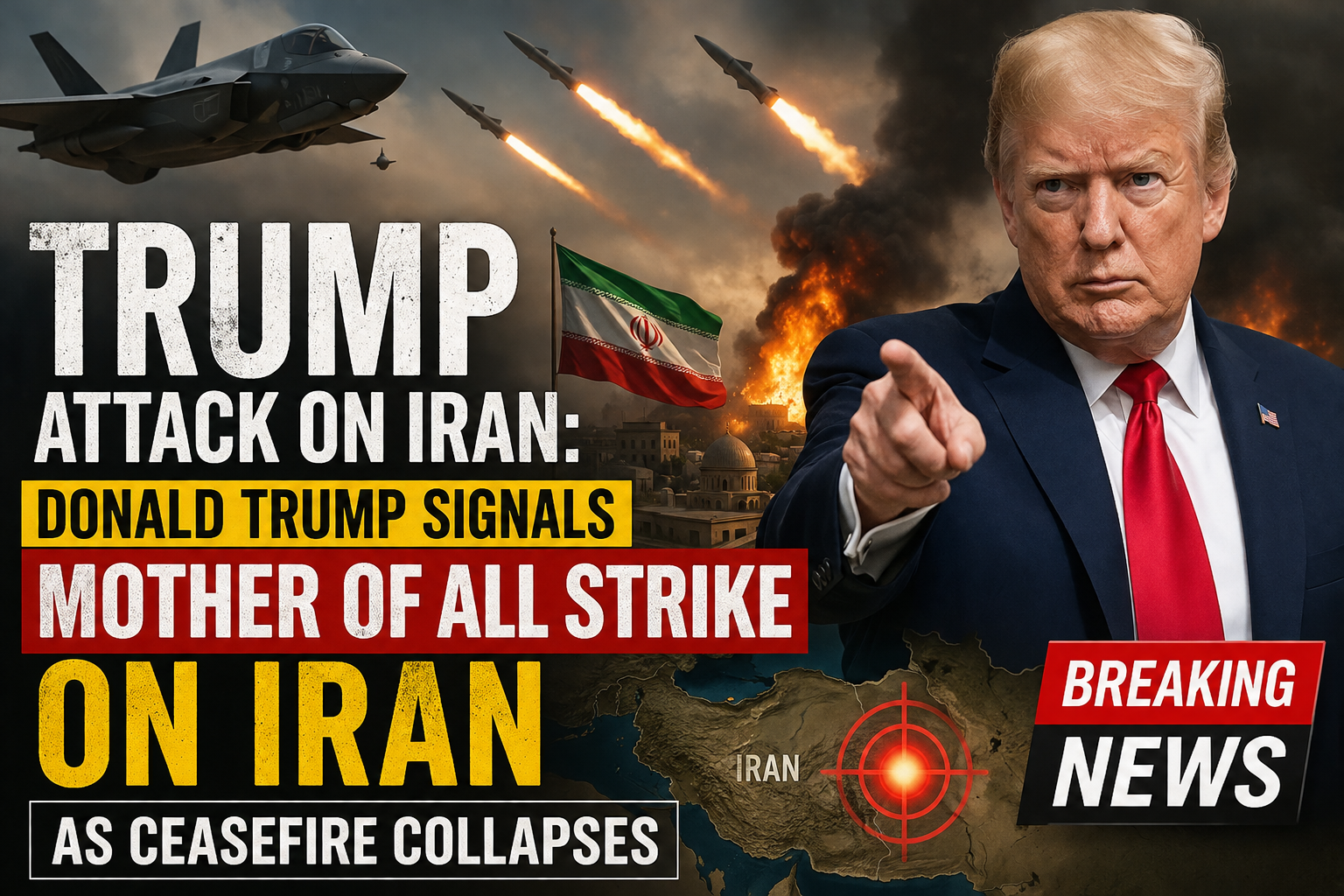
- Trump Attack on Iran and signals of powerful strikes on Iran tonight, declaring the ceasefire effectively over after Hormuz attacks.
- U.S. military on high alert, with preparations for one of the largest strike operations in recent years.
- Iran targeted Qatar-linked vessels, escalating tensions and undermining mediation efforts.
- Oil prices surge globally, raising fears of prolonged conflict and disruption in energy supplies.
ANKARA / WASHINGTON / DOHA / ISLAMABAD — U.S. President Donald Trump has signaled a major new wave of military strikes on Iran “tonight,” declaring that the fragile ceasefire is effectively over after fresh maritime attacks in the Strait of Hormuz, according to remarks made at a NATO summit in Ankara and corroborated by multiple officials familiar with the situation.
“We hit them very hard last night… we’ll probably hit them hard again tonight,” Trump told reporters.
“I’ll give them a little warning — we’re going to hit them hard tonight.”
“Ceasefire Is Over” — White House Signals Escalation
Senior officials and diplomatic sources say Trump has privately conveyed to key stakeholders that the ceasefire framework brokered in June has collapsed, and that Washington is preparing what insiders describe as “one of the most powerful U.S. strike packages against Iran in recent years.”
READ MORE: U.S.-Iran Conflict Reignites Ahead of Pakistan Talks, Sending Oil Prices Soaring Globally
A source familiar with internal discussions said:
While the White House has not formally announced a full-scale operation, Pentagon readiness levels have been elevated, and U.S. assets across the Gulf have been repositioned.
⚓ Trigger: Strait of Hormuz Attacks on Qatar-Linked Vessels
The immediate escalation follows Iranian attacks on three Qatar-linked commercial vessels in the Strait of Hormuz — a move that has deeply angered both Washington and regional mediators.
A senior official in Doha told The Islamabad Telegraph:
“Even in ancient times, mediators were respected in war. Targeting Qatar-linked vessels is like attacking the mediators themselves. This is unacceptable.”
Pakistan-based diplomatic sources confirmed that Qatar — alongside Pakistan — was playing a central mediation role, making the attacks particularly sensitive.
RELATED NEWS: Trump says ceasefire with Iran is over, calling its leaders ‘scum’
Massive Military Posturing Underway
According to U.S. defense officials:
- Over 80 Iranian targets were struck in previous rounds, including missile sites, radar systems, and naval assets
- Additional strike packages are now prepared, targeting deeper ռազմական infrastructure
- U.S. forces have fortified positions across the Gulf, including in:
- UAE
- Qatar
- Saudi Arabia
- Bahrain
- Israel
Defense Secretary Pete Hegseth stated:
“If required, we are ready to hit more targets — deeper and harder — on the President’s order.”
Oil Markets React Sharply
Global energy markets have already reacted to Trump’s remarks:
- Brent crude surged over 7%, nearing $80 per barrel
- Shipping risk premiums in the Strait of Hormuz have spiked
- Markets in Wall Street, London, Singapore, and Tokyo turned volatile
Analysts warn that a sustained escalation could push oil toward $90+ per barrel, especially if maritime flows are disrupted again.
Pakistan’s Mediation Role Acknowledged — But Sidelined
Interestingly, Trump has continued to praise Pakistan’s diplomatic role in earlier U.S.–Iran negotiations, particularly the Islamabad MoU framework.
However, insiders suggest that Washington now views Iran’s latest actions as crossing a red line, making immediate military response unavoidable.
A source close to the mediation track said:
“Pakistan and Qatar invested heavily in keeping talks alive. But after Hormuz, the U.S. believes deterrence must come first.”
Trump Attack On Iran, NATO Tensions and Global Fallout
At the Ankara summit, divisions within NATO have become more visible:
- Some European allies remain wary of deeper military escalation
- Spain reportedly restricted airspace access for U.S. operations
- Discussions are underway on maritime security deployments
Trump, however, appeared dismissive of allied hesitation:
“They should be doing more. This affects the whole world.”
Strategic Outlook: Region on the Brink
With diplomacy faltering and military momentum building, the situation is entering a high-risk phase:
- Short-term: Likely U.S. precision strikes on Iranian military and strategic assets
- Medium-term: Likelihood of Iranian retaliation across Gulf bases
- Long-term: Collapse of negotiations unless urgent mediation resumes
Despite the escalation, backchannel diplomacy — particularly via Pakistan and Qatar — is still active, though significantly weakened.
Bottom Line
The U.S.–Iran conflict has entered a dangerous new phase, with President Trump openly signaling imminent strikes and declaring the ceasefire effectively dead.
While the scale and targets of tonight’s potential operation remain undisclosed, all indicators point toward a significant escalation that could reshape the regional balance — and global energy markets — within hours.