



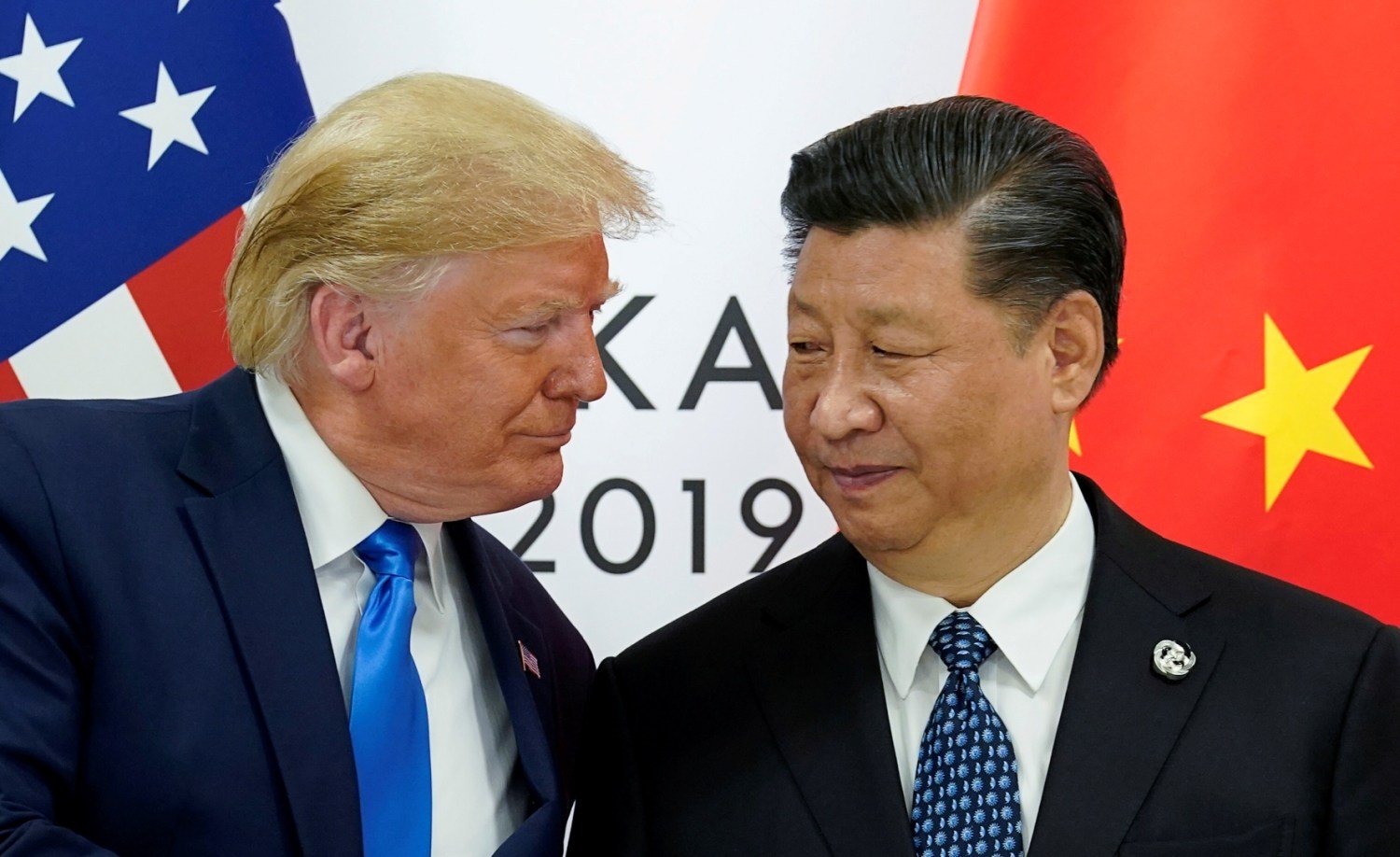
- Trump China tech restrictions freeze reflects a calculated diplomatic move ahead of April summit with Xi Jinping.
- Rare-earth supply chain leverage remains Beijing’s strongest bargaining tool in global tech competition.
- U.S. data center capacity projected to grow 120% by 2030, raising AI infrastructure security concerns.
- Global leaders from Europe and Canada engaging China signal recognition of Beijing’s economic weight.
In a striking recalibration of U.S.–China policy, President Donald Trump has quietly shelved a suite of technology security measures targeting Beijing, signaling what appears to be a deliberate attempt to ease tensions ahead of his April summit with Chinese President Xi Jinping in Beijing.
The suspended actions—previously undisclosed—include a planned ban on the U.S. operations of China Telecom and restrictions on the sale of Chinese equipment in American data centers. Also paused are proposals to block domestic sales of routers made by TP-Link, curb the U.S. internet businesses of China Unicom and China Mobile, and prohibit Chinese electric trucks and buses from entering the U.S. market.
Taken together, the decisions mark one of the most tangible gestures of goodwill from Washington since Trump’s return to the White House. They follow the October trade truce reached between Trump and Xi, which included a Chinese pledge to delay export restrictions on rare-earth minerals—materials critical to semiconductors, electric vehicles, and advanced weapons systems. China controls roughly 60–70% of global rare-earth mining and nearly 90% of processing capacity, giving Beijing formidable leverage over high-tech supply chains.
The shelving of these measures underscores a central reality confronting Washington: stabilization with China now carries strategic urgency. U.S. data center capacity is projected to grow by nearly 120% by 2030, according to Jones Lang LaSalle, driven largely by AI infrastructure expansion. As American tech giants pour hundreds of billions into AI, cloud computing, and energy-intensive server farms, the White House appears wary of provoking retaliatory Chinese restrictions that could choke critical inputs.
Commerce officials maintain that national security reviews remain active. Yet multiple sources suggest the administration has redirected enforcement priorities away from China and toward Iran and Russia in the interim. The removal last month of the Commerce official overseeing foreign tech threat reviews further signals bureaucratic recalibration.
Critics see risk. Matt Pottinger, Trump’s former deputy national security adviser, warned that easing restrictions may allow Beijing to gain new footholds in U.S. telecoms infrastructure, AI hardware ecosystems, and EV supply chains. He argues that while Washington seeks to reduce dependence on Chinese rare earths, it may inadvertently allow new digital dependencies to form.
Democratic lawmakers have also seized on the issue. Senate Minority Leader Chuck Schumer accused Trump of “selling out national security” in pursuit of diplomatic optics. Yet the White House appears to be betting that short-term stabilization will create breathing space for longer-term competition.
The geopolitical context reinforces that logic. In recent months, leaders from the United Kingdom, Germany, and Canada have traveled to Beijing seeking deeper economic engagement amid global slowdown fears. Europe’s largest economy, Germany, still counts China as its top trading partner. The U.K. is recalibrating post-Brexit trade strategy, and Canada remains deeply exposed to commodity exports to China. These diplomatic overtures underscore a broader recognition among advanced economies: China’s $18 trillion economy and central role in global manufacturing cannot be isolated without severe blowback.
Indeed, China accounts for nearly 30% of global manufacturing output and remains the world’s largest exporter. Despite years of decoupling rhetoric, bilateral U.S.–China trade still exceeds $575 billion annually. American multinationals—from semiconductors to consumer goods—remain deeply embedded in Chinese markets.
For Beijing, stabilization means halting new U.S. export controls. Chinese officials have repeatedly framed technology restrictions as political weapons that distort markets. In welcoming cooperation, the Chinese embassy recently described 2026 as a potential year of “mutual respect and win-win cooperation.”
The April summit thus looms large. Trump plans to visit Beijing and has invited Xi to Washington later this year. By shelving high-profile tech restrictions beforehand, Trump may be seeking to set a conciliatory tone—one that reduces friction ahead of face-to-face diplomacy.
Yet the détente is fragile. China’s leverage over rare earths remains potent. Wendy Cutler of the Asia Society Policy Institute notes that Beijing has demonstrated willingness to weaponize export controls when strategic interests are threatened. That reality “ties the president’s hands,” she argues.
The administration’s calculation appears transactional: freeze escalation now, secure mineral stability, and test whether summit diplomacy can reset guardrails. Should talks falter, officials say paused measures could be revived.
For now, Trump’s decision reflects pragmatic geopolitics rather than ideological surrender. After years of tariffs, blacklists, and export controls, Washington may be concluding that managed competition—rather than relentless confrontation—better serves American economic resilience.
Whether this tactical thaw evolves into durable stabilization will depend on what emerges from Beijing in April. But one thing is clear: by shelving punitive tech measures, Trump has signaled that the world’s two largest economies are once again exploring the narrow path between rivalry and coexistence.