



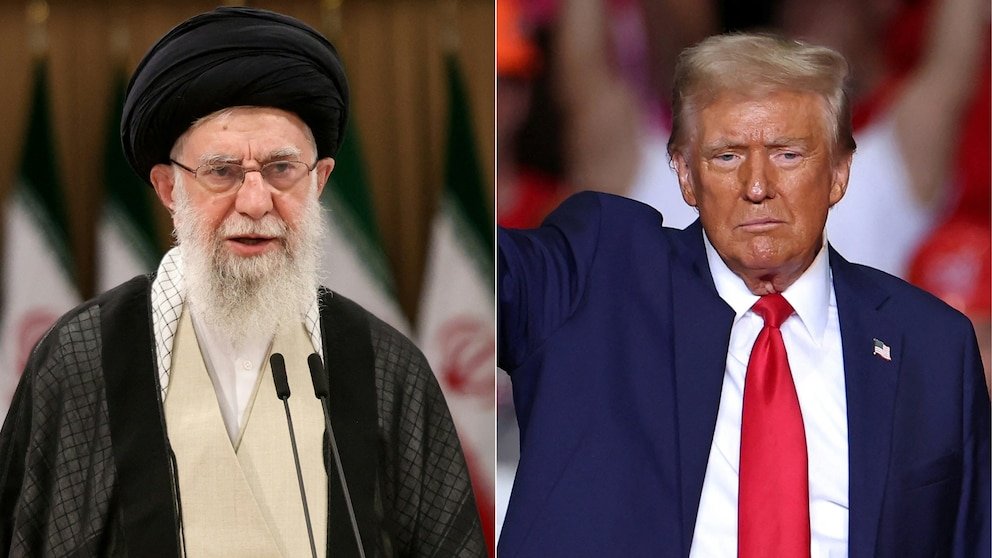
The negotiations unfolding this week between the United States and Iran are not the kind of diplomatic theater that announces itself with flags, handshakes, or choreographed optimism. They are quieter, more brittle, and far more dangerous. What President Trump and his advisers are attempting is a compressed, high-pressure renegotiation of the nuclear file—one conducted under the shadow of military threats, regional anxieties, and a rapidly narrowing margin for strategic miscalculation.
What we know is this: U.S. and Iranian negotiators have met twice in the past two weeks, first indirectly in Oman and then more directly—though still mediated—in Geneva. The talks are centered on Iran’s nuclear program, but the subtext is broader: ballistic missiles, regional influence, and the enduring question of whether coercive leverage can produce a durable agreement. Iran has signaled cautious optimism, describing a “clearer path ahead,” even as Trump warns of “consequences” if Tehran refuses to compromise.
This is diplomacy conducted with a raised eyebrow and a clenched fist.
The Architecture of Pressure
The administration’s strategy is unmistakable. In Muscat earlier this month, the United States sent not only diplomats but also the top military commander in the Middle East, Adm. Brad Cooper, whose appearance in dress uniform served as a visual reminder of the USS Abraham Lincoln and its accompanying strike group positioned off Iran’s coast.
This is not subtle. It is leverage by proximity.
Trump has repeatedly emphasized that he will be “indirectly involved” in the talks—a phrasing that signals both distance and dominance. He is not seated at the negotiating table, yet he remains unmistakably present in the room. His public statements, alternating between optimism (“I think they want to make a deal”) and explicit warnings, appear calibrated to shape the psychological terrain of the negotiations.
Israel, meanwhile, is pressing for the talks to expand beyond nuclear constraints to include Iran’s ballistic missile program. Prime Minister Benjamin Netanyahu has been explicit about this during his own meetings with Trump, and the White House appears receptive to widening the scope.
The result is a negotiation operating on multiple layers: nuclear limitations, missile restrictions, regional behavior, and the implicit question of how far Washington is willing to go to enforce its demands.
Iran’s Calculus: Hope, Mistrust, and the Long Memory of Coercion
Iran’s public posture blends guarded optimism with deep mistrust. Officials have acknowledged progress on what they describe as “guiding principles,” while insisting that the United States must address accumulated distrust born of years of sanctions, threats, and abrupt policy reversals.
Tehran understands the stakes. It also understands the pattern: pressure, negotiation, partial relief, and renewed pressure. The presence of U.S. warships offshore has not gone unnoticed by Iranian negotiators. Nor has Trump’s repeated warning that military action remains an option should talks fail.
Yet Iran also sees opportunity. A carefully structured agreement could stabilize its economy, reduce the risk of conflict, and provide breathing space in a region where it faces mounting internal and external pressures.
The central question is whether Tehran believes Washington can be trusted to uphold any agreement long enough for it to matter.
What’s Actually Possible
The range of outcomes is wide, but not limitless. Based on the current trajectory, three scenarios stand out.
1. A Narrow Nuclear-Only Agreement
This remains the most achievable outcome. Both sides have signaled a willingness to prioritize the nuclear file, and Iran has already expressed optimism about progress in Geneva. A limited deal would likely include caps on uranium enrichment, expanded inspections, and partial sanctions relief. It would not address missiles or regional activities—issues Iran considers off limits.
Such an agreement would be functional, but fragile.
2. A Broader Deal Including Missiles
This appears to be the White House’s preferred outcome, strongly encouraged by Israel. However, Iran has historically refused to negotiate its missile program, viewing it as central to national defense. For this scenario to materialize, Washington would need to offer significant concessions—economic, political, or security-related—that it has not yet signaled a willingness to provide.
Possible, but unlikely.
3. Breakdown and Escalation
This is the scenario all parties claim to want to avoid, yet one that becomes increasingly plausible with each public threat. If talks stall and Trump follows through on warnings of military “consequences,” the region could enter a cycle of retaliation beyond either side’s full control. The presence of U.S. carriers near Iran increases the risk of miscalculation, even if neither side seeks open conflict.
This is the outcome in which diplomacy fails not because of disagreement, but because events gather their own momentum.
The Strategic Frame
What makes this moment especially volatile is that both sides believe time is working against them. Trump seeks a deal that demonstrates strength and reshapes the regional balance. Iran seeks relief before economic pressure becomes destabilizing. Each believes the other is bluffing. Each believes patience will yield greater leverage.
And both may be wrong.
The negotiations this week are not merely about centrifuges and sanctions. They are about whether two adversaries—each convinced of its own strategic advantage—can find a narrow corridor of mutual interest before events outrun intentions.
The path ahead may indeed be “clearer,” as Iran suggests, but it is also narrower. And the consequences of misreading this moment extend far beyond the negotiating rooms in Geneva.