



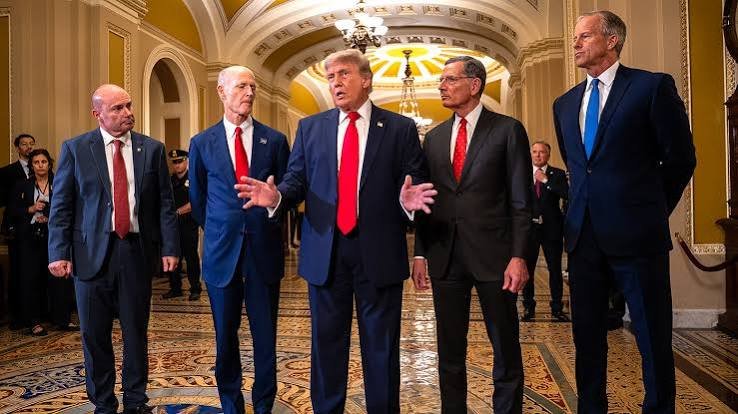
- Trump Russia Oil Tariffs could give Washington authority to impose tariffs of up to 100% on countries purchasing Russian oil and gas.
- China and India remain the dominant buyers of Russian crude, accounting for 50% and 37%, respectively, of Russia’s crude exports in CREA’s cumulative dataset.
- With Hormuz and Bab al-Mandab disrupting global energy flows, Trump may have an incentive to use tariffs rather than remove large quantities of Russian oil from international markets.
WASHINGTON—President Donald Trump now has a new weapon against countries buying Russian energy, but the evidence points toward tariffs rather than an attempt to shut Russian oil out of world markets.
The U.S. House of Representatives on Wednesday passed legislation giving Trump authority to impose tariffs of up to 100% on countries purchasing Russian oil and gas. The 262-159 vote sends the measure to Trump after Senate approval. The White House has indicated that Trump plans to sign it. The bill also strengthens sanctions on Russia and extends sanctions on Iran through 2031.
The timing is significant. Trump publicly urged Ukrainian President Volodymyr Zelensky on September 13 to stop attacks on Russian oil refineries, arguing that strikes were worsening diesel shortages and affecting global supplies. Trump subsequently said Russia and Ukraine had agreed to stop attacking each other’s energy infrastructure, although Kyiv said any halt would depend on Russia doing the same.
That sequence suggests a different calculation from an outright embargo. Trump appears to want Russian oil available while using U.S. trade access as leverage against countries buying it. Washington could make purchases more expensive by imposing tariffs on their exports to the United States.
READ NEXT: Don’t Target Russia’s Energy Infrastructure; Trump’s Warning To Zelensky Signals a New Global Energy Reality
The distinction matters in the current energy crisis. The Strait of Hormuz remains severely disrupted, while instability around Bab al-Mandab has constrained another major route for global petroleum flows. Removing Russian barrels from international markets could tighten supply further and push prices higher.
The Centre for Research on Energy and Clean Air said Russia’s fossil-fuel export revenues fell 8% month-on-month in August to €604 million a day, while export volumes fell 7%. Its research estimates the Hormuz crisis added about €31 billion to Russian seaborne oil and gas export revenues over six months as higher prices increased the value of remaining exports.
READ MORE: House Passes Bill Aimed at Punishing Top Importers of Russian Oil and Gas
Who buys Russian oil?
The biggest buyers are concentrated in Asia, with China and India overwhelmingly dominant in crude purchases. CREA’s August data shows China has purchased 50% of Russia’s crude exports since the EU-led sanctions period began, India 37%, Turkey 5%, and the European Union 5%. The broader list below combines principal destinations for Russian crude and oil products; it is not a precise top-ten ranking for crude alone.
- China — Russia’s largest crude buyer, accounting for 50% of cumulative crude exports in CREA’s dataset.
- India — 37% of cumulative Russian crude exports and the second-largest fossil-fuel buyer in August.
- Turkey — 5% of cumulative crude exports and the largest buyer of Russian oil products.
- Brazil — 11% of Russian oil-product exports.
- Singapore — 8% of Russian oil-product exports.
- Saudi Arabia — 8% of Russian oil-product exports.
- Japan — a major Russian LNG buyer.
- South Korea — a significant buyer of Russian LNG and coal.
- France — a major European destination for Russian LNG.
- Egypt — purchased €513 million of Russian fossil fuels in August, including crude and oil products.
The list illustrates why blanket sanctions would be difficult. China and India dominate Russian crude trade, while Turkey remains deeply integrated into Russian energy flows. Several countries also buy Russian refined products that can be traded or consumed elsewhere.
Trump Russia Oil Tariffs
For Trump, tariffs offer another attraction: they can pressure foreign governments while generating revenue for the United States. The legislation gives him discretion to impose tariffs as high as 100% and, under specified circumstances, waive sanctions.
The likely direction may therefore be less about stopping Russian oil and more about monetizing access to the American market. Trump has repeatedly favored tariffs as instruments of economic pressure and revenue collection.
Forecast
With Hormuz disrupted, Bab al-Mandab under pressure and global fuel markets strained, Trump is unlikely to seek a policy that deliberately removes large volumes of Russian oil from the world market. His September appeal to Zelensky to stop attacking Russian refineries reinforces that possibility.
Instead, the more plausible path is selective tariff pressure on major Russian-oil buyers. Washington can allow Russian barrels to keep moving, protect global supply from another shock, and simultaneously charge countries importing those barrels for access to the U.S. market.
In that scenario, Trump’s Russia policy becomes less an oil embargo than a tariff strategy: pressure Moscow indirectly, preserve fuel availability, and raise American revenue. It fits his “Make America Great Again” agenda—using trade access as leverage and money while avoiding another supply shock during the Middle East energy crisis.