



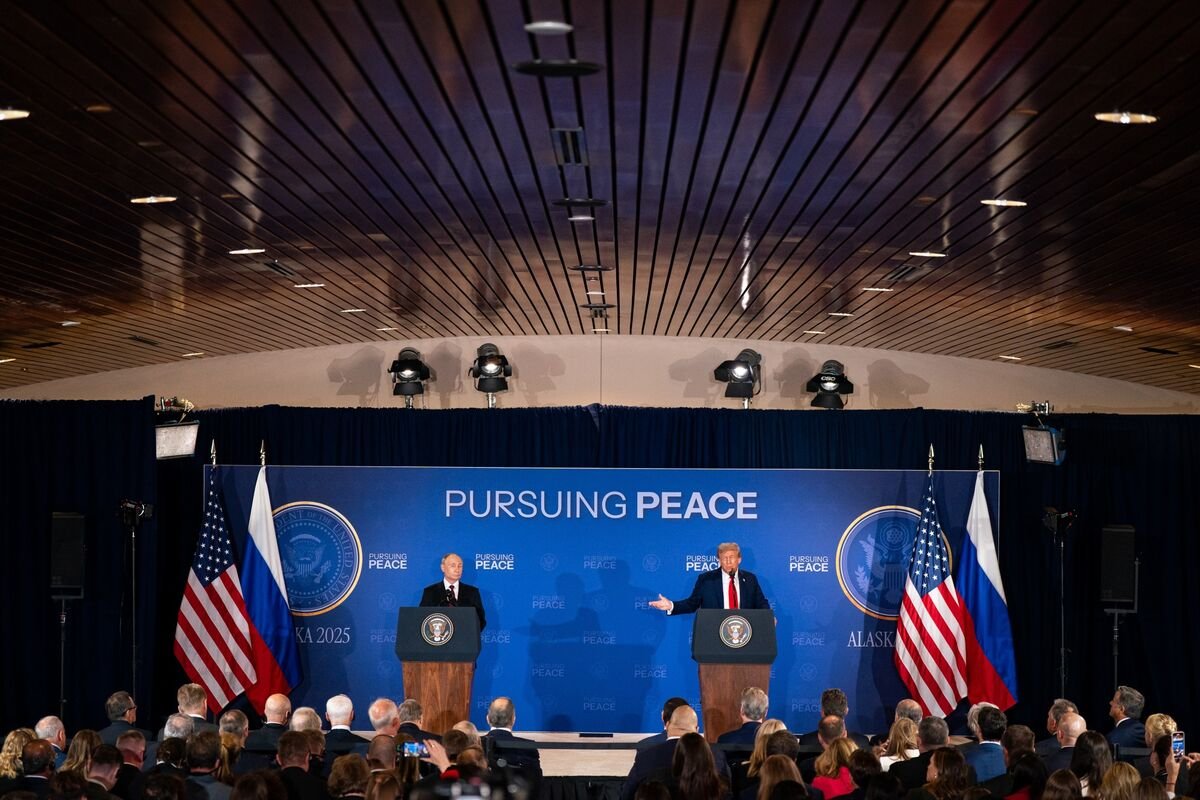
- Trump Russia peace Deal: Trump’s peace plan is heavily shaped by business interests, with U.S. investors exploring Arctic gas, rare-earth assets, and even Nord Stream-linked projects.
- European leaders fear the deal will undermine Ukraine, reward Moscow, and shift geopolitical power from Brussels to Washington.
- Kremlin oligarchs and American businessmen have already begun parallel negotiations, indicating economic normalization before any formal ceasefire.
- Ukraine faces a harsh new reality: the Trump administration prefers economic inducements over military support, weakening Kyiv’s negotiating leverage.
The secretive, Miami-born peace initiative that has stunned Europe and upended years of Western policy toward Russia is far more than a ceasefire blueprint. It is, at its core, a calculated business realignment—one that blends Donald Trump’s instinctive dealmaking with Moscow’s long-standing ambition to break Europe’s geopolitical spine. For allies rattled by the leaked 28-point plan, the message is unmistakable: Trump’s Ukraine peace is not a diplomatic settlement; it is an economic revolution designed to shift the center of gravity from Brussels to Washington.
At the heart of the project lies a covert triangle: U.S. special envoy Steve Witkoff, Russian sovereign wealth chief Kirill Dmitriev, and Jared Kushner. Their late-night huddle last month in Miami Beach—two Americans and one Kremlin-approved banker poring over a laptop—symbolizes the Trump administration’s unorthodox approach. To Trump, borders and battlefields matter less than the business potential lying underneath them. Dmitriev came armed with promises of rare-earth riches, Arctic energy exploitation, and—astonishingly—joint Russian-American ventures in space.
To European officials, the plan reads like a commercial bribe masquerading as peace. To Trump’s White House, it is a historic opportunity to shut down a war while opening markets closed since 2022.
The Kremlin’s Pitch: Build Wealth, Not Walls
For Moscow, the strategy began well before Trump’s swearing-in. With sanctions biting and its economy strangled, the Kremlin calculated that America’s businessman-president might be seduced by the right kind of offer. The key was not diplomacy—it was money. Dmitriev, a Harvard-trained banker with deep Kremlin ties, dangled the largest prize of all: unlocking Russia’s $300 billion in frozen central bank assets, most of them trapped in Europe.
READ MORE: Trump’s Ukraine Peace Plan Marks a Historic Breakthrough in Ending the War
Witkoff was a willing audience. His worldview mirrors Trump’s instinctive belief that prosperity deters war. If Russia, Ukraine, and America were all commercially intertwined, he reasoned, conflict would be too expensive to resume. He floated visions of Ukrainian soldiers turning from the trenches to American-built AI data centers, earning Silicon Valley-style salaries.
But Europe saw something more menacing. If the U.S. opens the door to Russia’s return to the global economy—on Washington’s terms rather than Brussels’—it would marginalize Europe’s influence, compromise its security assumptions, and reward Moscow for redrawing borders by force.
Trump Russia Peace Deal: A Peace Plan Built for America’s Boardrooms
What distinguishes this initiative from past U.S.–Russia diplomacy is the sheer volume of business deals running parallel to negotiations. From Exxon Mobil’s back-channel conversations with Rosneft about re-entering the Sakhalin gas project, to American investors eyeing stakes in Arctic LNG and even the sabotaged Nord Stream 2 pipeline, the machinery of commerce is already in motion.
ALSO READ: Make Money Not War: Trump’s Real Plan for Peace in Ukraine
Kremlin-aligned oligarchs—Gennady Timchenko, Yuri Kovalchuk, and the Rotenberg brothers—have reportedly sent representatives to pitch gas fields, energy corridors, and rare-earth deposits to American companies. These oligarchs were once symbols of Russia’s isolation; now they appear to be ambassadors of its economic reintegration.
In Washington, the overlap between political allies and prospective investors has raised eyebrows. Gentry Beach, a close associate of Donald Trump Jr., explored buying into a sanctioned Arctic gas project. Florida investor Stephen P. Lynch is lobbying aggressively to acquire Nord Stream 2. None of these businessmen are officially tied to the peace talks—but the timing speaks for itself.
The market is already betting on peace, long before peace exists.
Europe: Alarmed, Confused, and Sidelined
For Europe, the leaked 28-point plan was a diplomatic earthquake. It offered Ukraine little more than symbolic assurances and left many of Kyiv’s red lines shattered. Even after the administration insisted that the plan was merely a “draft,” the damage was done. From Berlin to Warsaw, the fear was not that Trump would end the war—but that he would end it on Putin’s terms and then partner with Moscow to dominate Eurasian commerce.
Poland’s prime minister Donald Tusk captured the sentiment with unusual bluntness:
“We know this is not about peace. It’s about business.”
Europe’s security officials are particularly alarmed by the economic carve-outs being discussed: Arctic mining, energy partnerships, joint space missions, and even the resurrection of the Nord Stream ecosystem. For Brussels, these are not investments—they are leverage.
Trump Russia Peace Deal: Witkoff’s Parallel Diplomacy
Perhaps the most extraordinary element of this saga is how disconnected the peace machinery is from the traditional U.S. national security establishment. The CIA was left out of early discussions on a sweeping prisoner swap. The State Department’s sanctions enforcement unit learned about some Moscow meetings from British intelligence. Europe’s leaders begged Witkoff to use secure diplomatic lines; he declined because of “travel difficulties.”
Meanwhile, Trump’s official special envoy for Ukraine, Lt. Gen. Keith Kellogg, has been sidelined to the point that he resigned last week. National Security Adviser Rustem Umerov and even President Volodymyr Zelensky had to meet the negotiators in Miami—far away from Kyiv or Washington—because that is where Kushner and Witkoff preferred to operate.
This is diplomacy outsourced to millionaires, conducted in beachfront mansions, with geopolitical outcomes shaped by business logic rather than statecraft.
Putin’s Game: Peace or Strategic Delay?
One unanswered question hangs over the entire enterprise: Is Vladimir Putin serious about peace, or is he simply exploiting Trump’s business instincts to buy time?
Putin’s personal involvement—multiple three-hour meetings with Witkoff—suggests interest. His sanctioned inner circle dispatching envoys to American investors suggests preparedness. But Putin has also pursued a narrative of historical destiny, insisting Russia will eventually grind Ukraine down militarily.
The Miami initiative could therefore be one of two things:
- the beginning of a genuine settlement, or
- a sophisticated stalling tactic to fracture the West while Moscow regroups.
The Stakes for Ukraine
President Zelensky, desperate for advanced weapons, arrived in Washington seeking Tomahawk missiles. Trump denied the request. Instead, Witkoff urged Ukraine to pursue a tariff-free decade with the U.S.—a commercial lifeline rather than a battlefield solution.
For Kyiv, this framed the new reality: under Trump, America will not arm Ukraine to victory. It will try to pay Ukraine into compromise.
A New Era of Geopolitics
The story of the Miami peace plan marks the most profound shift in U.S.–Russia diplomacy since the Cold War. If Trump gets his way, peace will not be built through treaties or military guarantees. It will be built through pipelines, mines, AI data centers, and partnerships in the Arctic and beyond.
For Europe, this is a nightmare. For Moscow, a lifeline. For Trump’s White House, a triumph of commerce over conflict.
And for Ukraine—caught between war and wealth—it may be the most consequential negotiation in its modern history.