



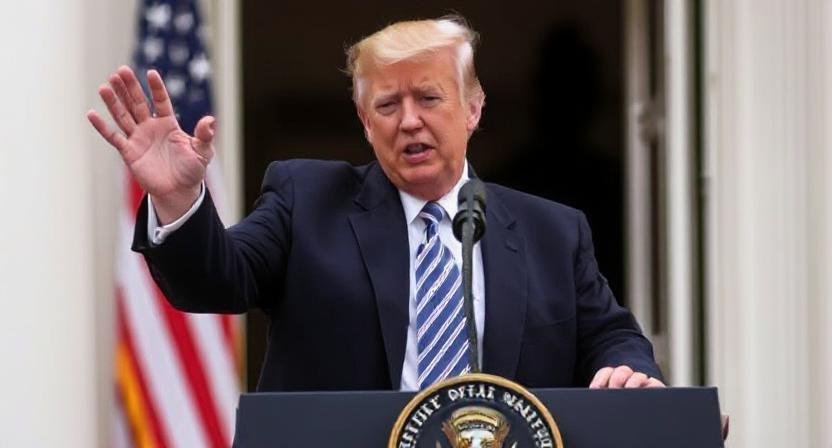
- Trump Issues Ultimatum to Iran: Ceasefire immediately or face devastating U.S. airstrikes; over 300 U.S. jets are combat-ready in the region.
- Israel Strikes Deep in Tehran: Live TV studios and Quds Force HQ bombed as Netanyahu hints at targeting Iran’s supreme leader.
- Nuclear Tensions Soar: IAEA confirms serious damage to Natanz but no radiation leaks—Fordo remains untouched, for now.
- Global War Fears Rise: Trump skips G7 de-escalation pledge; Russia, China watch closely as diplomacy hangs by a thread.
In a dramatic turn that could plunge the Middle East into an unprecedented catastrophe, U.S. President Donald Trump is preparing to issue Iran an ultimatum: Agree to an immediate ceasefire and reopen nuclear negotiations — or face direct American military intervention. The news, confirmed by multiple senior U.S. officials, emerged just hours after Trump left the G7 summit in Canada ahead of schedule to deal with the escalating Israel-Iran war.
With over 300 fifth-generation American fighter jets on standby across the region, including stealth F-35s and B-2 bombers equipped with Massive Ordnance Penetrators — bunker-busting bombs capable of destroying Iran’s deeply buried Fordo nuclear facility — the threat of a wider war has never been more real.
Why This Is a Global Flashpoint
Sources in Washington and Tel Aviv told The Islamabad Telegraph that neither the CIA nor Mossad had expected Iran’s retaliatory campaign to be this fierce or prolonged.
G7 Summit 2025: Trade Tensions, Global Wars, and Tariff Talks Dominate High-Stakes Gathering
Five days into the conflict, Israel’s objective of crippling Iran’s nuclear program remains unfulfilled. Meanwhile, civilian casualties are skyrocketing, diplomatic efforts are unraveling, and world powers are watching with unease — or preparing their own responses.
Four Key Developments Rocking the World:
-
Trump to Iran: Ceasefire now — or face U.S. bombs. Pentagon sources confirm “combat-ready” status of U.S. jets across the Gulf.
-
G7 Fractures: Trump refuses to sign de-escalation resolution at G7, putting the U.S. at odds with key Western allies.
-
Israel Claims Air Superiority: Tehran warned to evacuate as Israeli jets strike live news studios and Quds Force HQ.
-
Death Toll Mounts: 224 Iranians and 24 Israelis killed so far; over 2,000 civilians injured across both countries.
Israeli Strikes, Iranian Retaliation — And the Nuclear Question
Israel triggered the latest wave of conflict with a precision airstrike on Iran’s Natanz nuclear facility on Friday, obliterating above-ground infrastructure critical for uranium enrichment. Though the IAEA confirmed no radiation leaks, the power outage may have caused uranium centrifuges to spin out of control, according to Director General Rafael Grossi.
Grossi told the IAEA Board of Governors in Vienna on Monday:
“There has been no additional damage at Natanz since the Friday attack. But the possibility of internal damage due to power disruption cannot be ruled out.”
Further fueling fears, Iranian authorities still haven’t determined the full extent of the damage to their nuclear infrastructure, including Fordo — a site so deeply buried it’s resistant to all but the most advanced bunker-busting munitions, which only the U.S. possesses.
MORE READ: In the Shadows of War: Iran Refuses Ceasefire Amid Relentless Israeli Strikes
Iran’s Parchin military complex and Bushehr power plant remain untouched — for now.
Israel Escalates: “We Will Strike the Heart of Tehran”
With Iranian missiles raining down on Israeli cities and killing at least eight people, Israeli Prime Minister Benjamin Netanyahu signaled a disturbing escalation.
Speaking at a televised war cabinet meeting, Netanyahu warned:
“No site is too sacred. No leader is untouchable.”
Shortly after, Israeli fighter jets struck live television studios in Tehran while anchors were on air. The elite Quds Force headquarters in the capital was also reportedly bombed, raising fears that Israel may next target Ayatollah Ali Khamenei himself.
READ MORE: Live Updates: Trump Leaving G7 Early to Deal With Israel-Iran Conflict
Israeli officials are pressing the U.S. to engage directly — not just for political backing but to deploy military assets only the U.S. Air Force can deliver.
Trump’s Dilemma: “Iran Will Never Have a Nuclear Weapon”
Leaving G7 leaders stunned, President Trump departed the summit early, refusing to endorse the joint resolution urging both Iran and Israel to de-escalate. His departure sent global markets reeling and foreign diplomats scrambling.
On his social media platform, Trump wrote:
“IRAN WILL NEVER HAVE A NUCLEAR WEAPON. I will do whatever is necessary to protect America and our allies.”
According to senior White House insiders, Trump is now weighing two options:
-
Demand an immediate ceasefire and fresh nuclear talks.
-
Authorize direct strikes on Iranian military and nuclear facilities.
A decision is expected within 48 hours. The USS Gerald R. Ford carrier strike group has been ordered to “combat alert” status, while CENTCOM confirms F-22 Raptors and B-2 bombers are being repositioned in the Gulf.
Backchannel Diplomacy?
In a surprising twist, Iran’s Foreign Minister Abbas Araghchi has signaled openness to resuming negotiations — though without explicitly accepting a ceasefire.
“If President Trump is genuine about diplomacy and interested in stopping this war, next steps are consequential,” Araghchi said.
Behind closed doors, Vice President JD Vance and Trump’s Mideast envoy Steve Witkoff are reportedly preparing to meet Iranian officials in an undisclosed Gulf state. The outcome of these backchannel efforts could determine whether the region plunges into full-blown war or steps back from the brink.
What Happens If the U.S. Joins the War?
If Trump greenlights military involvement, analysts predict regional alliances could be activated, dragging in other major powers:
-
Russia, a long-time Iranian ally, has condemned Israeli strikes and warned against U.S. “imperialist aggression.”
-
China, though officially neutral, has strategic oil interests in Iran and could respond economically.
-
Europe remains fractured — caught between urging de-escalation and defending Israel’s right to self-defense.
The worst-case scenario? A multi-front Middle Eastern war with global energy markets in chaos, proxy militias activated, and civilian suffering on an unimaginable scale.
Intelligence Agencies Scrambling
Multiple intelligence sources told The Islamabad Telegraph that both CIA and Mossad were “caught off guard” by Iran’s aggressive retaliation. Initial Israeli air raids were believed to have degraded Iran’s strike capacity — a miscalculation now haunting Western officials.
A senior Mossad operative, speaking anonymously, admitted:
“We underestimated Iran’s missile depth and their will to escalate.”
Pentagon officials are reviewing satellite imagery to determine if any secondary radiation leaks have occurred at Natanz, and whether Iran has diverted enriched uranium to alternate sites — a red line that could force U.S. military engagement.
The World Holds Its Breath
With millions of civilians at risk, global stock markets rattled, and oil prices soaring above $120 a barrel, the Israel-Iran war has crossed every threshold of conventional conflict. Now, with the world’s most powerful military — the United States — poised to enter the battlefield, the next 48 hours could determine whether the region steps back from disaster or collapses into history’s most explosive Middle Eastern war.