



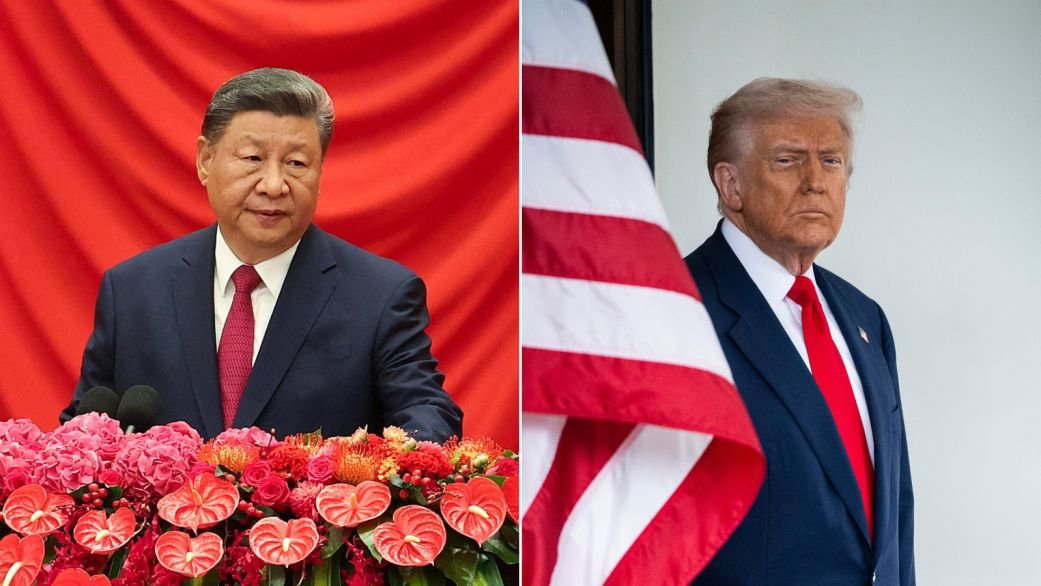
- Trump aims to secure a mini trade deal with Xi amid rising tariff tensions.
- China has yet to confirm the meeting as Washington raises stakes with new threats.
- Markets rally ahead of Trump’s Asia tour, betting on partial thaw in relations.
- Analysts see limited progress but major symbolic value in the Seoul encounter.
U.S. President Donald Trump’s five-day Asia tour is more than another round of diplomacy—it’s a test of whether his signature brand of transactional politics can deliver results in one of the world’s most strained relationships. As he heads to Malaysia, Japan, and South Korea, all eyes are fixed on his expected “pull-aside” meeting with Chinese President Xi Jinping in Seoul.
The encounter, still unconfirmed by Beijing, could define the next phase of the U.S.-China rivalry—a rivalry that has reshaped global trade, technology, and geopolitics since Trump’s return to the White House. For Trump, it’s an opportunity to prove that his aggressive tariffs, sanctions, and strategic brinkmanship have forced China to the negotiating table. For Xi, it’s a test of resilience against mounting American pressure.
A Tariff Battlefield Turned Negotiating Table
The roots of this tension stretch back to Trump’s first presidency, when he imposed sweeping tariffs on Chinese imports to correct what he called “decades of economic abuse.” Those measures—first at 25%, later escalating across multiple sectors—aimed to pressure Beijing into reducing its trade surplus and curbing intellectual property theft.
Now, in his second term, Trump’s tariff playbook is back, and even sharper. In September, he threatened to raise total tariffs on Chinese imports to 155% starting November 1, unless Beijing agrees to a “fair and reciprocal” deal. That ultimatum has rattled Asian markets and forced multinational corporations to recalibrate their supply chains once again.
Beijing responded with countermeasures, tightening export controls on rare earths—essential minerals for electric vehicles, semiconductors, and U.S. defense technology. The result has been a cycle of economic brinkmanship that both leaders now seem eager to de-escalate, at least partially.
Trump’s Play for a “Mini Deal”
According to officials familiar with pre-summit discussions, the Seoul meeting is unlikely to produce a grand bargain. Instead, negotiators are working toward a “mini-deal” — limited tariff relief in exchange for China’s renewed commitments to purchase U.S. goods such as soybeans and Boeing aircraft.
Such a framework would echo the 2020 “Phase One” agreement, which collapsed after China failed to meet its purchasing targets amid the pandemic. This time, Trump is reportedly seeking stricter enforcement mechanisms, possibly linking future tariff relief to quarterly audits of Chinese imports.
On technology, Washington might ease restrictions on certain high-end semiconductor exports, while Beijing could relax curbs on rare earth magnets — a trade-off that would benefit both economies. However, if talks falter, Trump has made clear he’s ready to “walk away and raise tariffs to levels no one’s ever seen before.”
Symbolism Over Substance
Even if little progress is made, the optics of the Seoul meeting matter enormously. Trump, who prides himself as the “ultimate dealmaker,” wants to project confidence and leadership on the global stage. After all, his Asia trip is loaded with achievements in waiting: a ceasefire deal in Southeast Asia, a $550 billion investment pledge from Japan, and deepening cooperation with South Korea on trade and security.
For Xi, appearing beside Trump at an international summit signals China’s continued relevance in global diplomacy, even as Western powers attempt to isolate it over human rights and its support for Russia. Both leaders understand that the world’s investors, diplomats, and defense planners will parse every gesture, word, and handshake.
Markets have already responded with optimism: Wall Street hit record highs on Friday, with the Dow crossing 47,000 for the first time, driven by hopes that a Trump-Xi thaw could stabilize global trade.
The Politics Behind the Policy
The timing of Trump’s Asia tour is no coincidence. With the 2026 midterm elections approaching, Trump’s administration wants to showcase foreign policy wins that resonate with both American farmers and industrial workers — two constituencies hit hardest by the trade war.
In contrast, Xi faces mounting domestic pressures: a slowing economy, a debt-laden property sector, and growing discontent among China’s manufacturing elite. Analysts say he cannot afford another escalation that risks alienating global investors or deepening China’s economic isolation.
Mira Rapp-Hooper of the Brookings Institution notes, “The high-level question on this trip is really, who does the United States stand with, and what does it stand for?” Her point underscores that Trump’s Asia strategy is as much about alliances as it is about adversaries. From Japan to South Korea, leaders are recalibrating their loyalties amid fears of another great-power divide.
Beyond the Tariffs: Strategic Friction Persists
Even as trade dominates the headlines, other flashpoints loom large. Taiwan remains the most sensitive issue, with Trump expected to reaffirm U.S. support for its autonomy—a move likely to irk Beijing. The White House also signaled Trump will press for the release of Hong Kong pro-democracy figure Jimmy Lai, detained under China’s national security laws.
Then there’s Russia. As Trump expands sanctions on Moscow’s energy exports, Washington wants assurances that Beijing will reduce its purchases of discounted Russian oil—a demand China is unlikely to accept.
The Seoul Showdown
Whether it lasts five minutes or fifty, the Trump-Xi encounter in Seoul will be watched like a geopolitical thriller. A friendly photo could send markets soaring; a canceled meeting could ignite panic. In either case, Trump will claim victory — as a negotiator who forced China’s hand, or as a leader unafraid to confront America’s biggest rival.
For now, both capitals are playing the long game. Trump wants leverage; Xi wants time. Between them lies a fragile global economy—and the hope that, even in rivalry, pragmatism might prevail.