



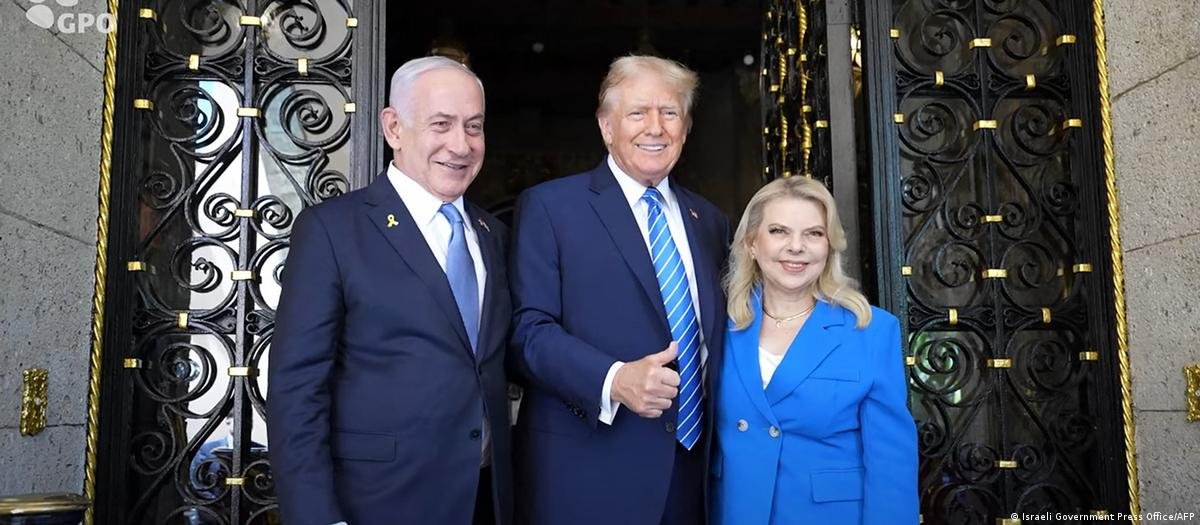
- The Trump–Netanyahu meeting revealed a significant shift in diplomatic leverage as Trump signals he is no longer offering a blank check to Israeli leadership.
- Trump decoupled Hamas disarmament from Israeli troop withdrawal, effectively signaling that Israeli delays will no longer dictate the peace plan’s pace.
- While maintaining a tough stance on Iran, the President positioned himself as a mediator rather than an unconditional ally.
- The meeting highlighted growing fractures between the two leaders regarding the West Bank and the second phase of the 20-point peace plan.
At Mar-a-Lago today, President Donald Trump and Israeli Prime Minister Benjamin Netanyahu staged a meeting that looked polished on the surface but revealed deep fractures underneath. The cameras caught the smiles; the transcripts caught the tension. And if you listened closely, Trump wasn’t standing fully behind Netanyahu—he was positioning himself dead center between Israeli hardliners and a Palestinian population still trapped in the wreckage of a two-year war.
The official agenda was the Gaza ceasefire, Iran’s nuclear activity, and the stalled second phase of Trump’s 20-point peace plan. But the real story was the recalibration of power: Trump signaling that he’s no longer willing to rubber-stamp Netanyahu’s delays, and Netanyahu trying to keep Trump close enough to avoid public rebuke.
Trump and Netanyahu Meeting: Negotiating the Future of Gaza and Regional Security
A Ceasefire Stuck in Neutral The ceasefire that took effect in October is technically holding, but barely. More than 400 Palestinians have been killed since the agreement, according to local officials, and Israel continues to accuse Hamas of violations—including delays in returning hostage remains. Phase Two of the plan, approved by the U.N. Security Council, requires Hamas to disarm and Israeli forces to withdraw from Gaza. Neither side has moved.
READ MORE: Saudi Arabia Foreign Policy: How MBS and Trump Are Re-Engineering Middle East Stability
Trump made it clear he’s losing patience. Standing next to Netanyahu, he warned Hamas there would be “hell to pay” if they fail to disarm. But then he did something Netanyahu didn’t expect: he separated Hamas disarmament from Israeli troop withdrawal, saying the two issues are “separate subjects” that will be handled independently.
That single line was a pressure point. Netanyahu has been accused—even by Israeli analysts—of slow-walking the ceasefire’s second phase. Trump’s decoupling of the requirements was a signal: the U.S. is no longer letting Israel’s delays dictate the pace.
Trump’s Middle Position: Not Pro-Israel, Not Pro-Hamas—Pro-Leverage Netanyahu showered Trump with praise, calling him “the greatest friend Israel has ever had in the White House.” Trump accepted the flattery, but he didn’t return it with the same intensity. Instead, he emphasized trust, not unconditional alignment.
ALSO READ: Netanyahu and Trump meet over the second phase of Gaza’s ceasefire plan
He even acknowledged disagreements—especially over the West Bank, where settler violence and military clashes have escalated. “I wouldn’t say we agree 100%,” Trump said, adding that he expects Netanyahu to “do the right thing.”
That’s not a blank check. That’s a warning disguised as a compliment.
Trump’s posture today was not the Trump of 2017 who moved the U.S. embassy to Jerusalem. This was a president trying to reclaim the role of mediator—or at least the appearance of one—while still projecting strength to both sides. He criticized Hamas. He threatened Iran. But he also subtly boxed Netanyahu in, making it clear that Israeli compliance with the peace plan is no longer optional.
Iran: The Shadow Player in the Room Iran’s nuclear program loomed over the meeting. Trump suggested Iran “may be behaving badly” and rebuilding nuclear sites the U.S. struck earlier this year. He warned that if confirmed, consequences would be “very powerful, maybe more powerful than last time.”
Netanyahu welcomed the tough talk. But Trump’s tone was different from his usual maximalism. He wasn’t promising unconditional support for Israeli military action—he was signaling that any escalation would be calibrated, not automatic. This is the middle-ground Trump: unpredictable enough to deter Iran, but cautious enough to avoid being dragged into a conflict on Netanyahu’s timeline.
The Investigative Angle: What Trump Didn’t Say The most revealing part of the meeting wasn’t what Trump said—it was what he avoided. He did not endorse Netanyahu’s claim that Israel has “lived up to the plan.” He did not repeat Netanyahu’s insistence that Hamas alone is responsible for delays. He did not echo Netanyahu’s framing of the West Bank as a minor issue.
Instead, Trump kept returning to the same theme: both sides need to move, and neither side gets to dictate the pace. That’s a shift. A subtle one, but a real one.
Optics vs. Reality The optics were classic Mar-a-Lago: gold trim, soft lighting, two leaders projecting unity. But the reality was a negotiation between two men who need each other—and know it. Netanyahu needs Trump’s political cover. Trump needs a foreign-policy win.
But Trump also needs distance. He’s negotiating with Ukraine, Russia, Israel, Palestine, Iran, and Turkey simultaneously. He cannot afford to be seen as Netanyahu’s echo. So today, he walked a tightrope: tough on Hamas, tough on Iran, but quietly tightening the screws on Netanyahu.
The Bottom Line This wasn’t a meeting about peace. It was a meeting about leverage. Trump is trying to restart a stalled peace plan. Netanyahu is trying to preserve strategic freedom. Hamas is trying to survive. Iran is testing boundaries.
And Trump—for the first time in a long time—is positioning himself not as Israel’s unquestioning ally, but as the broker who decides when the next move happens. That’s the real headline.