



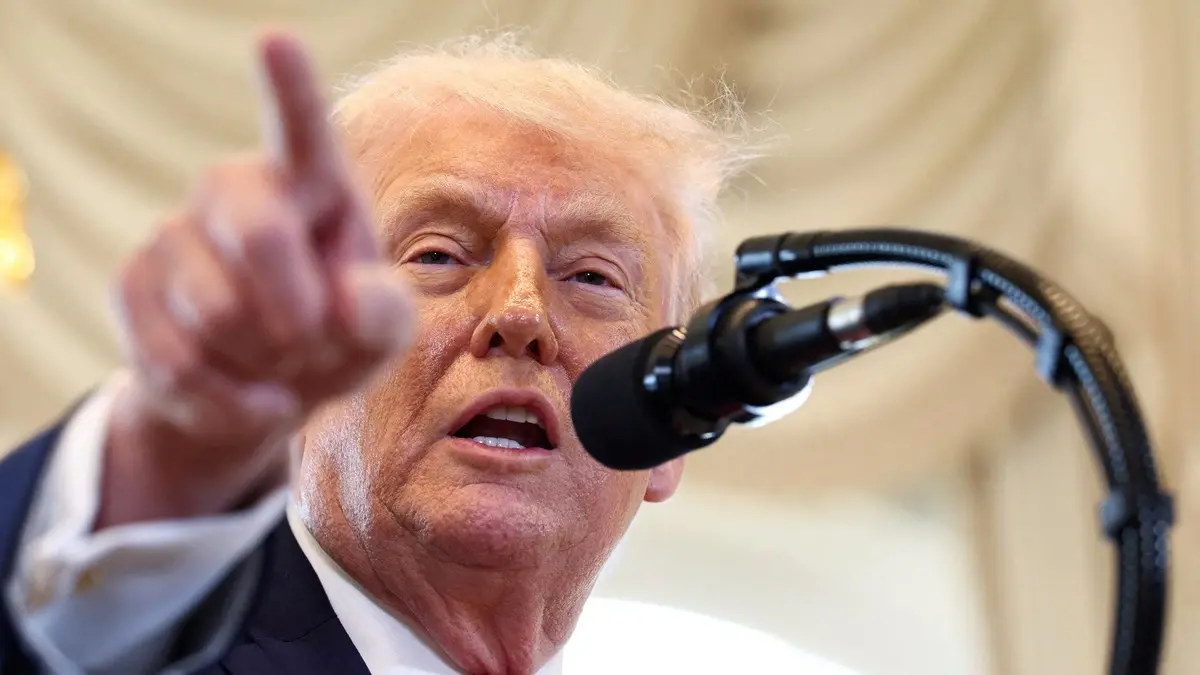
- Trump’s Board of Peace invitations have been sent to world leaders including Vladimir Putin and Shehbaz Sharif.
- The draft charter allows countries to bypass the three-year term limit with a $1 billion cash contribution.
- The organization aims to replace “failed” international institutions like the United Nations.
- The body will be chaired by Donald Trump, who retains the power to remove members.
In a move that signals a radical departure from traditional global diplomacy, the administration of U.S. President Donald Trump has unveiled a high-stakes international organization dubbed the “Board of Peace.” According to a draft charter obtained by Bloomberg and The Times of Israel, the White House is asking member nations to contribute a staggering $1 billion for a permanent seat on the body, which aims to resolve global conflicts and bypass established international institutions.
The board, chaired by Trump himself, represents a “pay-to-play” model of diplomacy that has sent shockwaves through foreign capitals. While membership is typically capped at a three-year term, the draft charter specifies a lucrative loophole: “The three-year membership term shall not apply to member states that contribute more than USD $1,000,000,000 in cash funds to the Board of Peace within the first year.”
Trump–Netanyahu Meeting at Mar-a-Lago: Pressure, Posturing, and a President Reclaiming the Middle
A New Global Hierarchy
The invitation list for this exclusive club includes an eclectic mix of allies and adversaries. High-profile figures such as Russian President Vladimir Putin, Hungarian Premier Viktor Orbán, Canadian financier Mark Carney, and Pakistan’s Prime Minister Shehbaz Sharif have reportedly been approached.
Trump to charge $1bn for permanent ‘peace board’ membership
The Kremlin confirmed the invitation on Monday. Spokesperson Dmitry Peskov told AFP that Putin had received the offer and that Moscow is currently seeking to “clarify all the nuances” of the proposal. The dynamic between Trump and Putin remains a point of intense global scrutiny; while Putin has previously praised Trump’s ability to tackle “complex crises,” their relationship has been complicated by the ongoing war in Ukraine and shifting alliances in the Middle East.
Bypassing the United Nations
The Board of Peace is not just a new committee; it is a direct challenge to the post-World War II international order. The draft charter takes a pointed swipe at the United Nations, stating the board must have the “courage to depart from approaches and institutions that have too often failed.”
Trump’s Gaza Plan Faces Global Hesitation as International Stabilization Force Falters — Exclusive Islamabad Telegraph Analysis
This rhetoric aligns with President Trump’s recent announcement that the United States will withdraw from 66 global organizations and treaties—roughly half of which are affiliated with the UN. By creating a private, chairman-led board, Trump appears to be centralizing diplomatic power. Under the proposed rules, the Chairman holds the authority to remove member states (subject to a two-third veto) and even appoint his own successor should he vacate the role.
From Gaza to Global Governance
Initially, the board was conceived as a mechanism to oversee the reconstruction of the war-torn Gaza Strip. The structure includes a main board, a committee of Palestinian technocrats to govern the territory, and an “executive board” for advisory roles. However, the finalized charter suggests a much broader mandate, defining the organization as one that seeks to “promote stability, restore dependable and lawful governance, and secure enduring peace” in any area threatened by conflict.
This expansion has already met with friction. Israel has reportedly voiced objections to the lineup of the “Gaza executive board,” which includes Turkish Foreign Minister Hakan Fidan and Qatari diplomat Ali Al-Thawadi. Meanwhile, Trump has stacked his side of the table with familiar faces, including Secretary of State Marco Rubio, senior negotiators Jared Kushner and Steve Witkoff, and former British Prime Minister Tony Blair.
Diplomatic Uncertainty
For leaders like Pakistan’s Shehbaz Sharif, the invitation presents a complex dilemma. Joining the board offers a direct line to the Oval Office but requires navigating a structure that operates outside the bounds of traditional international law.
As the “Board of Peace” begins to take shape—with Egypt, Turkey, and Argentina also invited—the world is watching to see which nations will pay the $1 billion entry fee. If successful, Trump’s initiative could effectively privatize global peace-brokering, replacing the deliberative (and often slow) halls of the UN with a streamlined, executive-led corporation of nations.