



- The USS Gerald Ford, America’s largest carrier, heads to Latin America amid surging tensions with Venezuela.
- Trump doubles reward for Maduro’s capture to $50 million, calls Colombia’s Petro a “drug leader.”
- U.S. military strikes in the Caribbean have already killed about 40 suspected traffickers since September.
- Legal experts warn the deployment risks escalating into a regional conflict under the guise of anti-narcotics operations.
President Donald Trump has once again thrust the United States into the geopolitical spotlight — this time in the Caribbean. On Friday, his administration announced the deployment of the USS Gerald R. Ford carrier strike group to Latin America, a move described by the Pentagon as part of a counter-narcotics mission but seen by many as a veiled show of force against Venezuela.
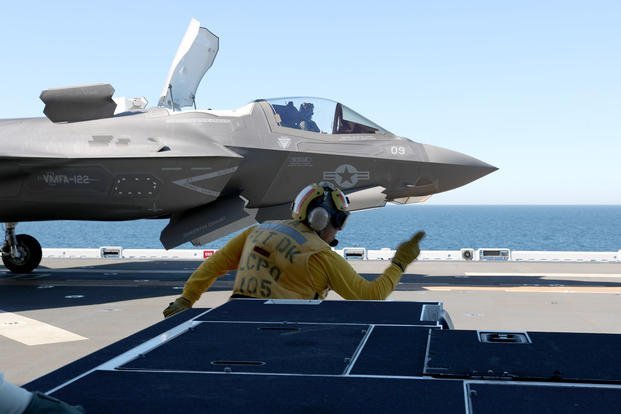
The Ford — the U.S. Navy’s most advanced and powerful aircraft carrier — joins an already formidable lineup of American firepower in the region, including eight warships, a nuclear-powered submarine, and squadrons of F-35 jets. The scale and timing of the deployment mark a striking escalation in Washington’s military posture toward its southern neighbors.
Pentagon spokesperson Sean Parnell said the enhanced presence would “bolster U.S. capacity to detect, monitor, and disrupt illicit actors” threatening U.S. security. But few in the region are buying the official line. To many observers, the operation looks less like a drug interdiction mission and more like the opening act of a geopolitical confrontation.
“The Western Hemisphere hasn’t seen this kind of buildup since the Cold War,” said a former U.S. defense official. “Calling it counter-narcotics doesn’t hide the message — this is about Venezuela, and Maduro knows it.”
A New Era of Gunboat Diplomacy
Since early September, U.S. forces have conducted at least ten strikes on suspected drug-running vessels in the Caribbean, killing about 40 people — many reportedly Venezuelan nationals. Details remain sparse, and the Pentagon has refused to release the full operational record.
Venezuelan President Nicolás Maduro, who has survived years of U.S. sanctions and covert operations, warned on Thursday that any American intervention would spark a nationwide insurrection. “Millions of men and women with rifles would march across the country,” he declared in a televised speech.
Washington’s response was to turn the screws tighter. The Trump administration recently doubled its bounty for information leading to Maduro’s capture to $50 million, accusing the Venezuelan leader of deep involvement in drug trafficking — charges he denies. The CIA, sources say, has been authorized to conduct “covert operations” inside Venezuelan territory.
It’s a policy reminiscent of the 1980s, when Washington’s anti-communist crusade in Central America left behind a legacy of coups, covert wars, and human suffering. “The language may have changed,” said a Latin American diplomat in Washington, “but the playbook hasn’t.”
Colombia and the Trump Factor
The latest escalation has also roiled relations with Colombia, traditionally Washington’s closest ally in the region. In a startling outburst, Trump accused Colombian President Gustavo Petro of being an “illegal drug leader” and a “bad guy” — comments that Bogotá called “deeply offensive and irresponsible.”
Hours later, Washington announced sanctions on Petro, citing alleged ties to drug trafficking networks. Analysts say the move risks fracturing a critical security partnership that has underpinned U.S. strategy in South America for decades.
“It’s one thing to threaten Caracas,” noted Lisa Monroe, a Washington-based foreign policy analyst. “It’s another to insult Bogotá — that’s alienating your own flank.”
The Ford’s Message: Deterrence or Provocation?
The USS Gerald R. Ford, commissioned in 2017, represents the cutting edge of U.S. naval dominance. Powered by a nuclear reactor and manned by over 5,000 sailors, it carries more than 75 aircraft, including F/A-18 Super Hornets and E-2 Hawkeyes — capable of sweeping the skies for hundreds of miles.
Supporting ships in the carrier strike group — including the cruiser Normandy and destroyers Ramage, Carney, and Roosevelt — bring formidable missile and anti-submarine capabilities. The sheer size and complexity of the operation underscore that this is no symbolic patrol.
Last year, a similar mission by the USS George Washington to South America was a routine exercise, planned months in advance. The Ford’s sudden redeployment, however, suggests a more urgent intent — one that has rattled both allies and adversaries alike.
Washington’s War on “Narco-Terror”
In announcing the deployment, Defense Secretary Pete Hegseth said the operation would “degrade and dismantle” transnational criminal organizations. Hours later, he confirmed another U.S. strike in the Caribbean had killed six alleged “narco-terrorists.”
Republican lawmakers were quick to rally behind Trump. “President Trump is not messing around when it comes to protecting the U.S. and our Western Hemisphere neighborhood,” wrote Rep. Rick Crawford on X.
But Democrats and international law experts are less enthusiastic. Many question whether these strikes — carried out without congressional approval — comply with international law. “We’re inching dangerously close to undeclared warfare,” warned Senator Chris Murphy.
Trump, meanwhile, appears undeterred. He has hinted that the next phase could involve “operations on land” against drug cartels, claiming he does not need a formal declaration of war to act. “The cartels are terrorists,” he said recently. “And terrorists must be destroyed.”
A Hemisphere on Edge
For Latin America, Trump’s “Caribbean surge” is both familiar and frightening. It echoes the era of American gunboats and covert wars — when Washington’s enemies were toppled and its allies often paid the price.
Whether the carrier’s arrival signals deterrence or the prelude to confrontation remains to be seen. But one thing is clear: with the USS Gerald Ford now steaming toward Latin waters, the shadow of American power once again looms large over a region still haunted by its past.