



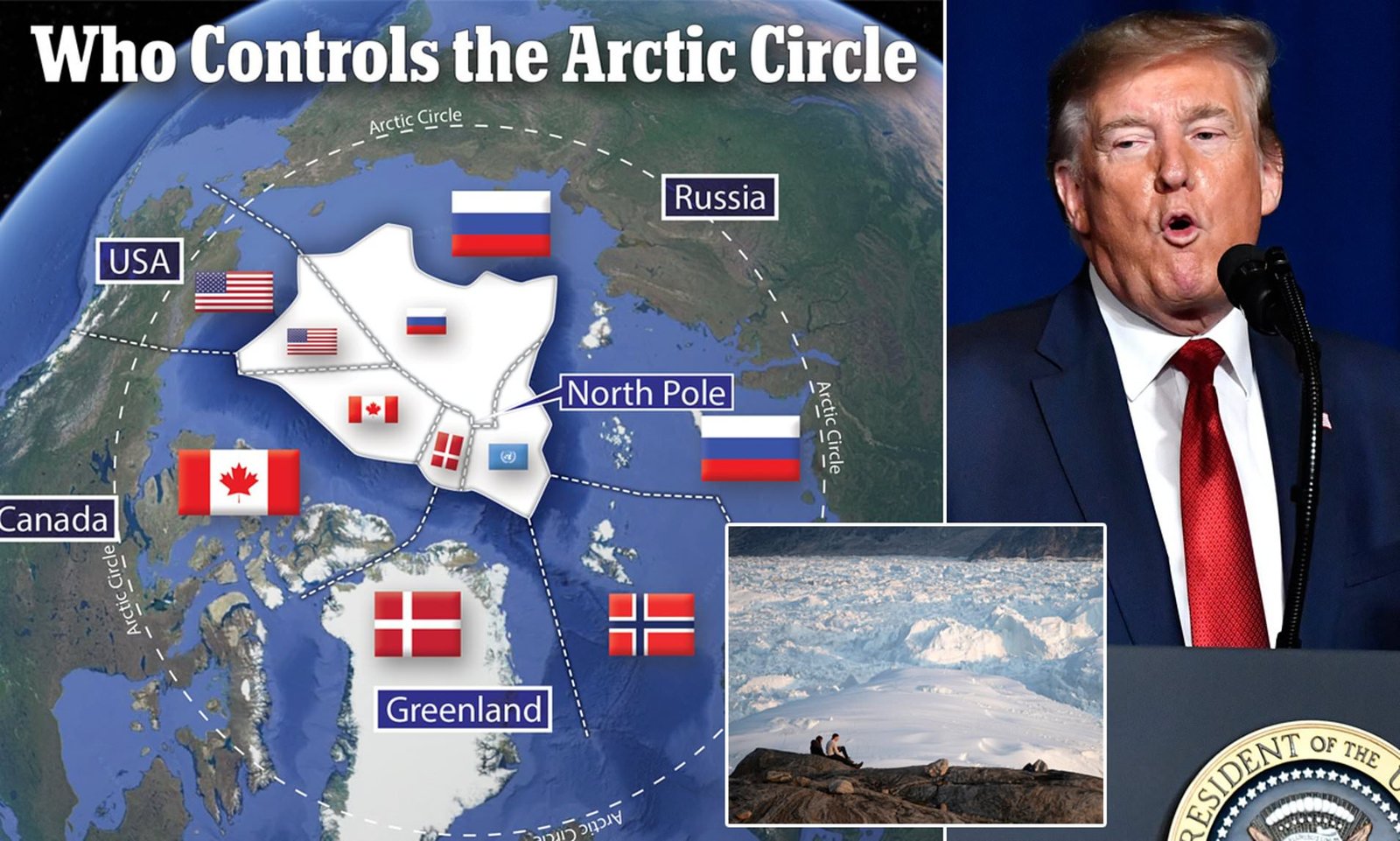
- Trump’s Greenland ambition has intensified following the successful U.S. military operation to capture Nicolás Maduro.
- Danish Prime Minister Mette Frederiksen has formally rejected U.S. annexation threats as “absurd” and “illegal.”
- The appointment of Governor Jeff Landry as a special envoy signals a shift from rhetoric to active policy execution.
- Global leaders in North Korea and Iran have voiced “shock” at the potential for further U.S. territorial interventions.
In a world already reeling from the dramatic capture of Venezuelan President Nicolás Maduro, the geopolitical landscape has shifted from the tropical heat of Caracas to the icy frontiers of the Arctic. As of January 5, 2026, the international community is grappling with the emergence of the “Don-roe Doctrine”—a bold, interventionist policy named after President Donald Trump that seeks to redefine global borders through direct action.
With Venezuela effectively under a U.S.-led administrative transition, the question on every diplomat’s lips is simple yet terrifying: Is Greenland next?
The Venezuela Precedent: A Global Seismic Shift
The January 3 raid in Caracas was not just a military operation; it was a manifesto. By removing a sovereign head of state to “secure energy infrastructure” and combat “narco-terrorism,” the Trump administration has signaled the end of the post-WWII rules-based order.
Denmark PM urges Trump to stop threats to take over Greenland
The reaction from the “axis of resistance” has been one of pure alarm. North Korea’s Foreign Ministry Sunday denounced the raid as a “wanton violation of the UN Charter,” while Iran characterized it as a “dangerous blueprint” for resource-rich nations. These states realize that in the 2026 landscape, historical norms of non-interference have been replaced by a “man of action” doctrine where plans are prepared specifically for full, rapid implementation.
The Arctic Ultimatum: Denmark and Greenland Respond
As the smoke cleared in Venezuela, President Trump wasted no time pivoting to his long-standing ambition: the annexation of Greenland. In a recent interview with The Atlantic, he was blunt: “We do need Greenland, absolutely. We need it for defense.”
Greenland National Security: Trump Appoints Special Envoy to Greenland: Why National Security and Minerals Are Driving the Push Amid Denmark Fury
The response from America’s oldest allies has been a mixture of “cold fury” and disbelief. Danish Prime Minister Mette Frederiksen issued a stinging statement Sunday:
“It makes absolutely no sense to talk about the U.S. needing to take over Greenland. The U.S. has no right to annex any of the three countries in the Danish Kingdom.”
In Nuuk, Greenlandic Prime Minister Jens-Frederik Nielsen was even more pointed, calling the rhetoric “disrespectful” and “unacceptable.” The outrage was further fueled by a viral social media post from Katie Miller, wife of Trump advisor Stephen Miller, depicting Greenland draped in the American flag with the caption: “SOON.”
Trump’s Greenland Ambition: The Triple Threat Strategy
Analysts argue that Greenland has moved to the top of the U.S. priority list because it represents a “Triple Threat” of strategic value:
-
Critical Mineral Dominance: Greenland holds the world’s eighth-largest reserves of rare earth elements. In the race for AI and EV supremacy, the U.S. views controlling these minerals as the only way to break China’s global monopoly.
-
The New Suez: As Arctic ice melts, the Northern Sea Route is becoming a viable commercial artery. Control of Greenland gives the U.S. a “toll booth” at the crossroads of the Atlantic and the Arctic.
-
Ballistic Shielding: The Pituffik Space Base (formerly Thule) is more critical than ever in an era of hypersonic missiles. Washington views Denmark’s “Arctic Command” as insufficient for the level of protection the U.S. now demands.
Future Perspective: A World Divided
Looking toward the remainder of 2026, the “Don-roe Doctrine” suggests a future of “Coercive Diplomacy.” If the U.S. follows the Venezuela playbook, we can expect:
- Economic Pressure: Targeted sanctions on Danish goods or a “security tax” on Arctic shipping.
- Bilateral Isolation: Moving away from NATO-led Arctic defense in favor of direct “ownership” models.
- Social Engineering: Significant investment in Greenlandic independence movements to decouple the island from Copenhagen, making a “purchase” or “lease” easier to negotiate.
While analysts say “no one can stop Trump” once a plan is in motion, the push for Greenland may be the breaking point for the Western alliance. If the U.S. treats a NATO ally’s territory as a real estate acquisition, Europe may be forced to seek “strategic autonomy,” potentially aligning more closely with Middle Eastern or even Asian powers to balance American hegemony.