



- U.S.–Iran war Middle East impact is shifting diplomatic priorities away from Gaza.
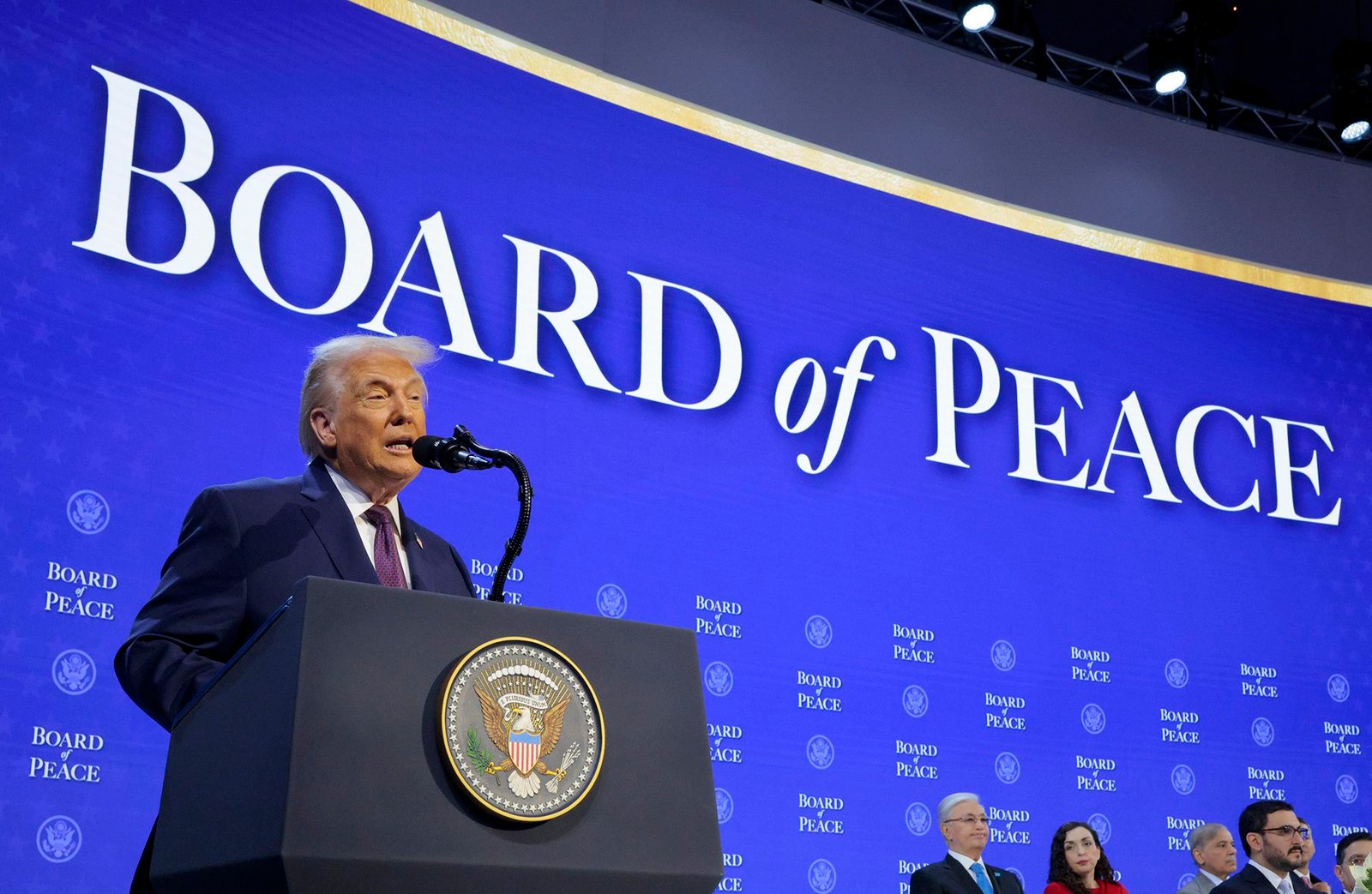
- Trump’s Board of Peace initiative has stalled after its first meeting in the United States.
- Palestinians face worsening humanitarian conditions as global focus moves to regional war.
- Lebanon is emerging as a new frontline with hundreds of thousands displaced.
The widening U.S.–Iran war is rapidly reshaping the strategic landscape of the Middle East, pushing long-running crises—particularly Gaza—into the background. What began as a dramatic escalation between Washington, Tel Aviv, and Tehran has now triggered a cascading regional conflict that is consuming diplomatic bandwidth, redirecting political priorities, and leaving the Palestinian question increasingly neglected.
The immediate casualty of this geopolitical shift appears to be President Donald Trump’s ambitious Gaza peace initiative, once framed as the cornerstone of his Middle East diplomacy. Negotiations designed to advance the plan have effectively stalled since the late-February outbreak of the U.S.–Iran war, according to multiple sources involved in the mediation process.
The pause underscores a harsh geopolitical reality: when great powers clash in the Middle East, smaller conflicts rarely disappear—they are simply overshadowed.
War Changes the Strategic Agenda
Trump’s plan to end the Gaza war had relied on an intricate diplomatic architecture. At its core was a controversial proposal that would see Hamas militants disarm in exchange for amnesty, enabling reconstruction of Gaza and a gradual Israeli military withdrawal.
The plan was to be implemented through a new diplomatic platform known as the Board of Peace, an initiative backed by several Gulf and Asian states and designed to mobilize billions of dollars in reconstruction funds.
But the sudden eruption of hostilities between the United States and Iran—after coordinated American and Israeli strikes on Iranian targets—has thrown that process into disarray.
The first meeting of the Board of Peace, held in the United States with great fanfare only weeks ago, now appears to have yielded little progress. Diplomatic channels that were expected to shuttle mediators between Cairo, Doha, and regional capitals have largely fallen silent.
Even Trump himself, the initiative’s principal architect, has been forced to pivot. With American forces now engaged in an escalating regional confrontation, Washington’s foreign policy machinery has shifted focus from peacebuilding in Gaza to managing a rapidly expanding war.
A Coalition Distracted by Survival
The Board of Peace was initially designed as a wartime emergency coalition to stabilize Gaza and accelerate reconstruction.
Instead, many of its members now find themselves grappling with immediate security threats.
Gulf states that had pledged billions for Gaza’s reconstruction are currently confronting Iranian missile strikes and regional instability. For governments that once saw Gaza diplomacy as a strategic priority, the calculus has shifted dramatically.
As one analyst noted, donor governments are increasingly questioning whether reconstruction pledges remain politically or financially feasible while they are “dodging rocket fire.”
One of the most striking signals of internal strain came from Prabowo Subianto, the president of Indonesia, who reportedly warned that Jakarta might withdraw from the Board of Peace altogether if the initiative fails to regain momentum.
Such a move would represent a serious blow to the initiative’s credibility, as Indonesia had been positioned as a leading voice representing the broader Muslim world within the diplomatic framework.
Palestinians: The Forgotten Casualty
While diplomats debate strategy, the humanitarian reality in Gaza continues to deteriorate.
For Palestinians, the geopolitical pivot triggered by the U.S.–Iran war has effectively frozen what little diplomatic progress had been made. Meetings between Hamas representatives and mediators from Egypt, Qatar, and Turkey were abruptly cancelled on the very day the conflict erupted.
No new meeting date has been announced.
This diplomatic paralysis reinforces a familiar pattern in Middle Eastern geopolitics: Palestinian suffering frequently becomes a secondary concern whenever a larger regional conflict emerges.
The Gaza war, which had already devastated civilian infrastructure and displaced vast segments of the population, now risks becoming a prolonged frozen conflict with little international attention.
In effect, the world has not solved Gaza—it has simply stopped looking.
Lebanon: The War’s New Frontline
At the same time, the regional escalation is opening new humanitarian crises beyond Gaza.
Lebanon has been drawn deeply into the conflict following clashes between Israel and the Iran-aligned militant group Hezbollah.
Israeli airstrikes and military operations have already forced more than 700,000 Lebanese civilians from their homes, according to humanitarian officials.
Columns of smoke now regularly rise over Beirut’s southern suburbs, a Hezbollah stronghold that has become a focal point of Israeli bombardment. Entire neighborhoods are being evacuated as the Israeli military expands its operations into southern Lebanon and parts of the Bekaa Valley.
The humanitarian toll is mounting rapidly.
Lebanon’s health authorities report that hundreds have been killed in Israeli strikes, including dozens of children and women. Displaced families are now sheltering in stadiums, schools, and improvised camps across the country.
For a nation still struggling with economic collapse and political paralysis, the sudden influx of hundreds of thousands of displaced civilians represents a potentially catastrophic burden.
Strategic Calculations Behind the Escalation
From a strategic standpoint, Israeli leaders appear to view the regional war as an opportunity to weaken Iran’s network of allied militant groups.
Israel’s military leadership has argued that mass evacuations in southern Lebanon could create a security buffer zone along its northern border—an objective long sought by Israeli defense planners.
Meanwhile, some proponents of the Board of Peace initiative believe the war might ultimately reshape the Palestinian question by weakening Iran’s influence over groups like Hamas.
Yet this theory remains highly speculative.
What is certain is that the immediate effect of the war has been to stall diplomacy rather than accelerate it.
A Region Consumed by War
The broader picture emerging across the Middle East is one of cascading instability.
The U.S.–Iran war has effectively reordered the region’s strategic priorities. Diplomatic energy that was once focused on Gaza reconstruction, political reconciliation, and ceasefire negotiations is now being diverted toward crisis management.
Airspace disruptions, military mobilization, and security concerns have already complicated travel and diplomacy across the region. Mediators who once shuttled between capitals are now struggling simply to maintain communication channels.
The result is a diplomatic vacuum at precisely the moment when Gaza requires sustained international attention.
The Risk of Strategic Amnesia
History suggests that when major wars erupt in the Middle East, unresolved conflicts tend to linger long after global attention moves elsewhere.
The Gaza crisis risks becoming another example of this phenomenon.
For Palestinians, the implications are stark. Their political future is once again hostage to the wider power struggles of the region.
And as the U.S.–Iran war intensifies, one troubling reality is becoming increasingly clear: in the hierarchy of Middle Eastern crises, Gaza is once again slipping down the list.
The world may still speak of peace—but for Palestinians, that promise now feels more distant than ever.