



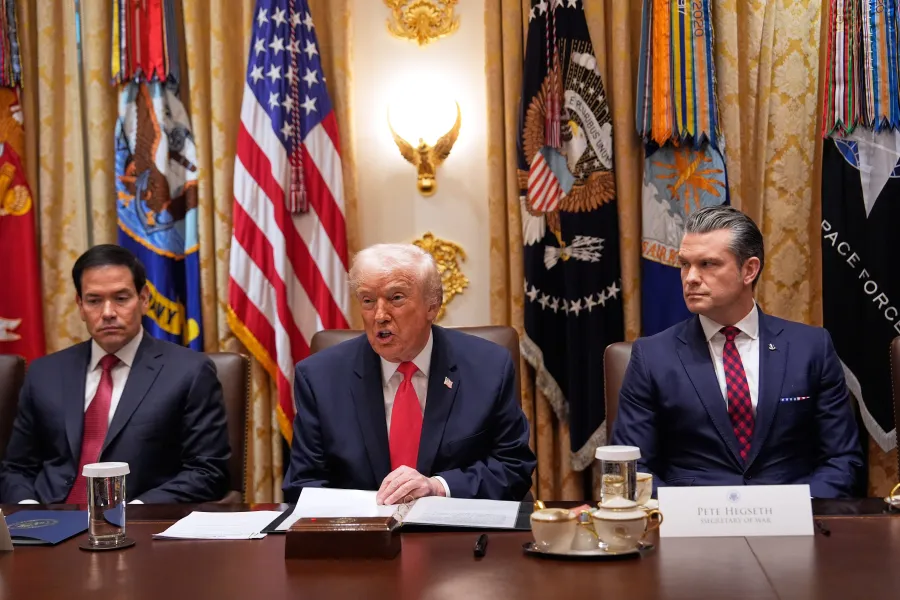
- U.S. National Security Strategy Cast Europe as Villain: The U.S. National Security Strategy accuses Europe of losing sovereignty, suppressing democracy, and facing “civilizational erasure.”
- China Reframed as Partner: The report softens its tone toward Beijing, describing China as a potential partner instead of a strategic threat.
- Russia Not Listed as a Threat: For the first time in decades, Russia is not mentioned as a national security threat to the U.S., alarming European governments.
- Trans-Atlantic Shockwaves: European policymakers and analysts say the document signals the death of traditional U.S.–Europe relations and fuels political instability across the continent.
In a stunning and unprecedented turn, the Trump administration’s latest National Security Strategy (NSS) has done what no modern U.S. government document has dared: it casts Europe—not China, not Russia—as the central villain in America’s global outlook. The 30-page report treats the European Union as a failing project, labels key NATO allies as unreliable, and warns of a looming “civilizational erasure” on the continent.
For decades, Europe has been Washington’s closest and most loyal ally—supporting U.S. wars, aligning with U.S. sanctions, and backing American leadership in NATO and beyond. Europe stood by the United States through the Cold War, the war on terror, and the global financial crisis. It never betrayed Washington. If anything, critics argue, Europe followed the U.S. even when American policies backfired.
Now, under Trump’s second term, the U.S. appears to be rewriting this history—and rewriting the hierarchy of global adversaries. China, portrayed for years as America’s largest strategic rival, is barely treated as a threat. Instead, the NSS frames Beijing as a “pragmatic partner” capable of cooperation. Europe, meanwhile, is portrayed as the declining, wayward, ideological antagonist holding America back.
Analysts on both sides of the Atlantic are calling the report “disturbing,” “baffling,” and “a political earthquake in trans-Atlantic relations.”
A Villainous Portrait of Europe
The NSS—typically a sober document identifying threats from adversarial states—devotes its harshest language to U.S. allies in Europe. It accuses European governments of suppressing democratic voices, handing over sovereignty to the EU, and pursuing immigration policies that will make Europe “unrecognizable” within two decades.
“The document reads like the U.S. government sees Europe as a burden, a failing civilization rather than a partner,” said one senior EU diplomat, speaking anonymously due to the sensitivity of the matter.
READ MORE: Trump Russia Ukraine peace talks: Russia Welcomes U.S. Delegation as Trump’s Peace Push Enters a Defining Phase
Katja Bego of Chatham House warned that European leaders reading the report “need to assume that the traditional trans-Atlantic relationship is dead.”
Timothy Garton Ash, one of Britain’s most prominent historians, called it “the mother of all wake-up calls.”
“We’re in this bizarre moment where the U.S. is objectively still Europe’s ally, but subjectively—at least in Trump’s Washington—we are no longer seen that way,” he added.
The irony, European officials say, is bitter: after decades of alignment, the U.S. now treats Europe with more suspicion than it treats Beijing.
China: From Threat to ‘Partner’
The most striking feature of the report is not just its harsh critique of Europe—but the notable absence of similar language toward China. Previous U.S. administrations, Republican and Democrat alike, framed China as America’s principal long-term threat.
ALSO READ: U.S. Flips History by Casting Europe—Not Russia—as Villain in New Security Policy
Trump’s NSS instead calls for “constructive engagement” and recognizes China as a “key global partner in selective domains”—a phrase geopolitical observers say would have been unthinkable under any prior administration.
“This is an unprecedented repositioning,” said a former U.S. State Department policy adviser. “To soften the tone on China while weaponizing rhetoric against Europe—this is a reversal of 70 years of American strategy.”
Russia Not Mentioned as a Threat — At All
Equally striking: Russia is not listed once as a threat to U.S. interests.
Phillips O’Brien, professor of strategic studies at St. Andrews, noted, “The document reads like a brief in favor of the Russian position… This is a strategy to destroy the present Europe, to make it MAGA.”
The NSS positions the U.S. not as Europe’s ally against Russian aggression, but as a mediator between the two sides—an approach that alarms Western policymakers, particularly as war continues in Ukraine.
Europe Reacts with Shock and Disbelief
European governments reacted with disbelief, shock, and quiet anger. While EU officials offered cautious public statements, privately several diplomats described the report as “insulting,” “provocative,” and “dangerously misguided.”
A senior Commission spokeswoman, Paula Pinho, rejected the suggestion that Europe undermines free speech or backs harmful migration policies. She added that the U.S. and Europe have traditionally enjoyed deep security ties: “U.S. national security has been inextricably linked to Europe’s security.”
Analysts say the document’s call for “cultivating resistance inside European nations” amounts to open U.S. interference in European politics—particularly in ways that could empower far-right and anti-immigration forces.
“It essentially declares outright opposition to the European Union,” Garton Ash said. “It’s JD Vance’s Munich speech on steroids—now official U.S. policy.”
Nathalie Tocci of the Institute for International Affairs was even more direct: “Europe is on the colonial menu. The administration sees Europe as something to dominate—either by America or Russia.”
U.S. National Security Strategy: America Turns Away from Europe
For The Islamabad Telegraph’s readers, the significance is global. The long-standing doctrine that “the West stands united” is clearly over. The Trump administration’s NSS doesn’t just critique Europe—it reframes it as a declining, unreliable, quasi-adversarial bloc in need of ideological correction.
In doing so, it sends a message that will reverberate across NATO capitals, G7 meetings, and European parliaments:
America no longer sees Europe as indispensable. It sees Europe as the problem.
For a U.S. security document to villainize one of its oldest allies while portraying China as a potential partner marks a profound moment in geopolitical history—one that Europe, and the wider world, must now absorb.