



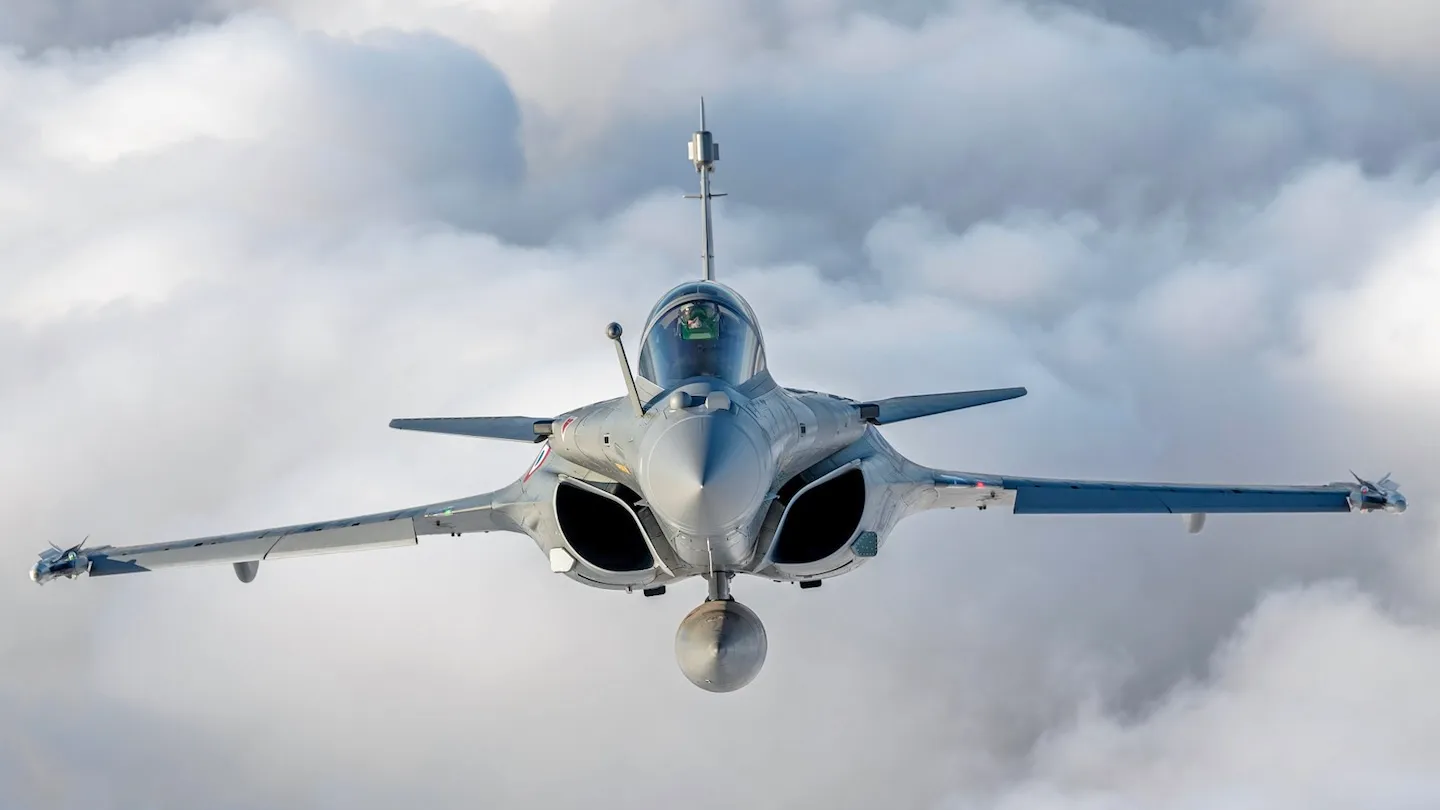
- Ukraine France Rafael deal for up to 100 French Rafale jets confirms Europe is preparing for a long, costly conflict with Russia.
- France aims to finance the deal partly through EU defence programmes and frozen Russian assets, despite legal concerns.
- The war is transforming Europe’s strategic identity, forcing deeper defence integration and military spending.
- Rafale training timelines reveal that Europe expects Ukraine’s security challenge to last well beyond the current phase of the war.
Ukraine France Rafale Deal is changing the fate of ‘ Ukraine War’. When Ukrainian President Volodymyr Zelenskiy stood beside Emmanuel Macron at the Villacoublay military airbase this week—flanked by roaring Rafale jets and the flags of both nations—it was more than a ceremonial handshake. The announcement that Ukraine will obtain up to 100 French-made Rafale fighter jets over the next decade marks one of Europe’s most consequential military commitments since the war began. It also reaffirms a sobering truth that Western leaders increasingly whisper but seldom admit publicly: the war in Ukraine is not ending anytime soon.
For Europe—and indeed the global economy—the conflict is no longer a crisis of the moment. It has become a long-term geopolitical, financial, and strategic restructuring that is reshaping the continent’s defence posture, budgetary priorities, and industrial future.
A Deal for a War With No Clear End
The Rafale agreement is framed in Paris as a political commitment rather than a formal purchase. The details—cost, delivery schedules, financing structures—will follow later. Yet the symbolism is unmistakable. France is not offering refurbished Soviet-era aircraft or spare parts. It is promising frontline-generation jets, the very systems that anchor its own air force.
Zelenskiy called it “one of the greatest air defences in the world.” Macron, eager to demonstrate European resolve, described the 100-Rafale package as the “regeneration” of Ukraine’s military.
Trump Halts Tomahawk Deliveries to Ukraine in Shock Decision That Stuns Europe and Delights Moscow
But this long horizon—10 years—reveals what European policymakers now accept: Ukraine will need to be militarily capable decades after any ceasefire, and Russia will remain a threat long after the guns quieten.
Europe Pays for a War It Cannot Afford to Lose
This deal lands at a time when Europe is absorbing the economic strain of a conflict that has already reshaped energy markets, supply chains, and defence spending.
France and Ukraine hope to finance the Rafales partly through EU defence programmes and by tapping into frozen Russian assets—the same controversial funding mechanism Brussels is debating to support a proposed €140 billion loan for Kyiv. But legal concerns remain. Belgium, home to most of the frozen Russian central bank reserves, has warned that such moves may frighten non-Western governments into withdrawing their euro-denominated holdings.
READ MORE: Ukraine signs deal to obtain 100 French-made Rafale warplanes
The war’s shockwaves are global. Oil volatility, food insecurity, higher interest rates, and military-industrial competition have hit developing economies hardest. Even U.S. markets shuddered this week, with the Dow losing more than one percent. This is the price of a conflict that has upended the geopolitical foundations of the post–Cold War world.
Ukraine France Rafale Deal: France Pushes Europe to Take Ownership
While the United States continues to play a crucial role, Washington has made it clear—especially under the Trump administration—that Europe must shoulder more responsibility. Paris has been one of the most vocal advocates of “strategic autonomy,” a concept long dismissed as unrealistic but now seen as unavoidable.
France and Britain are spearheading a coalition of nearly 30 nations willing to deploy troops or military assets along Ukraine’s western flank once a peace deal is signed. This is a remarkable shift for a continent that, until 2022, imagined war as a relic of history.
ALSO READ: Trump’s Green Light to Kyiv: The Long-Range Gamble That’s Pushed the Ukraine War to the Brink
The Rafale deal is just the most visible part of a broader rethink. Europe is investing in:
- Drone interception systems,
- New SAMP/T air defence batteries,
- Munitions production lines, and
- A Europe-wide “drone wall” to counter Russian incursions along NATO’s eastern frontier.
The war has forced Europe to confront vulnerabilities it ignored for two decades.
Training Pilots Takes Years—Because So Does the War
Operating Rafales is a technically demanding endeavour requiring years of pilot training, maintenance capability, and logistical infrastructure. Ukraine cannot deploy these jets tomorrow—or even next year. For that very reason, the timeline itself is revealing. Europe is not planning for a quick victory or a negotiated settlement that stabilizes the region soon.
Instead, the continent is preparing for a prolonged era of confrontation, where a militarily capable Ukraine serves as a buffer between Russia and the EU. The Rafales are designed not only to help Ukraine survive the current conflict but also to deter the next one.
A War Reordering Europe’s Identity
The Rafale deal also reflects Europe’s accelerating evolution from a peace-time economic bloc into a geopolitical actor forced to take tough, expensive, and long-term decisions. Defence is no longer a taboo subject in Brussels. Military spending—once viewed as wasteful—is now seen as existential.
But Europe’s political cohesion is fragile. Budget debates intensify. Energy costs hurt households. Populist parties in Germany, France, and the Netherlands are exploiting war fatigue. Yet European leaders know the cost of disengagement is far higher.
The Ukrainian war is now a structural reality. It will not end soon—certainly not on terms that restore Europe’s pre-2022 comfort. The Rafale announcement is not just a defence deal; it is a geopolitical acknowledgement that Europe must prepare for a decade-defining confrontation with a Russia that remains aggressive, resilient, and strategically patient.
Macron and Zelenskiy’s ceremony in Paris marks the beginning of a new phase: one where Europe accepts that its security, economy, and politics will be shaped by this conflict for years, perhaps generations, to come.
The bill for this prolonged war will be staggeringly high—for Europe, for global markets, and for international stability. But the cost of losing Ukraine, European leaders believe, would be far higher.