



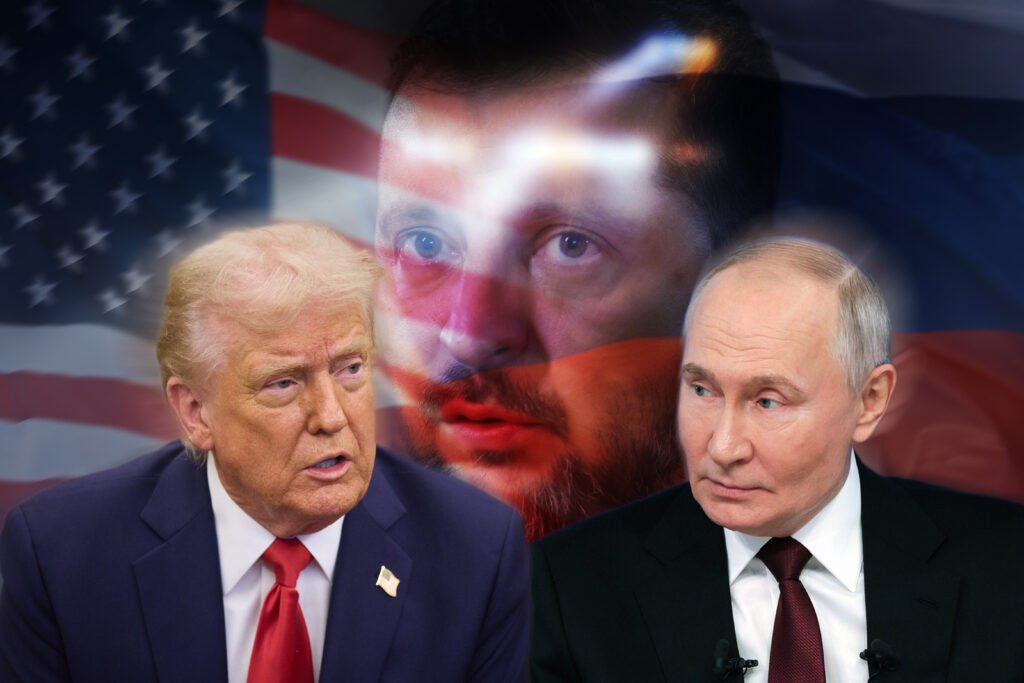
- Ukraine Peace Deal: Europe worries the U.S.-led Ukraine peace proposal rewards Russian aggression and weakens European security.
- Macron, Merz and Starmer push for stronger guarantees and a greater European role in negotiations.
- Kyiv faces battlefield pressure, corruption crises and fading U.S. support as Zelensky seeks firm security assurances.
- Frozen Russian assets and territorial disputes—especially over Donbas—remain major obstacles to a durable peace.
For months, Europe has pretended that it is shaping the fate of Ukraine. But this week’s huddled meeting in Downing Street—where the leaders of the U.K., France and Germany gathered around President Volodymyr Zelensky—revealed the uncomfortable truth: Europe is scrambling to influence a peace process it neither designed nor controls.
While Washington rushes to seal a swift end to the war, European powers worry that America’s eagerness for closure may push Kyiv into an agreement that secures only an illusion of stability. At stake is not merely Ukraine’s sovereignty, but Europe’s own long-term security architecture—fragile, fragmented and vulnerable to a resurgent Russia.
In reality, European leaders aren’t sitting at the negotiating table; they’re standing at the door, knocking.
Washington’s Proposal: A Deal for Peace or a Blueprint for Future War?
The original 28-point proposal—crafted largely by U.S. and Russian interlocutors—was nothing short of alarming for Europe. It capped Ukraine’s military, blocked future NATO accession and effectively redrew the map of Europe in Moscow’s favor by transferring fortified eastern territories to the Kremlin. Crucially, it offered no concrete mechanism to stop Russia from launching another invasion years down the line.
In Paris and Berlin, the proposal was seen not as peace, but as appeasement masquerading as diplomacy.
French President Emmanuel Macron, ever eager to sound assertive, declared that Europe “has a lot of cards in our hands.” Germany’s new chancellor, Friedrich Merz, voiced open skepticism about the American plan. But the reality is harsher: Europe may have opinions, but it lacks leverage.
The Trump administration’s direct negotiations with both Kyiv and Moscow have largely sidelined Europe. No NATO consultations. No EU frameworks. Just a blunt, bilateral American push.
And last week’s release of the new U.S. national-security strategy only added fuel to the fire. For the first time in decades, Washington didn’t label Russia as a national threat. Instead, it framed the relationship in terms of “strategic stability”—a phrase that sent shivers across European capitals.
Zelensky’s Balancing Act
Zelensky arrived in London aware that his political survival hinges on balancing American demands, European anxieties and Ukrainian public sentiment. His call with Jared Kushner and U.S. negotiator Steve Witkoff underscored the stakes: Ukraine simply cannot endorse any plan that fails to guarantee its security.
“Security must be guaranteed,” he reiterated upon landing in the U.K.
But guarantees come from power—and right now, Ukraine is running low on both money and military momentum. Russia continues to make slow but meaningful gains on the battlefield. Kyiv is also reeling from a corruption scandal that forced the resignation of one of Zelensky’s closest aides. And American support is increasingly conditional.
Europe, meanwhile, offers sympathy but little decisive action. The one area where the EU does hold real leverage—$244 billion of frozen Russian assets—has produced bitter internal divisions. Belgium fears legal risks. Some states push for total confiscation. Others prefer caution. Consensus, as usual, is elusive.
Europe’s Fear: Becoming a Bystander in Its Own Security Drama
The uncomfortable truth is that Europe is behaving less like a strategic actor and more like a worried spectator. Starmer’s call for “hard-edged” guarantees and Macron’s insistence on “European contributions” all highlight the same insecurity: Europe doesn’t trust America’s new direction, and it certainly doesn’t trust Russia.
Yet the continent that should be most invested in long-term stability is drifting along behind great-power bargaining.
Even Zelensky now leans on Europe more than ever—not out of choice but necessity. “There are some things we cannot manage without Americans, things we cannot manage without Europe,” he admitted in London. This dependency is dangerous because each camp wants a different outcome: Washington wants closure; Europe wants safety; Ukraine wants survival.
The Real Stumbling Block: Territory
Every peace negotiation eventually breaks down at the same point—territory. Donbas remains the immovable obstacle. Zelensky recently admitted that Ukraine, Russia and the U.S. “don’t have a unified view” on the region. Trump insists that “Zelensky’s people love the plan,” while simultaneously admitting the Ukrainian president hasn’t even read it. Putin, for his part, walked away from a marathon meeting with American envoys, insisting that the plan contained items “Russia couldn’t agree to.”
It is diplomacy by delusion.
Europe’s Decision Point
If Europe truly believes that this peace process risks repeating the mistakes of 2014—when the West allowed Russia to seize territory without consequences—it must move beyond symbolic meetings and press statements. It must unify its position, resolve its internal battles over Russian assets, and present a credible European framework for guarantees.
Otherwise, the continent will wake up to a peace agreement written in Washington and Moscow—one that reshapes European security without European consent.
Ukraine may sign that deal. Washington may celebrate it. Moscow may exploit it. But Europe will live with it.
And history shows that when Europe lets others write its security story, the ending is rarely peaceful.