



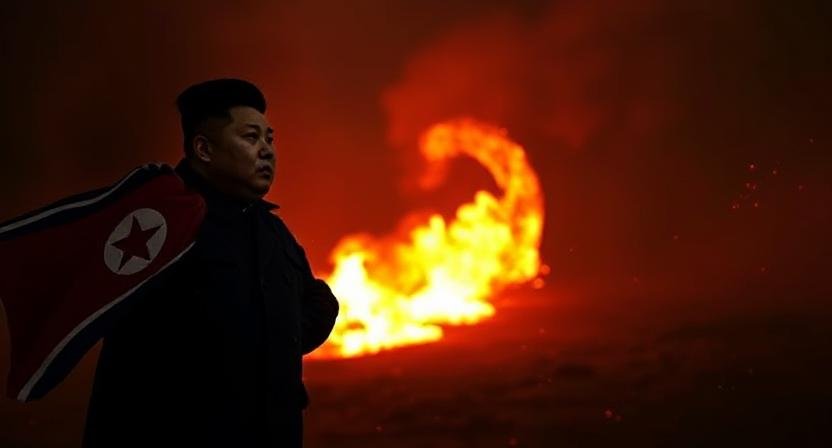
- North Korea may deploy troops to Ukraine as early as July or August, aiding Russia in its war against Kyiv, according to South Korea’s intelligence.
- Pyongyang continues to supply arms and missiles to Russia, receiving advanced satellite and missile technology in return.
- NATO faces new security concerns, with fears that a Russia-North Korea axis could deepen the conflict and destabilize Eastern Europe.
- Ukrainian forces may face additional battlefield pressure, especially if North Korean soldiers reinforce Russian offensives in contested zones.
In a revelation that could reshape the dynamics of the Ukraine war and set Europe on high alert, South Korea’s intelligence agency has warned that North Korea may begin deploying troops to fight alongside Russian forces as early as July or August. The National Intelligence Service (NIS) shared the explosive update during a closed-door parliamentary briefing in Seoul on Thursday.
The development marks a dramatic and dangerous escalation of the conflict in Eastern Europe, with authoritarian allies—Moscow and Pyongyang—tightening their military partnership. South Korean lawmaker Lee Seong-kweun, who attended the intelligence session, told reporters that the NIS believes a new troop roundup in North Korea is tied to an imminent deployment to the Ukrainian front.
Breaking: U.S. Strikes on Iran “Severely Damaged” Nuclear Program, New CIA Assessment Reveals
“The timing of the additional deployment is that it could be as early as July or August,” Lee said. He also pointed to a recent high-level visit to Pyongyang by a Russian presidential security official as further evidence of deepening military coordination.
What Does It Mean for Ukraine and Europe?
The implications are stark and unsettling:
1. A New Axis of Authoritarian Militarism
The formal arrival of North Korean soldiers on Ukrainian soil would mark the first foreign ground troop deployment in support of Russia since the war began. It would signal the formation of a de facto military axis between Moscow and Pyongyang, dramatically expanding the geographic and ideological scope of the conflict.
2. Strain on Ukrainian Forces
Ukrainian defenders are already stretched thin across a 1,000-km frontline. The addition of fresh North Korean battalions, possibly trained for artillery and trench warfare, could tilt the tactical balance in select areas. Even if their battlefield effectiveness is limited, their presence could serve as psychological warfare, complicating Ukrainian planning and NATO’s calculus.
READ MORE: North Korea may send more troops to Russia in July or August for Ukraine war, Seoul says
3. NATO’s Red Line in the East
Europe may now have to confront the real possibility of multiple hostile regimes coordinating militarily on the continent. NATO Secretary-General Jens Stoltenberg has previously warned against external state interference in the Ukraine war. If North Korean troops enter the battlefield, it could trigger a broader NATO reassessment of its eastern deterrence and air defense posture.
4. China’s Calculated Silence
Beijing has thus far remained on the diplomatic sidelines. But the entry of North Korean soldiers into Europe’s war zone could test China’s balancing act between supporting its regional allies and avoiding confrontation with the West. It will also raise fresh questions about China’s influence—or lack thereof—over Pyongyang.
5. Escalation of Hybrid Warfare
In return for providing artillery shells and short-range missiles to Russia, Pyongyang is reportedly receiving advanced missile and satellite guidance technology. That trade-off accelerates both countries’ military capabilities and could lead to future confrontations not just in Ukraine, but on the Korean Peninsula and in East Asia.
ALSO READ: Breaking News: Trump Confirms U.S.-Iran Nuclear Talks Set for Next Month Despite Tensions Over Cease-Fire, Bombings
A Strategic Gamble
The Kremlin’s reported plans for a large-scale summer offensive may now be bolstered by this new development. Analysts believe that Moscow, facing manpower constraints and mounting Western support for Kyiv, is exploring every possible resource—including foreign troops—to gain an upper hand. North Korea’s military is large, disciplined, and deeply indoctrinated, making it a potentially useful auxiliary force for static or defensive operations.
Both Russia and North Korea have already publicly confirmed the deployment of limited North Korean support personnel in previously contested regions like Kursk. However, the possibility of combat troops entering active war zones represents a serious escalation.
A Message to the West
The message from Moscow and Pyongyang is unmistakable: the Ukraine war is no longer just a regional conflict—it is a geopolitical flashpoint where alliances are shifting and authoritarian regimes are cooperating in unprecedented ways.
As the West continues to supply Ukraine with modern weaponry, the entry of North Korean troops may serve as a counterbalance that adds volatility to an already combustible theater.
For Europe, the question now is not whether the Ukraine war will expand—but how far it might spiral.